- Friday, 29 May 2026

Govt legalising ICE to EV conversion
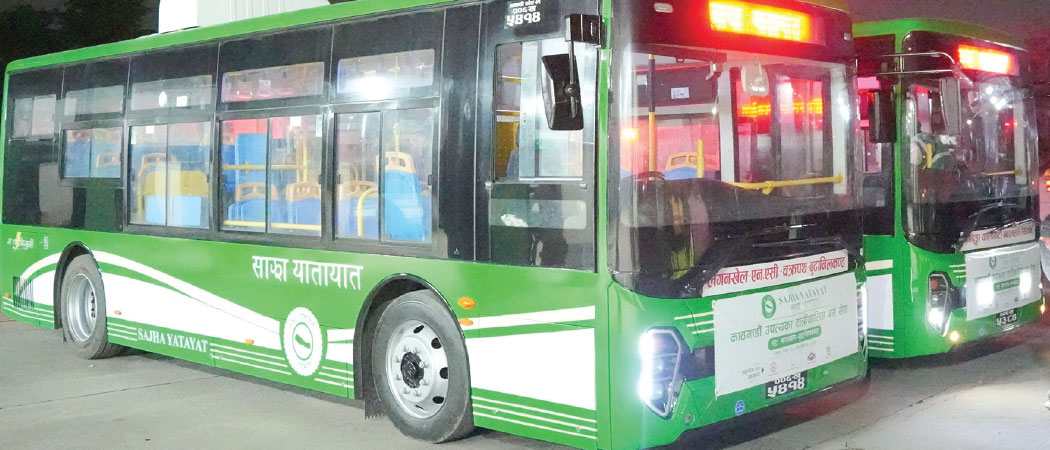
Kathmandu, Apr. 19: A 16-year-old internal combustion engine (ICE) vehicle owned by Sajha Yatayat was successfully converted into an electric vehicle (EV) two years ago. This was the recent case in Nepal where an ICE vehicle was converted into an EV, despite the absence of a relevant policy.
However, the Cabinet decision on April 5, 2026, has marked a major development for ICE vehicle owners wishing to convert the machine into EVs. A meeting led by the Prime Minister cleared long-standing legal hurdles by agreeing to establish a formal framework that allows the conversion of vehicles.
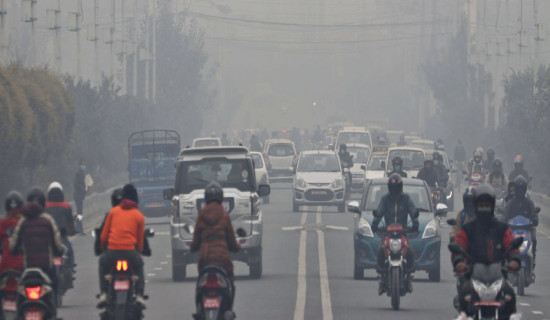
The government, through the Council of Ministers, decided to arrange the necessary legal and procedural framework to facilitate the conversion. This move aims to promote the use of domestic hydroelectricity, reduce environment pollution and decrease the national trade deficit caused by petroleum imports.
This has become a major development, as a clause in Section 39 of the Motor Vehicle and Transport Management Act (1992) had long prohibited any structural or engine modifications to vehicles.
Sajha has converted ICE vehicle into EV
According to Janak Risal, an engineer at Sajha Yatayat who was involved in converting the old Sajha bus, the vehicle has not been allowed to operate on main roads due to the absence of proper legal provisions.
“We have been using the bus inside the Sajha compound and it has remained there for two years after the conversion due to the lack of policy,” he said.
“The conversion was made in April 2024, as a pilot project, funded by the SOLUTIONSplus project of the European Union. It cost around Rs. 8 million -- Rs. 6.5 million for an imported conversion kit and Rs. 1.5 million for motor and system integration,” Risal said.
However, he said that the recent Cabinet decision is only a policy-level approval in principle. It does not yet allow immediate conversion of vehicles. For implementation, the existing Motor Vehicle and Transport Management Act 1992 must be amended, as it still restricts conversion. Detailed procedures, guidelines and standards need to be developed before conversions can be officially permitted.
According to Risal, these guidelines should clearly define the entire process, including approval mechanisms, certification requirements, safety tests, equipment standards and authorised service providers. Only after such frameworks are in place can vehicle conversion be carried out safely and legally.
On cost, he said the conversion of a single bus appeared high mainly because it was a one-time and one vehicle pilot project.
If multiple vehicles of the same model were converted in bulk, costs could be significantly reduced.
“Although there had been a policy to provide minimal customs duty on such kits, the lack of a proper classification code meant that components like batteries and motors were taxed separately, increasing overall costs during the time,” he added.
On smaller vehicles, he said conversion is technically easier compared to large buses. With proper scaling, small vehicles could be converted at a lower cost—estimated at around Rs. 1.5 million at minimum if done in larger numbers.
The Sajha bus conversion took about three to four months to import components and around two to two-and-a-half months to complete the installation. The vehicle is currently in good condition and can be operated when needed within the depot. Based on initial estimates, it could provide a range of around 100 kilometres under testing conditions.
Early EV revolution: Safa Tempos
Before Sajha Yatayat carried out the conversion, Nepal had already witnessed an early EV revolution in the 1990s when Bikram tempos were converted into electric “Safa Tempos.” This was considered one of the world’s first successful large-scale transitions to electric public transport, expert said.
According to EV conversion expert Abhishek Karki, the old diesel-powered Bikram tempos, which caused heavy smoke and air pollution, were gradually converted into electric vehicles starting in 1993. This initiative was supported by the Global Resources Institute (GRI) and the United States Agency for International Development (USAID), which funded a three-year pilot project.
After the pilot phase, a Nepali company, Nepal Electric Vehicle Industries (NEVI), took the lead in producing and promoting the Safa Tempos. Mechanical engineer Bijay Man Sherchan played a key role in developing and expanding their use across the country. Compared to old tempos, they are quieter, cleaner and cheaper to operate, making them more suitable for city transport and better for public health and the environment, Karki said.
Karki added that the idea of converting ICE vehicles into EVs is not new in the country. He said such conversions remain a successful case, contributing to public transport and creating jobs mostly for women over the past three decades.
From a technical perspective, he said vehicle conversion has already been demonstrated in the country. Various types of vehicles -- from vans to tractors and buses -- have been converted into electric versions. This showed that conversion is technically feasible.
However, he stressed that the bigger challenge is financial feasibility. The cost of conversion varies depending on the type of vehicle. Converting a small car is very different from converting a large bus, both technically and financially. “Costs are also affected by factors such as the rising value of the US dollar, since most components need to be imported.”
He pointed out that although there is a provision in Nepal’s customs tariff to charge only 1 per cent duty on conversion kits, it has not been effectively implemented due to the absence of clear procedures and standards. As a result, components like batteries and motors are often taxed separately, increasing costs.
According to Karki, financial viability depends on several factors, including taxation policies, financing models and market demand. If new vehicles are easily available through loans and instalment schemes, consumers may prefer buying new EVs rather than converting old ones. However, if proper financing options are introduced for conversion -- similar to vehicle loans -- it could improve feasibility.
He suggested that commercial vehicles, such as cargos, municipal vehicles and logistics buses, could be more suitable for conversion than private cars. These vehicles typically operate under similar conditions, making it easier to apply a standardised conversion model and reduce costs through bulk implementation.
“If a large number of similar vehicles are converted using a single model, costs can be significantly reduced. In addition, local manufacturing -- such as producing batteries within the country or attracting foreign investment -- could further lower costs and support the domestic EV ecosystem.
Referring to the Safa Tempo experience, he said that financing models had helped women entrepreneurs enter the transport sector and repay loans successfully.
Social and environmental impact
The innovation of Safa Tempos not only contributed to environmental improvement but also created employment opportunities for women, marking a shift from the traditionally male-dominated transport sector, seconded environmentalist Bhusan Tuladhar.
Following this, the country established charging stations where drivers could swap depleted batteries for fully charged ones. This system improved operational efficiency and helped reduce reliance on imported fuel, while also preventing older vehicles from being scrapped prematurely.
According to Tuladhar, converting old vehicles into electric ones can help reduce environmental pollution and promote the reuse of existing resources. However, he said the cost remains a major challenge.
“If components are brought in bulk -- for example, for 40 vehicles at once -- the cost could be reduced,” he said. He also highlighted that such initiatives would support better use of existing resources while gradually developing local technical manpower.
However, not all vehicles are suitable for conversion, as older vehicles have limitations. Still, vehicles in good condition -- even those around 20 years old -- can be considered for conversion, which would be beneficial from an environmental perspective by replacing diesel engines with cleaner battery systems.
Tuladhar stressed that the main issue so far has not only been the absence of policy, but also the lack of clear standards and guidelines. Simply allowing conversions is not enough; proper procedures, safety standards and regulations must be in place. Since these vehicles operate on public roads, safety, legal and insurance issues must be carefully addressed.
He also stressed that the government should take the lead in developing standards and gradually implementing pilot projects. Large-scale conversion may not be possible immediately, so it should begin with small trials and expand over time. With advancements in EV technology, including sensors and computer systems, converting larger vehicles like buses and trucks may be more complex. However, smaller vehicles such as motorcycles and small cars are relatively easier to convert, he added.
Meanwhile, Kathmandu University in its Facebook post on April 6 welcomed the government decision to legalise EV conversion of petroleum vehicles. It said in its post, “Our research team has already proven that conversion is both technically and financially feasible. The focus now should be on regulated commercial rollout with certified standards and sustainable financing. A strong step toward clean and affordable mobility in Nepal.”
Challenges remain
According to Sagar Gyawali of the Nepal Electricity Authority (NEA), the idea of converting vehicles may sound appealing, but from a user’s perspective, most people would prefer to buy a new vehicle if they can afford it.
Conversion becomes attractive only when it is significantly cheaper than purchasing a new one. However, the cost of batteries and control systems remains high, making conversion less economically appealing.
Gyawali explained that, technically, conversion involves removing the petrol or diesel engine and replacing it with an electric motor, battery system, controller and software. However, these components -- especially the battery and battery management system -- are expensive, and the process requires significant engineering adjustments.
He stressed that one of the biggest gaps in the country is the absence of a proper certification system. There is no authorised body to test whether a converted vehicle is safe for public roads. Issues such as braking performance, safety, insurance and legal liability remain unclear. Without proper testing equipment and standards, it is difficult to guarantee that converted vehicles are roadworthy.
Drawing on global experience, he argued that while conversion is often discussed as an innovative idea, it has not proven commercially viable anywhere in the world at scale. If it were economically feasible, countries like China or India would have widely adopted it by now. Instead, the global trend has been towards manufacturing new electric vehicles rather than converting old ones, he said.
The other point he made was that currently banks are hesitant to invest and provide loans for alternatives that are not yet certified or proven. Also, there is uncertainty about the depreciation of the converted car and this hinders the potential for greater adoption.
Gyawali added that older vehicles, especially those that have already completed 20 to 25 years, may not be suitable for conversion due to their limited lifespan.