- Thursday, 4 June 2026

Kathmandu among most polluted cities
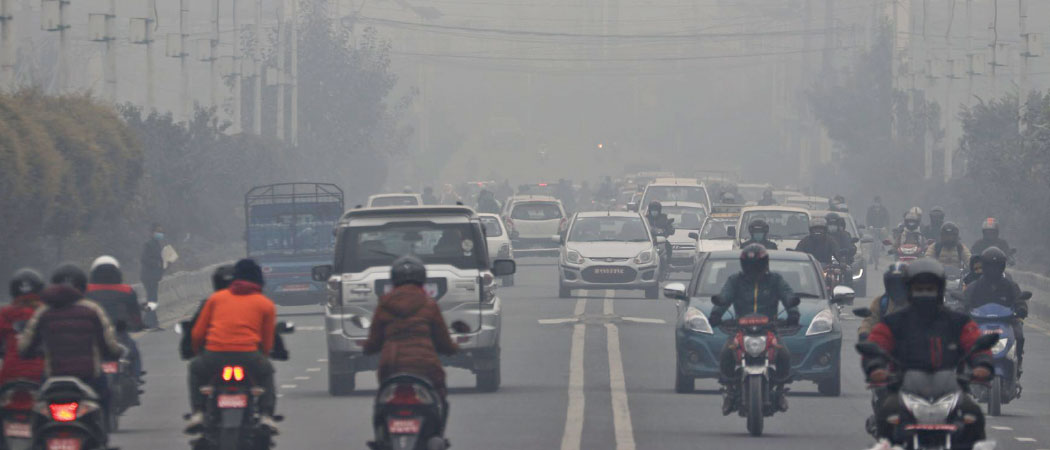

Kathmandu, Apr. 25: On Friday afternoon, Kathmandu ranked at the top of the Air Quality Index (AQI), with levels crossed 200. Delhi in India and Dhaka in Bangladesh ranked second and third, respectively.
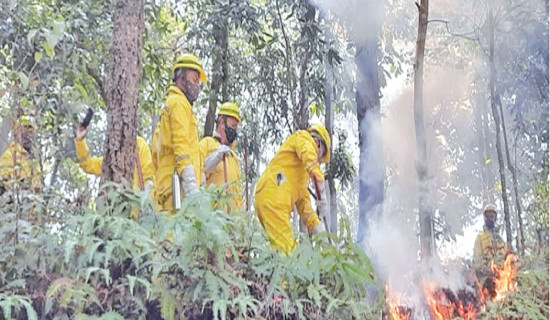
Air quality had remained relatively normal during the initial weeks of the pre-monsoon season, as normal to moderate rainfall across the country helped contain forest fires. However, in recent weeks, forest fires have increased, leading to rising pollution levels in many areas due to insufficient rainfall.
In the past one week alone, forest fires have been recorded in 14 districts including Achham, Arghakhanchi, Banke, Bardiya, Dadeldhura, Dailekh, Dang, Doti, Jajarkot, Kailali, Pyuthan, Salyan and Surkhet, according to Forest Fire Detection and Monitoring System in Nepal.
According to environmentalist Bhushan Tuladhar, air pollution levels in Kathmandu have risen sharply over the past week, mainly due to seasonal factors, dry weather and an increase in forest fires. Tuladhar said pollution typically rises during this time of year, but the current spike has been worsened by a lack of rainfall. “Dry conditions mean there has been little rain to settle pollutants,” he said.
He added that the country is currently in the peak season for forest fires, which usually occurs during March and April. While earlier rainfall had helped reduce fires, they have intensified again in recent weeks.
“Satellite data show a high number of forest fires, particularly in the western and central Tarai regions and in parts of India. Smoke from these fires is also drifting into the country, contributing to higher pollution levels,” he said.
Tuladhar added that, alongside forest fires, regular sources such as vehicle emissions, industrial pollution and waste burning continue to add to the problem.
He said there is no immediate solution unless rainfall improves conditions, but stressed that efforts to prevent and control forest fires can still make a difference.
Clearing fire lines in forests and ensuring rapid response to extinguish fires can help reduce their spread,” he said. The main sources of air pollution for Kathmandu or Nepal as a whole, have remained largely unchanged over time.
Manjeet Dhakal, a climate expert, said that the dominant source comes from road, particularly vehicular emissions from petroleum-based vehicles and road dust. While important steps have been taken to improve fuel quality, upgrade vehicle and fuel standards and maintain roads, transport remains the largest contributor.
According to Dhakal, seasonal sources such as forest fires and transboundary pollution further worsen air quality, adding to existing pollution levels.
Tuladhar urged the public to reduce exposure to polluted air. “People should wear masks and avoid heavily polluted areas. Vulnerable groups such as children and the elderly should take extra precautions, including using air purifiers if possible,” he said.
Tuladhar pointed out that Nepal’s air quality management plans had not been fully implemented or updated. He urged authorities to expedite revisions and develop a national air quality action plan.
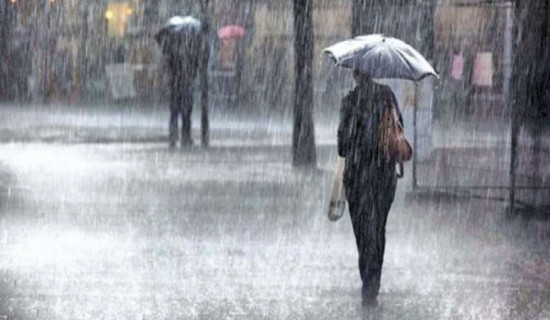
Meanwhile, David Dhakal, meteorologist at the Meteorological Forecasting Division under the Department of Hydrology and Meteorology (DHM), said that light rainfall was likely over the next two days, particularly in the eastern parts of the country.
Dhakal said areas from Gandaki Province eastwards were expected to receive some rainfall, with higher chances in hilly regions compared to the Tarai. “Rainfall activity is likely to be more prominent in the hills, while the Tarai may see relatively less precipitation,” he said.
He added that the current hot conditions in parts of Koshi, Madhesh, Bagmati and Gandaki provinces are likely to ease slightly as a result of the expected rainfall. However, the Tarai districts of Lumbini and Sudurpaschim provinces would witness high temperature for the next three days, with no significant increase or decrease expected.
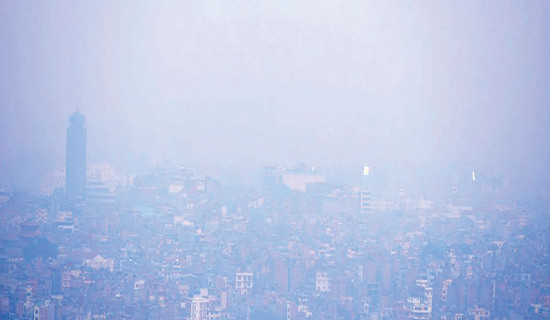
Dhakal also said that hazy conditions seen over Kathmandu are likely due to increased pollution levels. “The hazy sky is not limited to Kathmandu; similar conditions are being observed in other parts of the country,” he said.
-square-thumb.jpg)