- Thursday, 28 May 2026

Decline of pollinators puts human health, food security at risk

Kathmandu, May 8:The rapid decline of insect pollinators is putting human health and food security at risk, claimed a new study. The study also showed that fewer pollinators mean poorer nutrition, lower farm income and greater vulnerability to disease.
The study published in Nature on Wednesday reveals, for the first time, how the decline of insect pollinators undermines essential ecosystem services that support human nutrition and livelihoods in Nepal.
The study led by researchers T.P. Timberlake and J. Memmott from the University of Bristol, in collaboration with universities and research institutions from Nepal, the UK, the US and Finland, including Tribhuvan University, Agriculture and Forestry University and HERD International surveyed 776 people in Jumla district over a year to examine links between pollinators, nutrition and livelihoods.
Researchers also carried out plant-pollinator surveys every two weeks during flowering seasons and projected future impacts of pollinator decline up to 2030.
Working in 10 smallholder farming villages and their surrounding landscapes in the district, the study traced the full chain of connections between wild pollinators, crop yields and the nutrients families rely on. By tracking diets, crop nutrients and the insects visiting those crops over a year, the research team showed how pollinators directly support both nutrition and livelihoods.
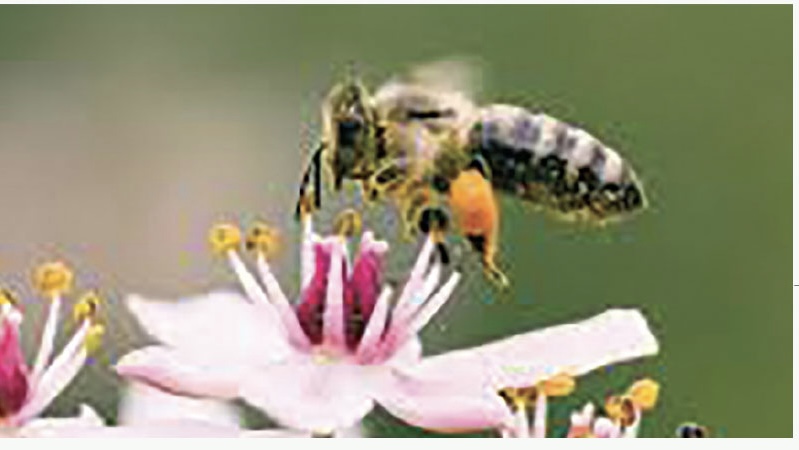
Talking about the pollinator effect in the human health and food security, Krishna Paudel, an agriculture expert, said the decline in pollinators poses a direct threat to food security, as nearly 50 to 60 per cent of food production depends on insect pollination. He said bees, bumblebees and other pollinating insects play a crucial role in crop reproduction and biodiversity conservation.
“Without pollinators, many crops would not bear fruit,” he said, adding that pollinators also act as indicators of environmental health.
Paudel identified excessive pesticide use and environmental pollution as the two major causes behind the decline in pollinator populations. He said pesticides kill not only harmful insects but also beneficial species such as bees and bumblebees. “When poison is sprayed in fields, pollinators die while searching for food,” he said.
He also warned that biodiversity loss has reached alarming levels globally and said modern farming practices, including monoculture and hybrid crops, are further threatening ecological balance.
Referring to the research, Paudel said the findings were credible but said that the crisis could be even more severe in the Tarai-Madhes region, where pesticide use is widespread.
He stressed that research should not remain limited to academic discussion but should help build awareness and policy responses to biodiversity loss and declining pollinator populations.
According to the research, “It is known for long that insect pollinators are vital for producing many of the fruits, vegetables and pulses that supply essential vitamins and minerals in human diets. Yet clear evidence has been limited as to how the decline of pollinators affects people - until now.”
The study found insect pollinators are crucial for both the nutrition and income of farming families, and pollinators were responsible for 44 per cent of people’s farming income and contributed more than 20 per cent of their intake of vitamin A, folate and vitamin E.
The research showed there is real potential for positive change - when communities support pollinators, their nutrition and income can improve. Simple steps like planting wildflowers, using fewer pesticides or keeping native bees can help boost pollinator numbers, strengthening both nature and people’s wellbeing.
Dr. Samuel Myers, faculty director of the Johns Hopkins Institute for Planetary Health and a co-author of the report said, “This study reveals in detail what the field of Planetary Health asserts: that human wellbeing and the state of our planet’s natural systems are intimately connected. As we tear larger and larger rents in the fabric of life we degrade the future of vulnerable populations across the globe. Protecting natural systems is foundational to securing a livable future for humanity and the rest of life on Earth.”
Dr. Thomas Timberlake, post-doctoral research associate and lead author, said: “Our study shows that biodiversity is not a luxury - it is fundamental to our health, nutrition and livelihoods. By revealing how species like pollinators support the food we eat, we highlight both the risks of biodiversity loss for human health, but also the powerful opportunities to improve human lives by working with nature.”
Dr. Naomi Saville from the University College London Institute for Global Health, who coordinated the nutrition work in Nepal, said: “Over half of the children in our study were too short for their age, which is largely driven by poor diets that depend upon insect pollinated vegetables, legumes and fruits. As pollinator biodiversity declines, loss of vitamin A, folate and protein from the diet can further damage these children’s health and development, so efforts to restore pollinators are crucial.”