- Friday, 29 May 2026

Kathmandu’s air remains hazardous despite surge of cleaner cars
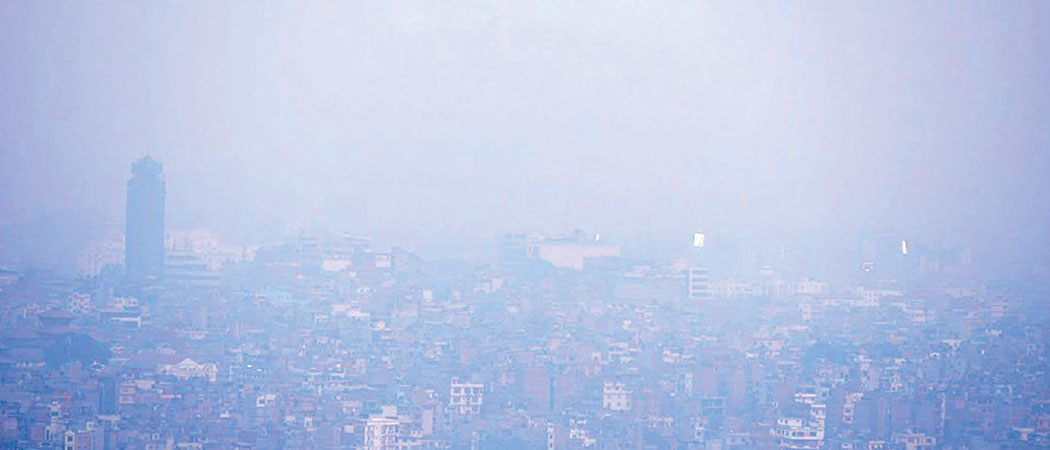

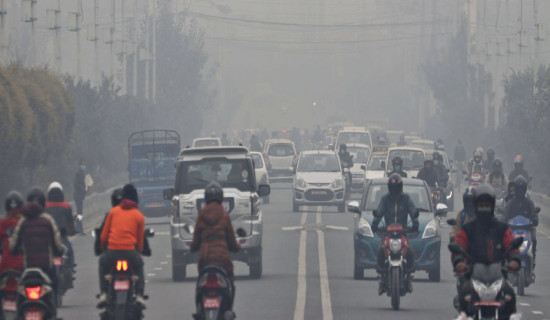
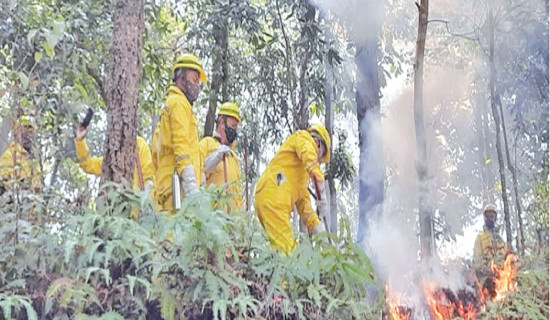
Kathmandu, Feb. 17: For the past few weeks, large parts of the country -- including Kathmandu and the Tarai -- have been grappling with toxic air. With no notable rainfall this winter, road dust, industrial emissions and smoke from forest fires and crop-residue burning have combined to severely degrade air quality, posing growing challenges for people living in these areas.
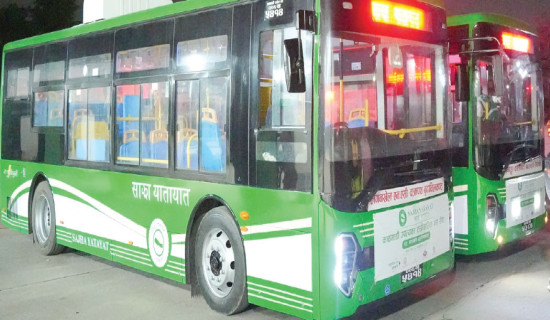
The situation is particularly acute in the Kathmandu Valley, where vehicle emissions and industrial pollution remain the dominant sources of harmful pollutants. Although a growing number of new car buyers are opting for electric vehicles (EVs), outdated public and private vehicles continue to ply the streets, emitting large volumes of smoke and fine particulate matter.
Nepal has emerged as the world’s second-ranked country, after Norway, in terms of the share of EVs in new car sales in 2025, placing it among the fastest adopters of electric mobility globally, according to International Energy Agency ((IEA) and Ember.
Experts, however, caution that the rapid uptake of EVs alone is not enough to address Kathmandu’s worsening air quality. They stress that continued operation of old and poorly maintained vehicles is undermining the potential gains from electric mobility.
Dr. Maheswar Rupakheti, an atmosphere scientist who has led several studies on air pollution in Nepal, said the transport sector remains the single largest contributor to air pollution in the Kathmandu Valley, accounting for about 40 per cent of PM 2.5 emissions. “A large number of fossil-fuel vehicles are still on the roads, including a small but highly polluting group of super-emitters that require urgent action,” he said.
He added that transport emissions are only part of the problem. “Industries, open waste burning, and unregulated construction are also major sources and need equal attention. Only a truly integrated national air-quality management plan -- with clear sectoral targets, timelines and adequate resources -- can bring pollution levels in the Kathmandu Valley down to acceptable levels,” Dr. Rupakheti said.
Dr. Madhav Karki, a natural resource management and environment expert, echoed similar concerns, noting that Kathmandu frequently ranks among the world’s most polluted cities. “Despite impressive growth in EV adoption, emissions -- particularly black carbon, dust particles and methane -- remain high. This shows that a transition to EVs alone is not sufficient to tackle air pollution, which is Nepal’s number one health and economic challenge,” he said.
Beyond transport and industry, unplanned construction and poor dust management are further worsening air quality. Residents living behind the Tribhuvan International Airport (TIA) have complained of persistent dust pollution caused by ongoing runway expansion works.
Nayak Paudel, a resident of Gothatar, who lives close to the construction site, said that while the airport expansion is necessary, nearby communities are paying a heavy price. “I live about 200 metres from the airport fencing near the recent crash site. Motorcycles parked overnight are covered in dust by morning. Construction work continues round the clock, and the noise from tippers and bulldozers regularly disturbs our sleep. This has been going on for several months,” he said.
Responding to residents’ complaints, Deependra Shrestha, Project Director of the Air Transport Capacity Enhancement Project under the Civil Aviation Authority of Nepal (CAAN), said efforts were being made to control dust by regularly spraying water at the construction site.
“Sometimes dust spreads as construction is ongoing. As winds mostly blow from west to east, people living on the rear side may be affected at times. However, we are taking the issue seriously and are applying water as frequently as possible,” he said.
Meanwhile, the International Centre for Integrated Mountain Development (ICIMOD) said air quality in the Kathmandu Valley worsened with the onset of winter. Data from ICIMOD’s air quality monitoring station in Khumaltar showed an average PM2.5 level of 45 micrograms per cubic metre (µg/m³) in December 2025. Between December 2025 and February 2026, the average PM2.5 concentration was around 50 µg/m³.
Ashish Tiwari, Lead of the Action Area on Air at ICIMOD, said the government could drive long-term change through effective implementation of the National Air Quality Management Plan (NAQMAP). “The plan aims to identify major pollution sources, prioritise investments and strengthen air-quality monitoring across the country,” he said.