- Monday, 8 June 2026

Smart Infrastructure Key To Sustainable Development
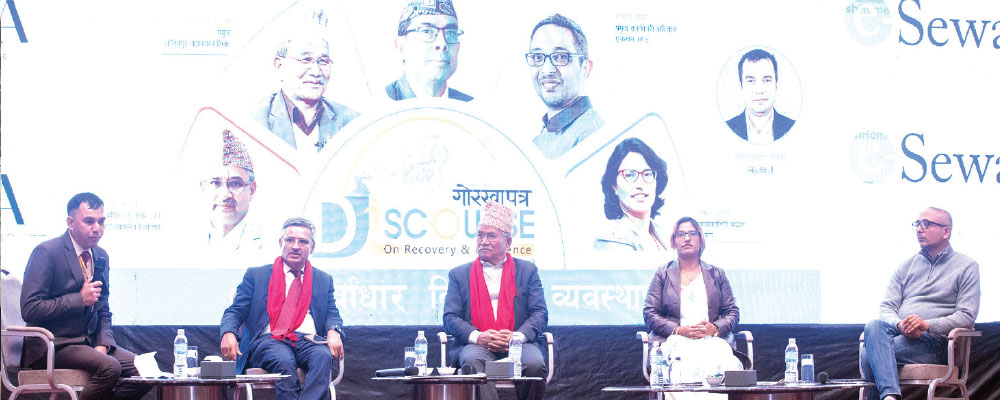
There are economic challenges in the country and discussions have begun on digital infrastructure to make development sustainable. Modernising financial, energy and physical infrastructure is the cornerstone of the country’s economic development. To foster sustainable growth, experts advocated for an integrated approach to building smart infrastructure, where the government acts as a facilitator for private sector innovation, opens up data sharing and adopts flexible policies that allow for rapid technological adoption and efficient resource management across all levels of government.
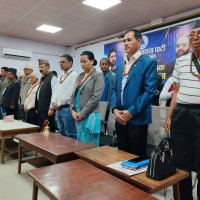
Speaking at the panel discussion on "Smart Infrastructure: Development and Management" at the Gorkhapatra Discourse on economic recovery and resilience, held to mark the 61st Anniversary of The Rising Nepal and 125 years of publication of the Gorkhapatra daily, they said that infrastructure is the main backbone of the country’s economic and social development.
Changing global context
However, in the changing global context, infrastructure now means not only roads and bridges, but also digital connectivity, financial technology and smart energy systems, they said. Speaking at the panel, Keshav Kumar Sharma, Secretary at the Ministry of Physical Infrastructure and Transport, said that the government has highlighted connectivity expansion, smart technology and integrated planning as key pillars of the country’s future infrastructure development.
Sharma presented the government’s perspective and long-term master plan, reviewing the country’s 75-year journey in physical infrastructure and outlining the future course of action.
He said Nepal had only 360 kilometres of roads in 1951 (2007 BS), while the total road network has now expanded to around 100,000 kilometres. Reaching all 77 district headquarters by road is a major achievement. “Out of 753 local bodies, only 18 are out of road connection, and they are also in the process of connection.”
He said that 95 per cent of the households have piped drinking water facilities, which are the assets of the country. He also admitted that significant work remains in improving road quality and safety.
Stressing a shift in priorities, Sharma said the government is moving beyond conventional road construction towards “smart infrastructure. This includes installing sensors on roads, automating traffic lights, and prioritising tunnel construction to improve efficiency and safety. On financing, Sharma said government resources alone are no longer sufficient to build large-scale infrastructure. He stressed the need to attract Public-Private Partnerships (PPP) and Foreign Direct Investment (FDI) to meet the country’s growing infrastructure demands.
Digital finance driving country’s financial transformation
The use of technology has brought sweeping changes to Nepal’s financial sector, expanding access, reducing costs and reshaping the way banking services are delivered, according to Subas Sharma, Director of F1 Soft.
Sharma explained how financial infrastructure and digital innovation have played a central role in the country’s digital revolution, while also highlighting key challenges that remain.
He said Nepal once had more than 200 banks and financial institutions, mainly to expand banking access among the public. However, the rapid growth of technology, particularly mobile phones and internet connectivity, proved that digital presence is more effective than physical branches. Although the number of banks has declined following mergers, access to services has expanded significantly, with more than 20 million mobile banking users across the country.
Highlighting the importance of Digital Public Infrastructure (DPI), he described the National Identity Card as a strong foundation for digital services. If the National ID database is securely integrated with banks, telecom companies and other service providers, he said, the long-standing hassles of ‘Know Your Customer’ (KYC) procedures could be permanently resolved.
Sharma also stressed the need for policy flexibility, arguing that technology always moves faster than regulation. Instead of imposing restrictive laws that slow innovation, he urged regulators to adopt a “light-touch” approach -- allowing technology to grow while gradually managing associated risks. He stressed that the private sector should be given the freedom to innovate.
Hydropower expert Suman Joshi has underlined the urgent need to modernise cthe ountry’s energy infrastructure, calling for smart grids, integrated planning and stronger private sector participation to address long-standing technical and policy challenges.
Speaking at the event, Joshi said that while the country has been increasing electricity generation, much of the country’s powerhouses are still based on mechanical technology that is more than 50 years old. Unlike in Europe and the United States, where fully automated and remote-controlled systems are widely used, Nepal’s lack of such technology has reduced productivity, he said.
She said that fragmented development has also hindered the sector’s growth. With the Nepal Electricity Authority (NEA), independent power producers (IPPs) and various government agencies working separately, the country has failed to develop an Integrated Energy Plan. As a result, the country faces situations where electricity is available in some areas, but transmission lines are lacking in others.
Joshi also expressed concern over the growing impact of climate change on hydropower projects. She said relying solely on 100-year planning is no longer sufficient for project design, stressing the need to adopt climate-resilient engineering technologies to ensure long-term sustainability.
Stressing the role of the private sector, Joshi urged the government to allow private companies not only to generate electricity but also to engage in domestic and cross-border electricity trading. This would help expand investment sources and mobilise private capital for the development of smart grids in Nepal, she added.
Mayor of Lalitpur Metropolitan City, Chiri Babu Maharjan, has said outdated laws, weak inter-agency coordination and process-driven bureaucracy remain major obstacles to effective infrastructure development at the local level.
Speaking at the programme, Mayor Maharjan described the Public Procurement Act 2007 (2063 BS) as a “barrier to development”. He said the provision that awards contracts to the lowest bidder has led to declining quality and stalled projects. “We should have the authority to reward good performers and penalise poor ones,” he said.
He also expressed frustration over frequent conflicts among government agencies within the Kathmandu Valley, where roads paved by the Department of Roads are often dug up by other agencies later on. As a result, he said, they are facing public criticism despite having little control over such actions. He stressed the need to strengthen local governments in a coordinating role.
Highlighting Lalitpur’s efforts towards becoming a smart city, the mayor said the metropolis has already begun using technology for smart street lighting, digital map-based building permit approvals and heritage conservation. He urged other local governments to follow similar practices.
Private sector confidence
Private sector representatives highlighted the need for good governance and transparency within the bureaucracy, urging the government to create a corruption-free environment.
The discussion also underlined the importance of strengthening domestic production. While most construction materials used in infrastructure projects-such as cement and steel rods-are now produced in the country, dependence on imported equipment remains.
In response, Minister for Physical Infrastructure and Transport, Kul Man Ghising, said that unavailability of construction material is causing the delay in the building of mega infrastructure project. He added that the development projects are currently being stalled due to reasons such as malpractice by contractors, shortage of construction materials, impractical policies, and the failure to ensure financial resources.
(Aryal is a reporter at this daily.)