- Thursday, 4 June 2026

Development At Environmental Cost

Nepal stands at a decisive crossroads. We dream of international airports, expressways, hydropower corridors, large buildings and complexes, mining, and international standard stadiums. Development has thus come to be equated with the visible infrastructure: concrete, steel, asphalt and floodlights. And the question is whether development really occurs at the expense of our environment? Nepal's development narrative is becoming more of a trade-off book. Take the case of the Nijgadh International Airport. The project, reportedly as a revolutionary aviation development, is scheduled to deforest around 7,500 hectares of woodland, one of the biggest deforestation plans in the country's history.
It has been estimated that an excess of two million trees might be cut. In addition to the number of trees, the site serves as a wildlife corridor, connecting habitats in the area of Parsa National Park, which is home to some endangered species like the Bengal tiger and Asian elephant. Hydrologists have also cautioned that the clearing of forest cover on this scale may increase soil erosion and the recharge of groundwater, exposing downstream towns such as Birgunj and Kalaiya to the risk of floods. Once ecological protection is subordinated to the need to build the political crisis, development starts to look like mining.
Tension
The same tension can be observed in the Pokhara International Airport. The Ritthepani Hill had to be cleared off and the natural scenery was changed forever. The danger to the bird species, such as the endangered vultures, has also been cited by environmental observers as a result of the flight-path planning in a biodiversity-harboring zone. There might be better connectivity due to infrastructure, but the environmental cost was not insignificant or fully expected.
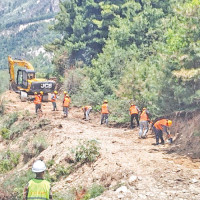
The 76-kilometre Kathmandu-Tarai Fast Track traverses the ecologically sensitive, but fragile belt, the Chure (Shiwalik), which is already prone to water erosion. The rate of slope instability and fragmentation of habitat has been accelerated due to road construction. The Chure is a natural sponge that controls the movement of the water between the hills and the plains. It is dangerous to disturb without a stringent ecological mitigation, which has long-term hydrological implications.
Even the areas that are under protection are not safe anymore. The expansion of hydropower, though very important to the energy aspirations of Nepal, is also encroaching on biodiversity hotspots. Other hydropower projects like the Tanahu Hydropower have been criticised because of cutting more trees than are mentioned in Environmental Impact Assessments (EIA), which makes one wonder whether the regulations are being enforced. On the same note, the East-West Highway expansion around Chitwan National Park has increased the risk of collisions between wildlife and a lack of proper ecological planning.
The redevelopment of the Kirtipur Cricket Ground, which was carried out to develop an international standards stadium, cost hundreds of trees in a land that lies within the already suffocating Kathmandu Valley. They were not trees somewhere in a remote forest that could be ignored by the development planners. They were trees in an overcrowded hill city, cleared off to build floodlights and concrete stands. We are a nation that cannot afford to lose a single tree in the valley, where the quality of the air is already among the worst in South Asia, and where we cleared a cricket pitch. That is not development. That is a nation that no longer appreciates what it cannot afford to lose.
The Department of Forests and Soil Conservation has recorded that each year, thousands of hectares of forest land have been diverted to roads, transmission lines, hydropower and urban sprawl, not just around the immediate footprint of the construction, but beyond. Indicators of air quality are also disastrous. According to the statistics provided by the Department of Environment, the PM2.5 rates in Kathmandu Valley often exceed the safe thresholds of the World Health Organisation (in some cases, it reaches levels that are 20 times higher than those), especially during the peak construction seasons when dust, car emissions, and open excavation collide.
The effect on wildlife is also evident: conservation reports associated with Chitwan National Park and Parsa National Park report increased rates of roadkills and corridor disturbance due to highway widening and residential development. The presence of river systems down the river systems below key hydropower and road projects increases sediment load, which impacts aquatic biodiversity and irrigation systems. These are not some abstract projections, but measurable changes in ecological bases that take place during one development cycle.
Structural impacts
As this course keeps unfolding, the resultant effect will be structural and not incidental. The impact of environmental degradation is hardly immediate in its entirety; it builds up. Today, the soil erosion in the Chure will choke the rivers with sediments tomorrow. The fragmentation of wildlife corridors in the present is the local extinction in the future. The low quality of air in the present day is a liability on both the long-term health costs of the population, productivity, and the burden on overstretched urban health systems. When development is done unaccounted ecologically, development just shifts the costs to the future.
There is no opposition to development; Nepal needs it. However, development should not be at the cost of clearing forests, destabilising hills, breaking wildlife corridors, and squeezing university green space. When all projects require an environmental trade-off, we ought to doubt the model itself. When we continue to build at the expense of our ecological baselines, the price will not be only environmental but also generational.
(Dahal is pursuing a bachelor's degree at St. Xavier College Maitighar, Kathmandu.)