- Sunday, 24 May 2026

El Niño may weaken monsoon, but disaster risks do remain

Kathmandu, May 24: A few weeks ago, the Department of Hydrology and Meteorology (DHM) published the National Outlook for Monsoon Season-2026, forecasting below-normal monsoon rainfall and hotter temperatures across most parts of the country this year.
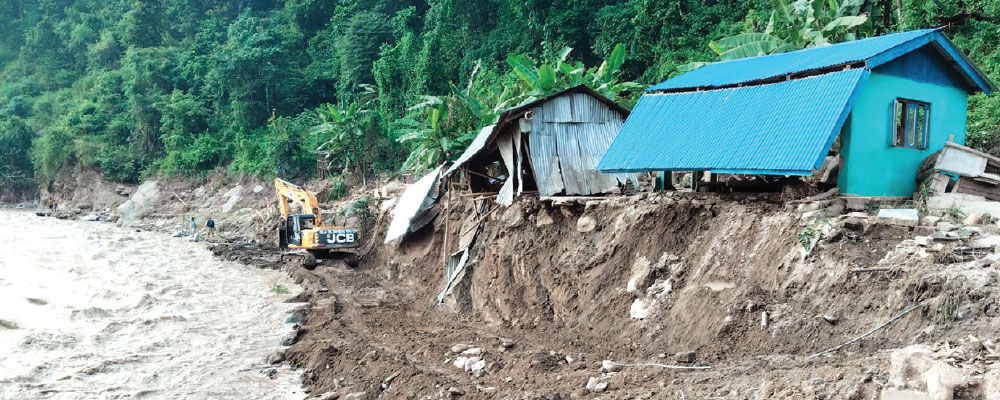
Experts said that the country’s upcoming monsoon season is expected to see below-average rainfall due to the possible development of El Niño conditions in the Pacific Ocean. However, they have warned that intense localised downpours and extreme weather events could still trigger major disasters despite the drier season.
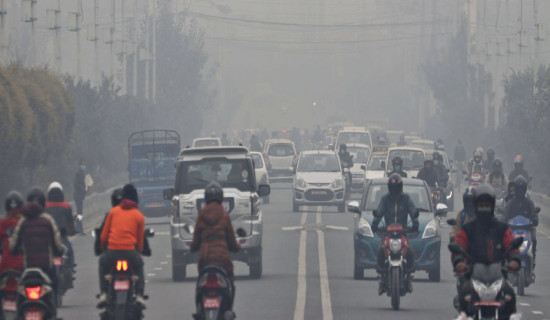
Officials said humid conditions, heat waves and drought-like situations may also occur during the four-month monsoon period, as moisture remains in the atmosphere even when total rainfall decreases.
The World Meteorological Organisation (WMO) also warned that a rapidly developing El Niño event -- the warm phase of the El Niño-Southern Oscillation (ENSO) -- is expected to fuel record-breaking global temperatures and trigger extreme weather globally, bringing severe droughts, intense heatwaves and catastrophic flooding.
Director General of the Department of Hydrology and Meteorology, Dr. Archana Shrestha, said the department’s seasonal monsoon outlook is based on forecasts for the overall four-month monsoon period, assessing whether rainfall is likely to be above normal, below normal or near average, and estimating the probability of each scenario.
Current climate models and indicators, including the ‘ENSO’ in the Pacific Ocean, suggest the possible development of El Niño conditions this year. “When El Niño develops, the monsoon generally weakens and rainfall tends to dwindle,” she said.
However, she clarified that lower seasonal rainfall does not mean extreme weather events will not occur. Moisture-laden air from the Bay of Bengal will still remain in the atmosphere during the monsoon period. “Even if rainfall is below normal overall, localised high-intensity rainfall events can still occur,” she said, adding that such events could trigger major disasters despite an overall drier season.
Dr. Shrestha stressed that preparedness remains essential. She cited last year as an example, when total monsoon rainfall was below normal but intense rainfall occurred towards the end of the season, causing significant impacts.
Shrestha also said that below-normal rainfall does not mean there will be no clouds or atmospheric moisture during the monsoon. “Humidity and clouds will still be present, which can increase discomfort and heat-wave-like conditions,” she said. Unlike winter droughts, monsoon conditions still produce cloud cover even when rainfall is reduced.
According to her, disaster preparedness and response plans should remain fully active despite forecasts of below-normal rainfall. Officials also warned against underestimating the monsoon risks and urged authorities to keep emergency response teams on high alert.
They also suggested deploying rescue teams and shelters more strategically in high-risk areas that could face localised extreme rainfall, floods and landslides.
Meanwhile, National Disaster Risk Reduction and Management Authority (NDRRMA) approved this year’s National Monsoon Preparedness and Response Action Plan over a week ago. According to the action plan approved last Thursday, around 226,661 people from 51,868 households across the country are projected to be affected by monsoon-related disasters this year.
The Action Plan estimated that 51.10 per cent of those affected by monsoon disasters will be women, while 48.90 per cent will be men.
The projected affected population also includes 4,500 women of reproductive age, 4,900 persons with disabilities, and around 18,000 children below the age of five.
According to the Action Plan, Lumbini Province is projected to be the most affected during this year’s monsoon. Around 51,626 people from 11,814 households in the province are expected to be affected while Karnali Province is projected to face comparatively lower risks. Koshi and Madhes Province are also considered vulnerable.
Disaster preparedness
Shanti Mahat, Joint Secretary and Information Officer at NDRRMA, said that although this year’s monsoon is forecast to bring slightly below-average rainfall, Nepal still faces significant disaster risks from extreme weather events, including floods, landslides and drought.
Responding to concerns over the apparent contradiction between lower rainfall forecasts and projections that more than 226,000 people could be affected by monsoon-related disasters, she clarified that the figure refers to the total potentially exposed population, not direct casualties.
She said the estimation is equivalent to around 10 per cent of the worst-case scenario. The disaster risk assessment was carried out through province-wise analysis to support disaster preparedness efforts at the provincial and local levels.
“Only a certain percentage of that population is expected to be directly affected,” she said, adding that disasters can still occur even when seasonal rainfall remains below average.
On preparedness efforts, she said NDRRMA has strengthened its Monsoon Command Post, first introduced last year, to improve real-time monitoring, coordination and emergency response. The command post will coordinate disaster information, mobilise rescue teams and disseminate alerts to the public through SMS, ringtones, public announcements and other communication channels.
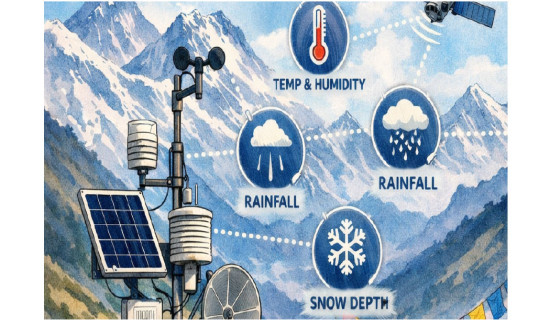
She also said additional sirens and automated river and rainfall monitoring equipment have also been installed in vulnerable areas. Search-and-rescue materials and trained personnel have also been increased.
Nepal has around 200,000 to 300,000 personnel from the Nepali Army, Nepal Police and Armed Police Force prepared for disaster response operations nationwide.
Referring to past flood incidents in Kathmandu, she said some of the earlier losses occurred because settlements had been built in highly vulnerable riverbank areas.
Now the efforts are being made to relocate or remove temporary settlements along riverbanks in order to reduce casualties and losses during this year’s monsoon, she added.
What needs to be done?
A geo-hazard expert and director of the Centre for Disaster Studies at the Institute of Engineering, Tribhuvan University, Dr. Basanta Raj Adhikari, said Nepal remains inadequately prepared for increasingly extreme monsoon disasters despite forecasts of below-average rainfall this year.
Dr. Adhikari said that although agencies such as DHM and NDRRMA have been making preparedness plans, the country still lacks detailed scientific risk assessments needed for effective disaster response.
“The major problem is that we still do not have a nationwide scientific risk assessment for floods and landslides,” he said. “We cannot clearly identify which exact areas, roads or settlements are most vulnerable during the monsoon.”
According to him, existing assessments are too general and only indicate that certain regions may receive heavy rainfall or face landslide risks. “Preparedness becomes effective only when we can say which section of a highway or which settlement is likely to be affected,” he said.
Dr. Adhikari added that the country has not yet mapped how many households or people are at risk from specific landslides or floods. He said local governments are legally responsible for disaster preparedness and response but lack trained human resources, equipment and technical capacity.
He also expressed concern over weak institutional leadership at the NDRRMA, saying governance and coordination challenges have affected disaster preparedness efforts.
Highlighting the growing impact of climate change, he warned that even if seasonal rainfall remains below average overall, extreme rainfall events within short periods could still trigger major floods and landslides.
“We are not prepared for extreme events,” he said, referring to incidents such as intense rainfall in Kathmandu in recent years.
Dr. Adhikari stressed the need for long-term, science-based decision-making, including comprehensive risk calculations, stronger risk communication systems and disaster risk financing mechanisms such as insurance. “If people are linked to risk insurance systems, they will also become more aware about building safer houses and settlements,” he said.
He further said that while Nepal has broad landslide hazard maps, they are too coarse to help communities prepare at the household level. “People have the right to know whether their own house is at risk from landslides,” he said. “That level of detailed mapping is still missing in Nepal.”
In the meantime, International Centre for Integrated Mountain Development (ICIMOD) issued a press note last week saying that four of the eight countries in the Hindu Kush Himalaya (HKH) region experienced more than 10 major disasters in 2025.
According to data from ICIMOD analysis, highlighting the region’s growing exposure to hazard-related risks, Asia accounted for a large share of disasters globally in 2025, a trend reflected in the HKH, which spans parts of South and East Asia.
The situation continued into 2025. Intense monsoon rainfall triggered repeated flooding and landslides across several HKH countries, including Nepal, Bangladesh, India and Pakistan. Other hazards, such as glacial lake outburst floods, were also reported in select locations. Across the region, about 1.2 million people were displaced or directly affected by disasters during the year.