- Friday, 29 May 2026

Republic brings progress to Karnali, but challenges persist
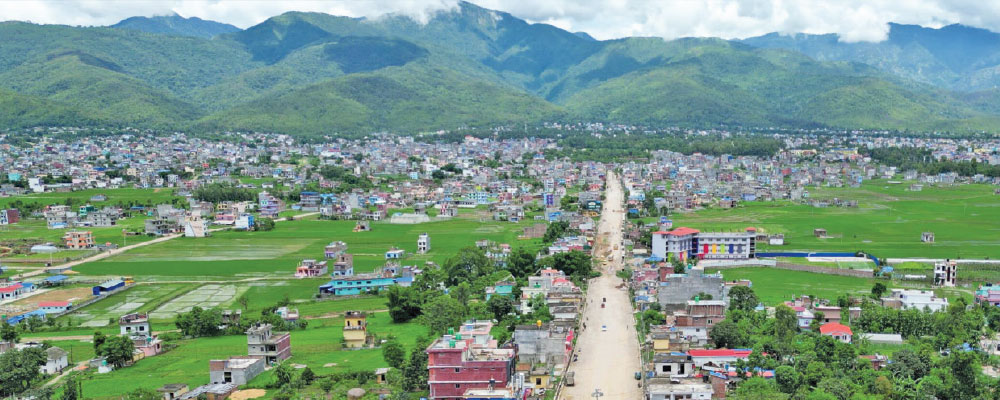
Photo: TRN Birendranagar area, the capital of Karnali Province in Surkhet.

BY LALIT BASEL, Surkhet, May 29: As Nepal marks the 19th anniversary of the establishment of the republic on Jestha 15 (May 29), residents of Karnali Province stated the federal democratic republican system had brought significant social and infrastructural changes, although many challenges still remain.
For decades, Karnali, one of Nepal’s most remote and underdeveloped regions, lagged far behind the national capital due to geographical isolation, poverty, disease, and illiteracy. The previous political system failed to uplift the region as expected. Following the Maoist armed conflict and the People’s Movement of 2006, Nepal entered a new political era as a federal democratic republic with the vision of self-governance and locally driven development.
Although the republic has not fulfilled all public expectations over the past two decades, residents said Karnali had made notable progress compared to the past.
Top Bahadur Budha, a local of Jumla, said the biggest achievement after the establishment of the republic had been freedom of expression.
“People can now speak openly and fearlessly,” he said, adding that the state had guaranteed citizens the right to express their opinions freely. According to him, employment opportunities and household incomes have also increased in recent years.
Budha stated that positive changes were visible in people’s lifestyles, food habits, communication, and access to healthcare. Roads have now reached most villages in the Himalayan district of Jumla, while health institutions had been established in nearly every settlement.
“With improvements in healthcare services, the average life expectancy in Karnali had increased from around 50 years in the past to nearly 73 years today,” he said. Better nutrition, easier access to treatment, and vaccination services from pregnancy onward have significantly improved public health in the region.
Similarly, Krishna Maya Upadhyaya of Jumla said women’s rights had strengthened considerably after the republic was established. The state has ensured 33 per cent participation for women in various government bodies, while mandatory representation of women and Dalit women at the local level had increased the participation of marginalised communities in policymaking.
“The mandatory inclusion of women has brought women’s voices into the mainstream of the state,” she said.
She also pointed out improvements in maternal and child healthcare. The establishment of birthing centres in villages and the founding of the Karnali Academy of Health Sciences in Jumla have contributed to saving the lives of mothers and newborns.
Residents said the republic has brought positive changes in education, healthcare, women’s rights, transportation, and social inclusion.
People in Humla also believe federalism has made government services more accessible. According to locals, citizens now have easier access to infrastructure development, education, healthcare, and local governance.
Ludki Budha of Tanjakot Rural Municipality-5 said that although the political system had changed and some progress had been made, much more remains to be done.
“Today, we can at least speak openly about what we feel,” she said.
She stressed that all three tiers of government must prioritise the development of remote districts like Humla, which was connected to the national road network only recently. According to her, significant efforts are still needed to improve the living standards of the people.
Dan Bahadur Phadera of Sarkegad Rural Municipality-2 said that the republican system had brought more noticeable improvements to the lives of ordinary citizens. While accessible areas have seen some development, he said remote villages still lag behind.
“There is still a need for programmes that directly uplift the lives of people living in rural areas,” he added. Civil society leader Arjun Bohara said the republic had brought unprecedented improvements in health, education, and infrastructure.
“Health institutions have been established in villages, roads have expanded, and schools now have teachers. These are achievements of the republic,” he said.
Similarly, civil society leader Pitambar Dhakal of Surkhet said the past two decades had seen encouraging growth in infrastructure development in Karnali, though many sectors still require reform.
“To strengthen the republic, many laws envisioned by the Constitution still need to be enacted,” he said, emphasising the need for capable representatives in Parliament.
He also stressed the importance of balanced development between urban and remote regions, strengthening provincial governments, ending political favouritism, and eliminating policy-level corruption.
“Only then can the republic become stronger,” he said.