- Friday, 29 May 2026

Republican Order Enters New Phase
Nepal’s journey to a republican path is marked by twists and turns. The country became a republic following the massive April Uprising that shook the 240-year-old monarchy in 2006. The then king Gyanendra surrendered to the people’s power. The dissolved House of Representatives was restored through a decree of the king himself. And in an ironic fate, the same parliament suspended him from the kingship, and he eventually got his marching orders when, at the first meeting, the Constituent Assembly decided to abolish the monarchy in May 2008.
However, one must not be misled that former king Gyanendra was himself responsible for the demise of the monarchy that was credited with unifying Nepal from scores of small states. His autocratic penchant made him an authoritarian figure. Of course, several factors existed that time, rousing his desire to rule the country with iron hands. The political parties became unpopular as the parties were mired in one corruption scam after another. The security situation had worsened owing to the surging Maoist insurgency. Frequent government changes had thrust the nation into a chronic instability, a reason for the country’s underdevelopment and economic plight.
Old tricks
King Gyanendra thought that he would fix the problem with an old trick. He failed to understand that a true legacy of the Shah Dynasty had come to an end with the royal massacre in which all family members of King Birendra and his many relatives were killed at once. Nepalis wept and rued the murder of the entire family of a popular monarch who wholeheartedly helped transition the Himalayan nation from the party-less Panchayat to the multiparty democracy. The love and respect that King Birendra commanded were not enjoyed by Gyanendra. This is because the people looked askance at his past deeds, as well as some unfounded conspiracy theories related to the tragic royal massacre.
When he imposed a totalitarian regime by imitating his father’s move in 1960, he was just digging the grave of his own dynasty. The unanticipated coup d'état widely backfired instead of earning the support of the disappointed masses. It was true the people were fed up with the activities of parliamentary forces such as Nepali Congress, CPN-UML and Madhesi parties. The Maoist movement had also disrupted the fabric of Nepali society. The people wanted peace over the bellicose movement that had claimed the lives of thousands of people. But the king’s autocratic rule was not an alternative to the multiparty system that became dysfunctional owing to the malfeasance of the political parties.
The king’s regressive step brought the parliamentary parties and the then CPN-Maoist together. Before the rise of the king to the national scene, the Maoists had targeted the NC and UML leaders and workers. Hundreds of their cadres lost their lives to the Maoist violence. Now, the Maoist and parliamentary forces joined hands against the monarchy. They forged a 12-point agreement in New Delhi at the behest of the then Indian regime. This deal energised the anti-king protests that had almost lost its steam. Understanding this political background is essential to grasping the subsequent upheavals that rocked the nation two decades later.
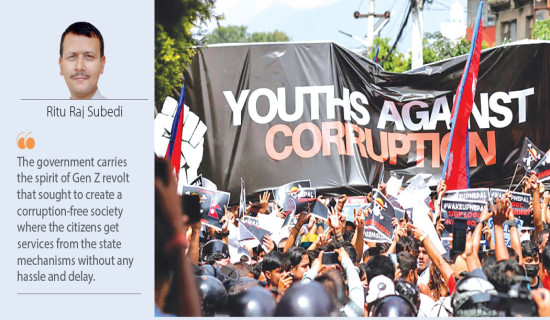
The forces that played their role in establishing the republican system have now been pushed into the corner following the Gen Z revolt. The youth-driven revolution was the direct outcome of the failure of old political parties. In 2015, the country got a new constitution that seeks to ‘build an egalitarian society founded on the proportional, inclusive and participatory principles in order to ensure economic equality, prosperity and social justice'. In the preamble, the national charter aims to ‘fulfil the aspirations for sustainable peace, good governance, development and prosperity through the federal, democratic, republican system of governance'.
The constitution has included at least 31 fundamental rights of citizens, with the three-tier governments working to meet the citizenry’s demands and concerns. However, all constitutional promises have been confined to papers and leaders of different hues indulged in corruption and power-sharing games to fulfil their parochial interests. The country’s active population roughly stands at 65.5 per cent, but the youths have been forced to leave their native soil to explore brighter prospects in a foreign land in the absence of quality education and employment opportunity.
One key factor behind the Gen Z movement that rocked the nation last September was the betrayal of the Republican charter. Widespread corruption weakened governance from top to bottom. The country has been beset with numerous problems related to health, education, and social security, but no successive governments have made the best efforts to solve them. When the then-government imposed a ban on social media, youth protests erupted into the streets. The repression of peaceful rallies left dozens of youth dead, which shook the society to the core.
Good governance
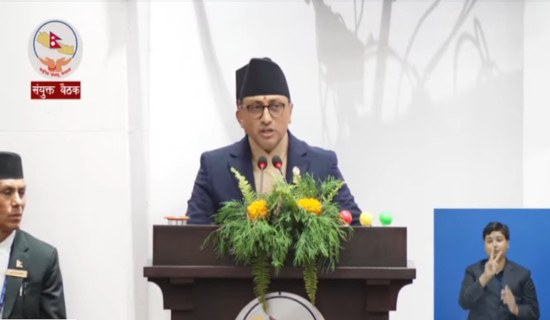
Rastriya Swatantra Party (RSP) swept the elections to the House of Representatives on March 5, 2026, on the plank of good governance, stability and prosperity. Prime Minister Balendra Shah has helmed the government with a huge mandate. There is an impressive presence of youths in both government and the parliament. This amply shows that our republican order has entered a new phase of evolution and refinement.
It is the strength of the republican order that the people picked a new political force to lead the government by punishing the old ones. It is the essence of democracy that the sovereign power is vested in the people, who decide the fate of parties based on their performance in the government. Now, the Balendra Shah-led administration has the onus to implement the republican constitution that has empowered the people with dozens of fundamental rights.
Two months into office, the government has taken a series of bold steps to deliver good governance, end corruption and pursue sweeping reforms in the economy, diplomacy, law, education, health and civil service, among others. This has ignited hope among the masses yearning for change in their daily life.
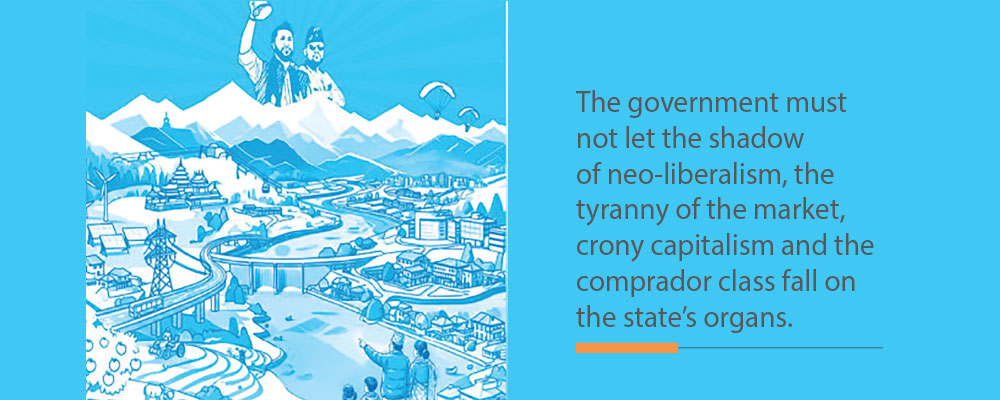
In order to bolster republican order, the government should strengthen public institutions essential for functional democracy and effective service delivery. The people’s right to health, education, jobs, a clean environment and social security must be realised in the spirit of the constitution that has envisioned a welfare state and socialism-oriented economy. The government must not let the shadow of neo-liberalism, the tyranny of the market, crony capitalism and the comprador class fall on the state’s organs. As the government, political parties, civil society and other stakeholders observe Republic Day today, they must reflect on how far they have come and what they should do in the best interest of people and the nation.
(The author is the Managing Editor of this daily.)

(The author is Managing Editor of this daily.)