- Tuesday, 2 June 2026

Nepal’s Long Tryst With Democracy
Nepal’s tryst with democracy is long and enduring. Nepali people have waged several peaceful movements for democracy, human rights, and economic justice over the past 75 years. They have emerged triumphant in every upheaval. Still, their quest for a true democratic form of governance has become elusive. This appears to be a Sisyphean battle; their fighting goes on. Their aspirations for decent living, quality education and gainful employment have never become a reality. As the electoral promises are ditched time and again, the people have no option but to hit the streets against the authoritarian rulers.
Despite repeated betrayals by the leaders they vote for, the people have never stopped trusting in democracy. This is a reason why democracy is renewed and shows resilience through revolts and revolutions. Nepal’s political movements are testimony to this fact. The people’s enthusiastic participation in democratic battles reflects their unflinching faith in the revival of democratic spirit and values. Yuval Noah Harari rightly says, "Democracy thrives on trust. Dictatorships thrive on fear. When trust erodes – when people no longer believe in elections, institutions, or truth itself – democracy collapses."
Unremitting trust
However, Nepali people have never allowed democracy to collapse because they believe that it is only in democracy that their yearning for dignity, happiness and affluence can be realised. With their unremitting trust, Nepal’s democracy has come out of every crisis. Our democratic journey started in 1951, when the Rana Oligarchy surrendered to the popular will. The 104-year Rana rule reminded us of the Dark Age – the Early Middle Ages that Europe passed through from the 5th to the 10th century. People were reeling from abject poverty, ignorance, scarcity, and inequality. The Rana period was a purely feudal phase of development.
The precarious condition of the people was seen in human development indicators. The country’s literacy rate stood at 2 per cent to 5 per cent, while the life expectancy was around 37 years. Over 85 per cent of people rely on primitive farming. Living under the repressive atmosphere, the people fear speaking even within the four walls. Even in such a hostile situation, the people participated in the democratic insurrection against a brutal, monolithic regime. It was the first time Nepalis showed their huge trust in the democracy through bold political action. Scores of people sacrificed their lives at the altar of revolution.
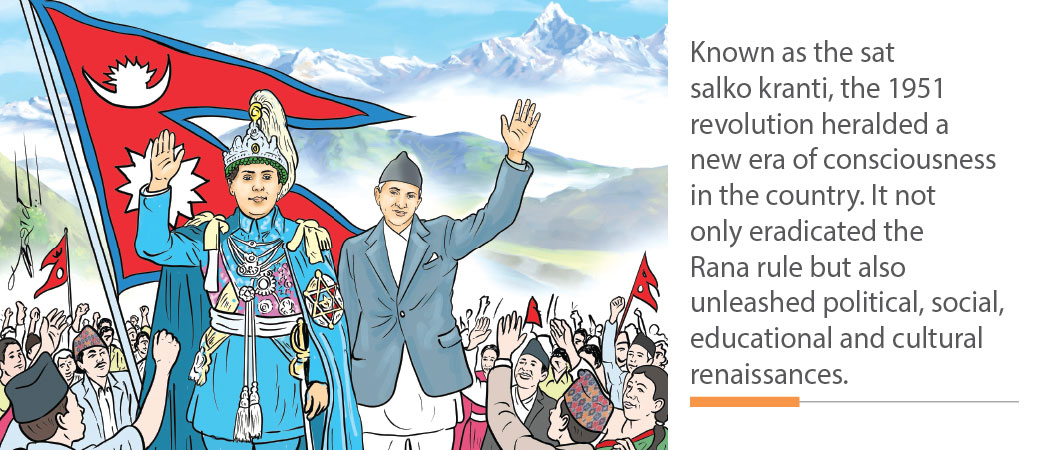
It sowed the seed of democracy and inspired the subsequent upheavals carried with the hope of transformative changes. Known as the sat salko kranti, the 1951 revolution heralded a new era of consciousness in the country. It not only eradicated the Rana rule but also unleashed political, social, educational and cultural renaissances. Democracy proved a boon for Nepali literature, art and journalism to thrive. Though it was a short-lived democratic experiment, it took the country on the path of civility and modernisation. The people exercised their rights to choose their own representatives who govern the nation on the basis of popular mandate.
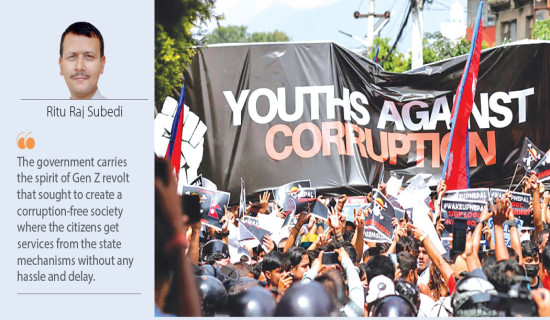
While remembering the historic significance of the 1951 revolution, we must not forget other movements that took place in different periods of the nation’s history. The 1990 and 2006 democratic movements played an equal role in the political metamorphosis of Nepali society. The Gen Z revolt in September last year also went down in history as an unprecedented political protest that must have given a reality check to the traditional parties responsible for misrule, corruption and entrenched political syndicates. Occurring outside the traditional ideological box, the youth uprising laid bare the inefficiency and malfeasance of old parties that continue to stick to power by cashing in on their role in the past democratic movements.
Nepali democracy has suffered a setback due to the gap between the constitutional provisions and their implementation. The 1990 constitution has envisioned an egalitarian society, but the adoption of neo-liberal economic policies hindered the overcoming of the structural challenges of democracy. The political leadership is never tired of making tall promises, but they hardly dare to translate them into action. Their obsession with power, post and money hollowed out our political system, established with enormous struggles and sacrifices.
The 2015 constitution is a comprehensive document enshrining at least 31 fundamental rights of the citizens. But the Gen Z movement demonstrated that by merely inserting the oodles of rosy provisions in the national charter, the people’s necessities are not fulfilled. It requires bold vision and political action. Those provisions must be implemented to bring drastic change to the lives of ordinary people.
True democracy
Karl Marx says democracy is the road to socialism. In a true democracy, according to him, the working class is empowered to root out the socio-economic inequalities. Nepal’s constitution has envisaged a socialism-oriented economy that creates the basis to evolve a genuine democracy that is not controlled by a handful of elites. Nepal has witnessed enough movements and constitutions. Now we must put a stop to this series of suffering and destruction. It is time to build an inclusive and democratic society where no one is compelled to take violent recourse to meet their demands.
Democracy becomes functional and sustainable only if the leadership shows integrity, sincerity and conviction. Democracy Day is a moment of reflection and introspection. Today, we should pay tribute to the martyrs not merely through words but through credible action. The political leadership of all hues and shades must pledge to embrace the democratic ideals and constitutional values. The political actors must keep in mind that the democracy and freedom we are enjoying today became possible because of the struggles and sacrifices of countless people
(The author is Deputy Executive Editor of this daily.)

(The author is Managing Editor of this daily.)