- Wednesday, 27 May 2026

Jute mills hit by raw material crunch
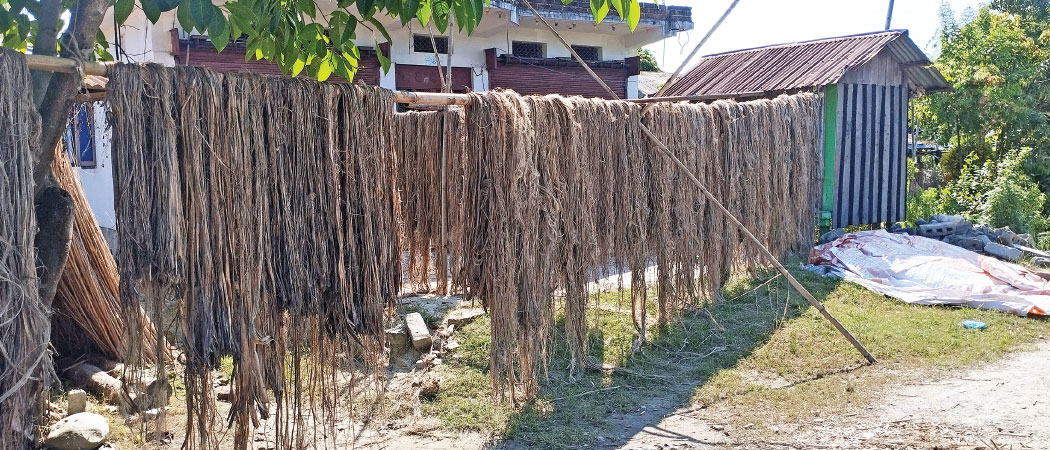

By Our Correspondent,Biratnagar, Mar. 12: Jute mills, which have long symbolised the industrial identity of eastern Nepal, are currently facing a serious crisis.
Following a significant decline in the import of raw jute from Bangladesh and India, jute mills in the Sunsari–Morang Industrial Corridor have reduced their production capacity by 60 per cent. With the reduction in production, nearly 3,000 workers employed in the sector have lost their jobs.
According to Raj Kumar Golchha, President of the Nepal Jute Entrepreneurs Association, the situation has arisen because industries are unable to operate at full capacity due to a shortage of raw materials.
At present, four jute mills are in operation in the corridor, with a combined production capacity of 240 tonnes a day. However, the lack of raw materials has pushed the production down to around 100 tonnes per day.
“At present we are producing only 40 per cent of our capacity. Bangladesh has reduced jute sales since September, while India has halted exports because its own industries are facing shortages. We have managed to keep the industries running by importing small quantities of raw materials,” said Golchha.
The direct impact of the production cuts has directly affected the workers.
Previously, around 10,000 people were directly employed in jute industries, but more than 3,000 workers have already lost their jobs. Industrialists warn that further workforce reductions may be unavoidable if the supply of raw jute does not improve.
According to industrialist Ramesh Kumar Rathi, industries currently have raw material stock sufficient for only 10 days to a maximum of one month.
Production decline in India Bangladesh
Data from the past three years show that production has declined in both India and Bangladesh, countries on which Nepal depends for raw materials. Jute production in Bangladesh has fallen by nearly 7 per cent due to unfavourable weather conditions which has directly affected Nepali jute industries.
According to Bangladeshi statistics, jute production declined from 1.51 million tonnes in the fiscal year 2022/23 to 1.44 million tonnes in 2024–25. Excessive heat during April–May last year and flooding in July significantly affected jute production. In addition, the area under jute cultivation has been shrinking as farmers shift to other crops.
Similarly, jute production has also declined in India. According to data from the Indian Ministry of Agriculture, production fell from 1.831 million tonnes in FY 2021/22 to 1.531 million tonnes in 2024/25.
Around 80 per cent of India’s jute is produced in West Bengal, where farmers have increasingly prioritised crops such as mustard and maize over jute cultivation.
Jute cultivation in Nepal has also been declining continuously, leading to a steady fall in domestic production. In addition, climate change and crop diversification have further reduced output, causing jute-based industries to weaken significantly. This situation has also led to the loss of employment opportunities.
Currently, most industries have reduced operations from three shifts to two, while some are managing by running only the basic machines of their production plants. Industrialists said they are uncertain about the future, as the government has not undertaken diplomatic initiatives to ensure a smooth supply of raw materials.

-square-thumb.jpg)