- Wednesday, 27 May 2026

Endangered red-headed vultures sighted in Bardiya
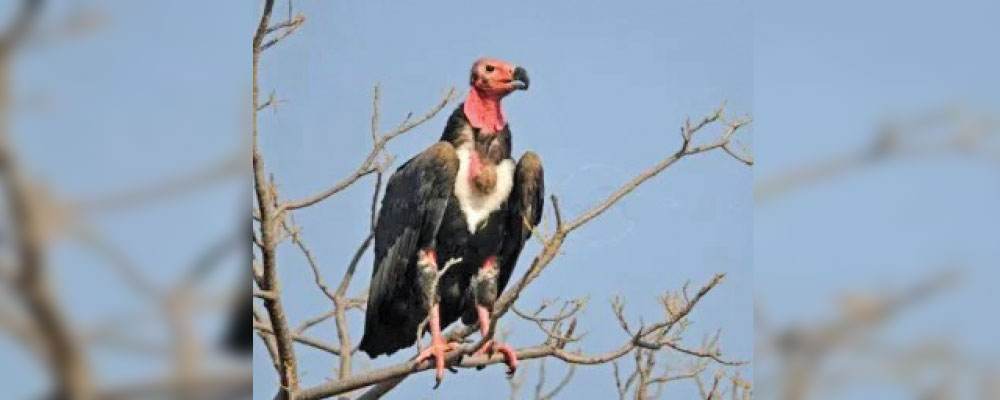

By Yagya Prasad Sapkota, Gulariya (Bardiya), May 27: Conservationists have expressed happiness after a flock of endangered red-headed vultures, locally known as Dangaar Giddha, were spotted in the Krishnasar Conservation Area.
The endangered birds, one of the nine vulture species found in Nepal, were recently seen inside the conservation area after having largely disappeared from the region in recent years.
About 15 years ago, vulture nests could still be found in the conservation area, but sightings had gradually declined and the birds were believed to have vanished from the area. However, a flock of around 12 red-headed vultures has now been regularly seen there over the past week.
Known as nature’s scavengers, vultures play an important role in maintaining ecological balance. The birds have been visiting nearby cowsheds and surrounding areas in search of food.
According to Ramu KC, information officer at the Krishnasar Conservation Area, around 12 red-headed vultures have been recorded in the area. Although no nests have yet been found, he said the birds appear to have started staying there more permanently in recent days.
“We hope they may eventually begin nesting here,” he said, adding that the protected status of the conservation area ensures the birds are not disturbed. “There is hope they may settle here permanently.”
Ram Bahadur Shahi, member secretary of the Nepal Vulture Conservation Campaign, said vultures have occasionally visited Bardiya in recent years in search of food, but they have neither nested nor bred there.
He said no nests had been recorded in the conservation area for nearly one and a half decades and vulture sightings had become increasingly rare. He described the recent sighting of the flock as encouraging and said the tall silk cotton trees and peaceful environment inside the conservation area could provide suitable nesting conditions.
Although vulture nests were found in Bardiya about a decade ago, no permanent nesting or breeding sites have been identified in recent years. Shahi said there had been plans to establish a “vulture restaurant” near any confirmed nesting site to support conservation efforts, but the idea could not be implemented due to the absence of a permanent habitat.
Bhoj Raj Pant, chief of the Krishnasar Conservation Area, said the return of the endangered vultures was a positive sign. He added that if the birds begin residing permanently in the area, it could open new opportunities for both conservation and tourism.
Despite ongoing conservation efforts, vulture populations in Nepal continue to decline. Nepal is home to nine species of vultures -- White-rumped, Slender-billed, Red-headed, Egyptian, Himalayan, Cinereous, King, Griffon and Long-billed vultures.
Among them, the Red-headed, Egyptian, Griffon and Long-billed vultures are listed as critically endangered, while the White-rumped Vulture is classified as endangered. Himalayan and Cinereous vultures are considered near threatened, whereas the Cinereous Vulture population remains relatively stable.
According to the Nepal Vulture Conservation Campaign, the country is estimated to have around 15,000 vultures in total. The Red-headed Vulture has been listed as critically endangered by the International Union for Conservation of Nature.