- Tuesday, 26 May 2026

Fifth National Social Entrepreneurship Summit concludes

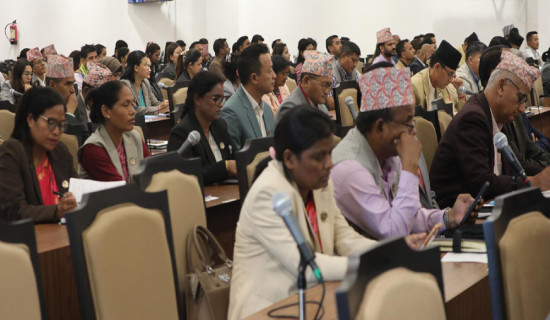
By TRN Online, Kathmandu, May 26:The fifth national social entrepreneurship summit concluded today issuing a nine-point call to action.
The nine-point “Call to Action,” urges the government and stakeholders to create an enabling environment for social enterprises through legal recognition, dedicated financing, policy reforms, and stronger institutional support.
At the closing ceremony, Arjun Bhattarai, President of the NGO Federation of Nepal and Nepal Development Initiative, unveiled the nine-point "Call to Action" on behalf of the summit participants.
The declaration, adopted at the end of the two-day summit held in Kathmandu under the theme “Defining and Bridging Policy Gaps with Ground Reality,” noted that Nepal’s social entrepreneurship sector continues to grow despite lacking a dedicated regulatory framework, targeted financing mechanisms, and institutional recognition. The participants stressed that social enterprises have demonstrated their ability to create employment, empower women and youth, and contribute to the Sustainable Development Goals (SDGs), but continue to face structural and financial barriers.
Among the key recommendations, the summit called for a dedicated legal and regulatory framework that formally defines and recognizes social enterprises, distinguishing them from conventional businesses and cooperatives. It also urged the government to operationalize the National Social Entrepreneurship Fund, encourage commercial banks and microfinance institutions to develop impact-based lending products, and allocate a portion of Corporate Social Responsibility (CSR) funds to support social enterprises.
The declaration further emphasized the need to bridge the gap between policy formulation and implementation by establishing a structured feedback mechanism that allows social entrepreneurs from all seven provinces to directly participate in monitoring and evaluating policies affecting the sector. Participants also highlighted the importance of integrating climate resilience and green enterprise into national development priorities, with support directed toward climate-smart agriculture, renewable energy, waste management, and disaster resilience initiatives.
Recognizing the growing role of technology, the summit called for greater support for digital innovation and artificial intelligence in social enterprises to improve service delivery, reduce operational costs, and expand opportunities in rural and marginalized communities. It also stressed the need for safeguards to ensure digital transformation does not widen existing inequalities.
The participants urged the government to incorporate social entrepreneurship into Nepal’s education system through dedicated curricula, innovation labs, incubation centers, and entrepreneurship competitions. The declaration also called on the private sector to adopt responsible business practices, including Environmental, Social and Governance (ESG) standards and Business and Human Rights (BHR) principles, while strengthening partnerships with social enterprises through supply chains and investment.
To ensure inclusive growth, the summit demanded equitable distribution of support infrastructure, including financing, mentorship networks, digital connectivity, and incubation services across all seven provinces, particularly targeting remote and rural communities. The declaration also called for clear implementation timelines, improved data collection and impact measurement systems, transparent public reporting, and annual multi-stakeholder reviews to track progress and ensure accountability.
Organized by the Nepal Development Initiative (NEDI), the Fifth National Social Entrepreneurship Summit brought together social entrepreneurs, policymakers, investors, development partners, civil society representatives, academics, and youth leaders from across the country. Participants concluded that social entrepreneurship must be recognized as a key driver of inclusive economic growth, job creation, and Nepal’s commitment to achieving the 2030 Sustainable Development Goals.





-square-thumb.jpg)