- Wednesday, 27 May 2026

Monsoon-related disasters kill over 3,000 people in a decade
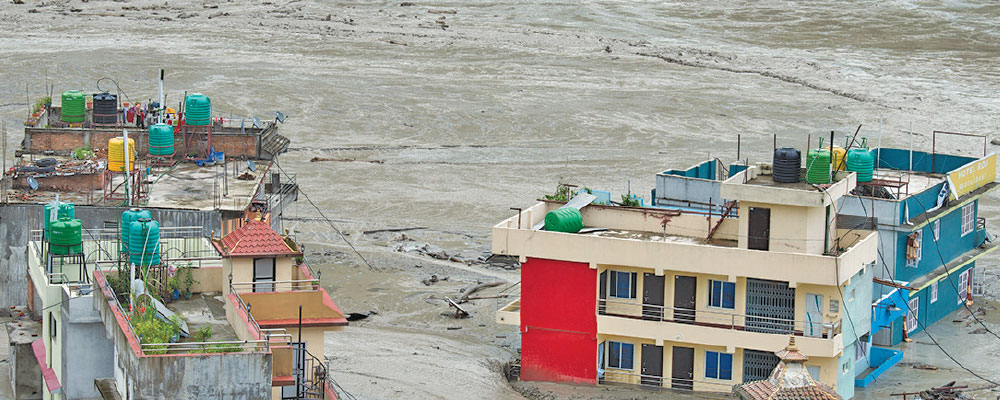
File photo

By A Staff Reporter, Kathmandu, May 27: More than 3,000 individuals have lost their lives in monsoon-induced disasters in Nepal over the past decade.
According to the ‘National Monsoon Preparedness and Response Action Plan-2026’ made public by the National Disaster Risk Reduction and Management Authority (NDRRMA) last week, a total of 3,074 people died between 2016 and 2025 due to floods, landslides, heavy rainfall and lightning incidents.
During the same period, 502 people went missing, 4,769 were injured, and 33,198 households were affected. The Authority states that landslides accounted for the highest number of casualties over the decade. A total of 5,032 landslide incidents were recorded, resulting in 1,483 deaths, 232 missing persons, and 1,347 injuries. In addition, 8,183 households were affected, and 5,973 houses were damaged.
Similarly, 2,358 flood incidents resulted in 678 deaths and 269 missing persons, and affected 23,805 households. Floods also damaged 2,248 houses and 2,378 livestock. Lightning strikes also caused significant loss of life. Over the past 10 years, 3,124 lightning incidents resulted in 805 deaths and 2,883 injuries.
Heavy rainfall-related incidents totaled 2,653, claiming 108 lives, according to the report.
The Authority notes that the nature of monsoon-related disasters has become increasingly complex in recent years. It highlights the severe rainfall between 3 and 6 October 2025, which caused widespread damage across the country. During that period, red alerts were issued in 26 districts across Madhes, Koshi, Bagmati, Gandaki and Lumbini provinces. Following extensive damage in Ilam, the district was declared a disaster-affected zone by the government.
In 2025, parts of Madhes Province also experienced drought conditions due to insufficient rainfall. As water sources dried up and drinking water shortages deepened, the government declared the entire province a disaster-affected area.
The authority further mentioned that during the monsoon period, displaced families affected by floods, landslides and inundation were provided with temporary shelter, food and non-food relief items, healthcare services, and emergency education support. Injured individuals were evacuated by helicopter and ground transport for free treatment. Disrupted roads, electricity, drinking water and communication services were promptly restored through emergency repairs.
The report also warns that monsoon risks are expected to remain high this year. Around 51,868 households, comprising approximately 226,661 people, could be affected in the 2026 monsoon season.
Rising temperatures, flash floods, landslides and the risk of glacial lake outburst floods are expected to intensify hazards. The likelihood of increasing daily temperatures also raises concerns over extreme heat and heatwave conditions in the southern Tarai region.
The forecast suggests that this year’s monsoon conditions will be broadly similar to those experienced in 2014, 2016 and 2022, according to the Authority.