- Friday, 29 May 2026

Government urged to create 'digital profiles' of Nepali workers abroad
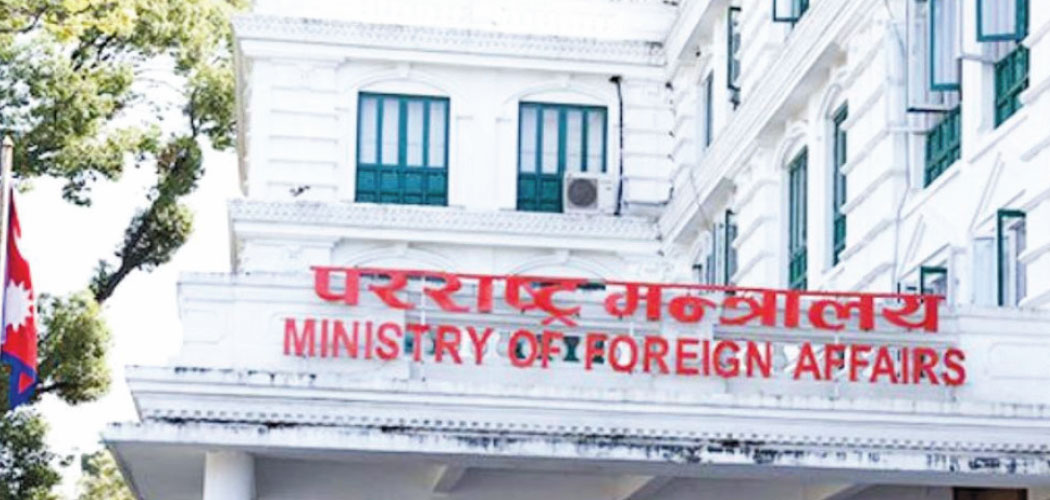

Kathmandu, May 9: The Inter-Ministerial High Level Task Force has suggested the government to immediately create 'digital profiles' and geolocation mapping data of Nepali workers residing in conflict-affected or high-risk areas.
"Analyse risk levels and remain prepared for the ‘safe relocation’ and, where necessary, repatriation of Nepalis from affected areas. Establish 24-hour ‘emergency hotlines' and dedicated help desks at relevant Nepali embassies," the Task Force suggested in its report submitted to the government.
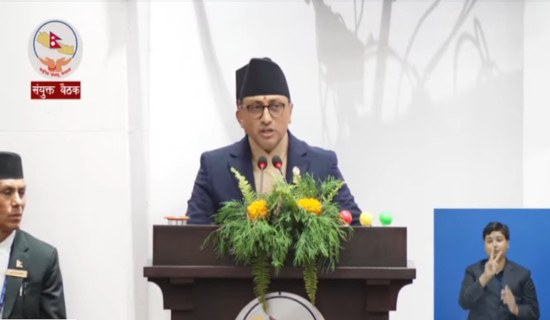
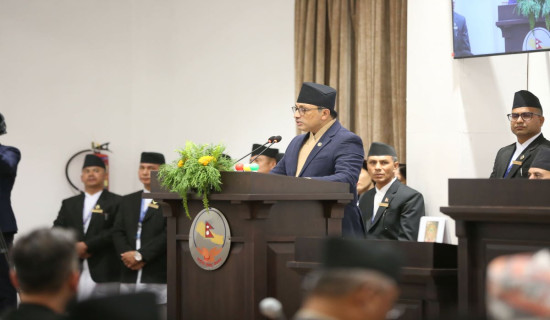
The government had formed the Task Force as per its 100-day agenda on governance reforms, on March 31 under the coordination of Foreign Minister Shisir Khanal. It had 10 members including secretaries from the ministries of Foreign Affairs, Labour, Finance, Industry, Energy and Tourism.
Its mandate was to study the impact of international and regional crises, especially in the West Asian nations, on Nepali migrant workers and economy and to prepare necessary policy and strategy to address the existing and emerging challenges.
The 100-day agenda on governance reform of the government required to form such task force.
Earlier, the government had also formed an Emergency Response Team on March 3, led by Foreign Secretary Amrit Bahadur Rai, to respond to the immediate needs of the Nepali workers in crisis.
According to the MoFA, there are 1.72 million Nepali migrant workers in 13 countries in the region whose safety has troubled the government here.
Nepalis in Iran, Israel, Egypt, Oman, Qatar, Kuwait, Jordan, Bahrain, Saudi Arabia, the United Arab Emirates (UAE), Lebanon, Iraq and Cyprus were or likely to be affected by the Israel-Iran war that has affected about half a dozen countries in West Asia. Cyprus is a European country while Egypt is in northern Africa.
The largest number of Nepalis are in the UAE with a presence of 478,144, followed by Saudi Arabia at 383,865, Qatar at 357,000, Kuwait at 175,000, and Iraq at 30,000. There are only six Nepali citizens in Iran and 500 in Egypt.
Two months ago, the MoFA said that the government was facing confusion in absence of established mechanism for rescue and repatriation of Nepalis from West Asia.
Meanwhile, the tension at the Strait of Hormuz has pushed the price of petroleum products rapidly up which also triggered the increase in transportation.
Short- and long-term policy suggestions
The summary of the report was made public by the Ministry of Foreign Affairs (MoFA) at a press briefing on Friday. It recommended the government to define short-term actions within 3–6 months, medium-term actions within 6 months to 2 years, and long-term actions within 2–5 years for better management of foreign employment.
According to the Task Force, the government should conduct skill mapping of the returnee migrants and launch skill-employment matching programmes to absorb returning skilled manpower into domestic industries. Skills acquired abroad should undergo immediate fast-track testing and certification through the National Skill Testing Board, read the report.
The report also suggested to operate programmes such as ‘cash-for-work’ to address immediate livelihood crises, and to provide entrepreneurship training and seed capital or machinery grants for those wishing to become self-employed.
Ram Kaji Khadka, Joint Secretary and Head of the Central Asia, West Asia and Africa Division at the MoFA, said that the current crisis in the region had increased the security concerns, expenses of Nepali workers as well as tourists while foreign investment and number of tourists has gone down significantly affecting the local and national economy.
"This could result in Nepali migrant workers' psychological wellbeing as well as economic pressures back home. Many families could fall into a debt trap if the crisis sustained and Nepali workers are forced to return home," he said.
Creating reintegration fund at local level
As the medium-term policy, the Task Force maintained that the local level must mandatorily arrange a 'reintegration fund' in their annual plans. The government should run programmes to provide concessional loans without collateral to returnee workers to start business, support seed money to establish small and medium enterprises (SMEs) and startups based on innovative ideas.
Similarly, providing high-level vocational training to returnee workers according to the current demand sectors such as tourism, IT and construction, encouraging commercial farming, and establishing mentorship and networks for aspiring entrepreneurs are also suggested.
Other policy proposals are mobilising cooperatives to pool the small capital of returnee workers and operating collective investment projects, arranging local branding, constructing returnee market hub in local bodies, and launching digital skill bank to facilitate direct contact between workers and employers.
Substituting petroleum products a priority
It is important to ensure at least three months’ supply by fully utilising the strategic storage capacity for petroleum products and raw materials. The Task Force suggested strengthening the ‘Price Stabilisation Fund’ while also implementing a policy of blending ethanol into petrol to reduce dependence on imported fuel, immediately. Promotion of electric vehicles, and work from home policy could also be the options.
Promoting the use of electric stoves, reducing reliance on the LPG, increasing domestic electricity consumption, and introducing emergency concessional tariffs during cooking hours are also recommended. Other suggestions include coordinating with airlines to keep airfares affordable, providing emergency tax relief on aviation turbine fuel (ATF), and providing 100 per cent waiver on landing and parking fees for new airlines operating the international airports in Bhairahawa and Pokhara.
"Strongly communicate through international media that Nepal is safe and open. Introduce special concessions and destination packages for domestic tourists. Further simplify the online visa system," it said.
In the medium term, the Task Force recommended to diversify the energy sources, reduce subsidies on LPG, enhance cross-border trade of electricity, provide concessional loans to convert coal or petroleum based industrial furnace and boilers to electric systems and establish battery swapping stations and large charging hubs.
Envoys to be appointed via regular system
Meanwhile, Spokesperson of MoFA, Lok Bahadur Poudel Chhetri said that appointing ambassadors through competitive approach is not the policy of the government. "The information being circulated on social media is not true," he said, while adding that the MoFA is going to follow the established and regular process to appoint the envoys.
He reiterated that the government is trying to resolve the 'Lipulek Issue' through dialogue with India and China on the basis of historical evidences.
-original-thumb.jpg)