- Saturday, 23 May 2026

Nepal initiates for LDC graduation deferral

Kathmandu, May 23: Nepal has initiated the formal process to temporarily postpone its scheduled graduation from Least Developed Country (LDC) status to a 'developing nation'.
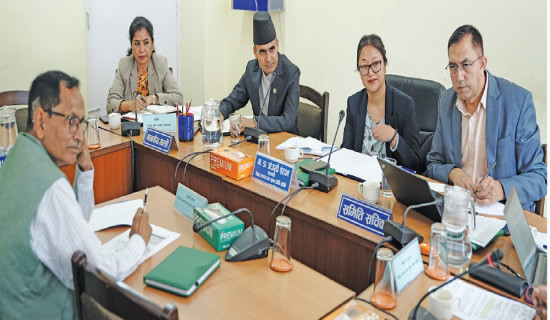
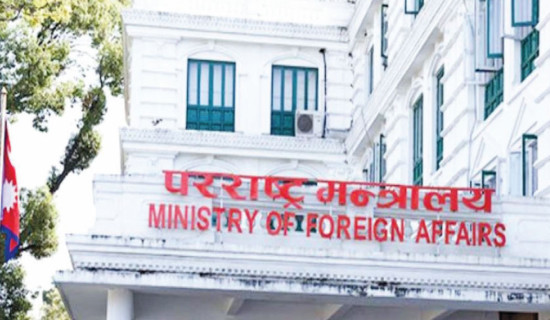
Minister for Foreign Affairs Shisir Khanal has written to the Chair of the United Nations' Committee for Development Policy (CDP) on May 13, requesting a deferral of the country's graduation until November 2029.
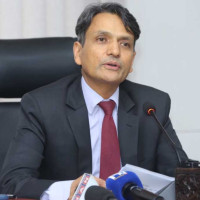
"The government has decided to seek the deferral, taking into account recent national and internal economic and political circumstances," Spokesperson of the Ministry of Foreign Affairs (MoFA) Lok Bahadur Paudel Kshetri informed at a press briefing on Friday.
According to the MoFA, Minister Khanal has cited five reasons to justify his request for the delayed graduation: the impact of regional conflict on the economy, risks of losing favoured treatment at international markets, slow transition preparation, prolonged impact of the COVID-19 pandemic and risk of remittance decline.
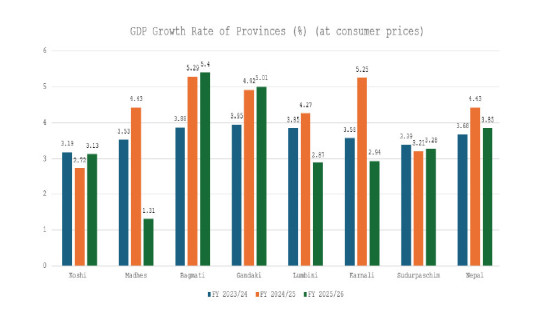
"The Nepali economy has been adversely affected due to regional conflicts, disruptions in global supply chains, and the impact on remittance inflows," said the MoFA, while citing the poor economic growth prospects of just 2.3 per cent in 2026 as projected by the World Bank.
Following graduation from LDC to developing country status, Nepal risks losing benefits such as duty-free and quota-free (DFQF) market access. It is estimated that this could lead to a decline of up to 35 per cent in employment within the productive sector.
The private sector has also long been asking the government for the deferral. Its voice for graduation postponement became louder following the destruction of the private properties during the Gen Z movement last year.
The Federation of Nepalese Chambers of Commerce and Industry and Confederation of Nepalese Industries had long maintained that the country should seek deferral for at least three years and implement a robust transition strategy to reduce the cost of industrial production, enhance the infrastructure and ensure access to the major international markets.
The MoFA acknowledged that for various reasons, the implementation of Nepal’s Smooth Transition Strategy (STS) has been slower than anticipated. "While the recovery from the COVID-19 pandemic has yet to fully stabilise, geopolitical tensions and the effects of climate change have created additional challenges for it," it said.
Likewise, recent developments in the Middle East have affected remittances, which form the backbone of Nepal’s foreign currency reserves. In addition, rising fuel, food and fertiliser prices have impacted the tourism industry and the wider national economy, which is likely to impact more jobs at home and abroad.
Graduation in one and a half decades
Although Nepal first met the criteria for the graduation from the LDC status in 2015 during the review of the United Nations, the country decided not to graduate due to the devastating Gorkha Earthquake the same year and its implications on the economy and infrastructure.
In 2018, the Committee for Development Policy of the UN formally recommended Nepal for graduation and the country was to graduate in 2021. But the country requested for a deferral amidst the ravaging COVID-19 pandemic and its pressure on tourism, foreign and domestic employment, and remittance. The country got an additional five years and was slated to graduate to a developing country status in November 2026.
According to the experts on LDC graduation, Bangladesh's deferral following the movement a couple of years ago was a motivator for Nepal's deferral. Bangladesh, Laos and Nepal were slated to graduate together in November. But this time, Laos will witness the progress alone.
Once a country is graduated from the LDC, it will lose the DFQF facility in the markets in the developed countries, options for the concessional loans and grants from the multilateral donors and support in programmes and travels to UN programmes.
However, Nepal has missed the favoured treatment like the DFQF facility provided by the USA and the European Union. The country failed to produce enough goods to export to those markets, and only a small benefit could be attained by the private sector.