- Tuesday, 26 May 2026

Govt to begin refunding depositors of troubled cooperatives


Kathmandu, May 6: The government has announced that it will begin returning the savings of depositors of troubled cooperatives from mid-May (the first week of Jestha in the Nepali calendar).
The Problematic Cooperative Management Committee, which started work on April 22, has collected the necessary details of cooperatives and depositors and is preparing to refund the savings, the Ministry of Land Management, Cooperatives and Poverty Alleviation informed.
According to the committee, around Rs. 46 billion must be returned to approximately 76,000 depositors of these troubled cooperatives.
Most of them are small depositors. Those with savings of less than Rs. 500,000 are classified as small depositors, while those with more than Rs. 500,000 are considered large depositors. Out of the total 76,000, only about 18,000 depositors have savings exceeding Rs. 500,000.
Minister for Land Management, Cooperatives and Poverty Alleviation, Pratibha Rawal, said that much of the preparatory work for the refunds has already been completed and the process will now begin.
“We have already completed a great deal of work. We will prioritise returning funds to small depositors first,” she said. The committee has also stated that it will adopt a policy of initiating the refund process while giving priority to loan recovery.
As per the Procedures for the Establishment and Operation of the Revolving Fund for Refund of Savings to Members of Problematic Cooperatives 2083, the committee, by its own decision, may give priority to small depositors. Among depositors, priority will be given to single women, senior citizens over the age of sixty, Dalit and indigenous nationality communities, and persons with disabilities.
The committee further announced that the refund process for claim-submitting depositors will begin from the first week of Jestha, while a second window for claims by those who missed the initial process will open in the third week of May.
It also stated that funds allocated by the government to the revolving fund will be used only as loans if the committee’s own fund proves insufficient.
According to the Procedures, the revolving fund will be created with the fund received from the government, reimbursement sums returned by the relevant cooperative society, and sums received from other sources.
Money recovered from the auction of assets belonging to directors, audit committees, managers, loan sub-committees, and individuals with authority or responsibility who were involved in the embezzlement or misappropriation of the institution’s assets, savings, loans, or shares, as well as any other sums recovered from such persons will also be deposited into the fund.
"If the sale of assets proves insufficient to refund the depositors, the Committee may also freeze and auction assets that have been transferred or invested in companies by family members of the individuals involved, whether such transfers occurred through property partition, divorce, or any other means," according to the Procedures.
Committee Member-Secretary Rabin Dhakal said that strict legal measures will be adopted for loan recovery.
Managers, directors are last to be refunded
The refunding of savings will be made on the basis of the records, details received from the cooperative, or the balance amounts shown in the computer system up to the day preceding the date on which the cooperative institution was declared problematic.
However, depositors who have taken loans from the cooperatives will get a refund after they have fully repaid the loans, reads the Procedures.
Similarly, the savings of directors and managers of the relevant institution, savings of members of their immediate family, and individuals involved in embezzlement or misappropriation shall not be refunded until the liabilities of depositors who have submitted claims have been settled.
If the claim for refund of savings is sub-judice in court, the process to refund the savings will not be started until the case is settled.
However, if a depositor has savings in multiple federal-level problematic cooperative organisations, he/she will get a refund only from one such institution.
If funds are insufficient, the Committee is likely to distribute the remaining funds in the account on a pro-rata basis.
In the event of a depositor's death or if they cannot be located, the savings will be refunded to their legal heir based on evidence provided.
Sick pillar of economy
Although cooperative is mentioned in the constitution as one of the pillars of the national economy, it remained unregulated and unsupervised sector for the last seven decades. Mismanagement and fund embezzlement in large and high-profile cooperatives were exposed in the last one decade.
The government began to declare cooperatives as 'problematic' since 2018. In 2024, a parliamentary probe found that about Rs. 87.89 billion was misappropriated in at least 40 cooperatives.
They also had faked their audit reports and fabricated property divisions.
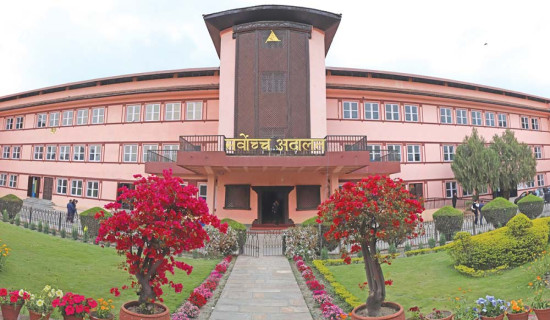
In January this year, the Supreme Court ordered the government to return funds to small depositors – those with less than Rs. 500,000.
On April 22, the government issued the Procedures to operate the revolving fund. With President Ramchandra Paudel ratifying the Cooperative (First Amendment Ordinance) last week, the government can now use public funds for immediate repayment to victims.