- Friday, 22 May 2026

West Asia conflict disrupts fertiliser supply

Kathmandu, May 22: The government has said the ongoing conflict in West Asia has disrupted the timely delivery of 185,000 tonnes of chemical fertiliser already under contract, raising concerns over supply management during the approaching monsoon paddy planting season.
In a public notice, the Ministry of Agriculture, Forests and Environment said that government has remained committed to implementing its policy of providing subsidised chemical fertiliser to farmers and has been making continuous efforts to ensure smooth and systematic supply and distribution across the country.
Despite these efforts, the prolonged conflict in West Asia has prevented the delivery of nearly 185,000 tonnes of fertiliser already contracted for import.
However, with demand expected to rise sharply during the upcoming paddy cultivation season, the ministry said efforts are being intensified to secure timely supplies.
Dr. Ram Krishna Shrestha, Joint Secretary at the Ministry of Agriculture, Forests and Environment, said that the ministry has already begun working on alternative measures to manage supply shortages and maintain fertiliser availability for farmers during the crucial agricultural season.
“There will not be any problem in the supply of chemical fertilisers by mid-July 2026,” he said, adding that the ministry is working to import additional quantities of fertilisers before that date to prevent further shortages.
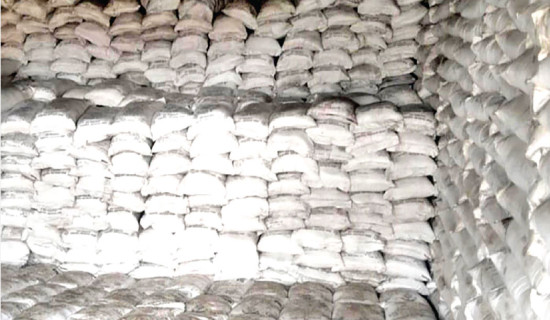
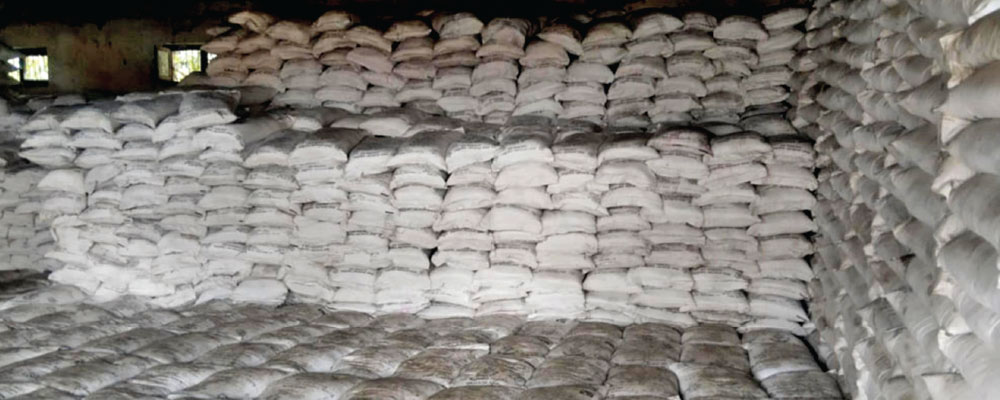
"Around 145,000 tonnes of chemical fertilisers is in stock with the Agriculture Inputs Company Limited and Salt Trading Corporation currently. This quantity is expected to meet the demand until mid-July 2026,” he said.He said between 500 tonnes and 2,500 tonnes of fertiliser is being distributed daily across the country.
Based on the previous year’s demand and supply situation, around 245,000 tonnes of chemical fertiliser is required for the five-month period from mid-May to mid-October, he said.
These statistics show that, based on the current stock and estimated demand, there could be a shortfall of around 100,000 tonnes of chemical fertilisers if no additional fertilisers arrive.
Govt seeks urgent imports through G2G mechanism
To address the situation, the government has initiated the process of importing 50,000 tonnes of fertiliser from India under a government-to-government (G2G) arrangement, including 30,000 tonnes of urea and 20,000 tonnes of diammonium phosphate (DAP).
A Cabinet meeting on May 4 also approved the Agriculture Inputs Company Limited (AICL) to import 80,000 tonnes of chemical fertilisers, comprising 60,000 tonnes of urea and 20,000 tonnes of DAP.
Following the decision, AICL sought price quotations from India’s state-owned Rashtriya Chemicals and Fertilizers Limited.
Dr. Shrestha said the government aims to complete all procedures and bring in the fertilisers within 90 days to avoid shortages during the upcoming agricultural season. He said that it is expected to receive price quotation form Rashtriya Chemicals and Fertilizers Limited within three-four days.
He added that the first phase of imports covering 50,000 tonnes has already begun, while the remaining 30,000 tonnes will be imported after further budget assurance.
Meanwhile, the Ministry of Finance has assured a budget of Rs. 20.27 billion for fertiliser imports for the next fiscal year. Under this arrangement, tenders have already been called for 210,000 tonnes of fertilisers, with agreements signed for 90,000 tonnes so far.
Besides imports through the G2G process, the ministry is also holding discussions with contracted suppliers to ensure timely delivery.
Of the total tendered quantity for the current fiscal year, agreements have already been signed for 94,500 tonnes of fertiliser.According to Dr. Shrestha, supplier companies have indicated that they could deliver around 60,000 tonnes of fertiliser, including 30,000 tonnes each of DAP and urea, shortly after the Strait of Hormuz reopens.
Farmers urged to use compost fertiliser
According to Shrestha, local governments have also been asked to encourage farmers to use compost fertilisers instead of relying fully on chemical fertilisers, not only to reduce the consumption of chemical fertilisers but also to preserve soil quality.
As soil quality has been deteriorating due to the excessive use of chemical fertilisers, it is necessary to use compost fertilisers to protect soil quality, he said.
According to him, the government has been regulating the import, sale, distribution, storage and quality control of chemical fertilisers under the provisions of the Chemical Fertiliser (Control) Order, 2055.
The order allows only those fertilisers meeting prescribed specifications, nutrient composition and quality standards to be imported and sold in the country.
Citing the possibility of black marketing and the sale of substandard fertilisers during shortages, the ministry has urged farmers to purchase fertilisers only from authorised sales centres and depots operated by the Agriculture Inputs Company Limited and Salt Trading Corporation Limited, or from registered importers and dealers.
Farmers have also been advised to verify the source, price and quality of fertilisers before purchase and to report any irregularities to local authorities, district administration offices or agricultural agencies.
The ministry further warned importers and dealers not to import, mix or distribute fertilisers that fail to meet official specifications, and not to sell products with misleading labels or false information.
The ministry said legal action would be taken against anyone found violating the Chemical Fertiliser (Control) Order and prevailing laws.







-original-thumb.jpg)