- Saturday, 30 May 2026

Price surge drives record cardamom exports
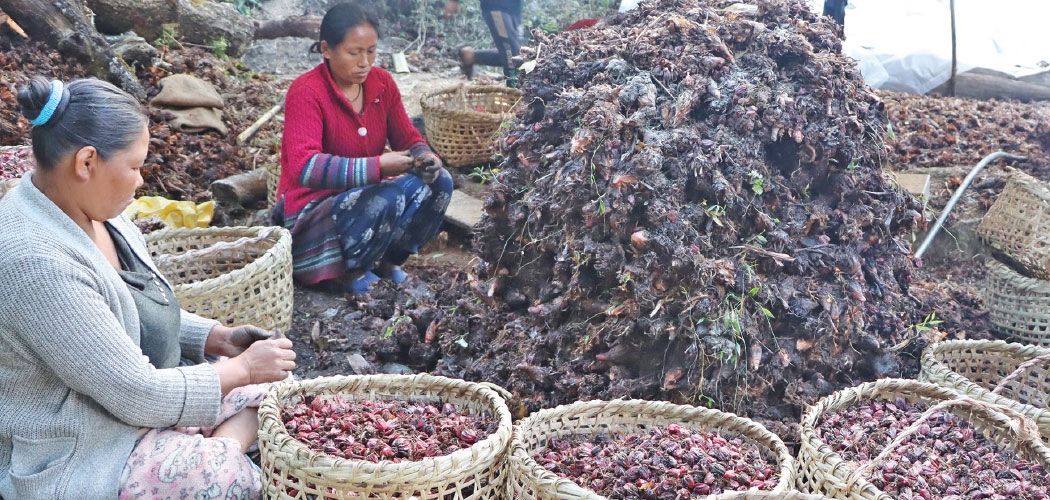

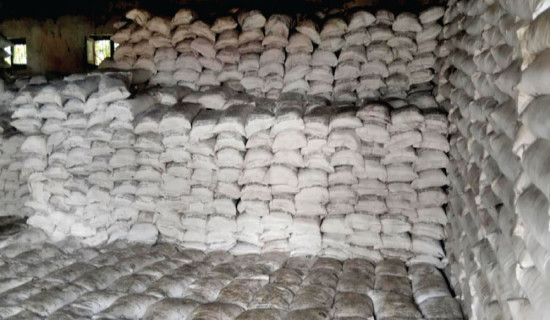
Kathmandu, May 10: Earnings from the export of large cardamom, one of the country’s major export commodities, have reached a historic high so far, thanks to a significant rise in its price.
According to statistics from the Department of Customs, cardamom worth Rs. 10.70 billion was exported during the first nine months (mid-July 2025 to mid-April 2026) of the current fiscal year.
This is the highest-ever export recorded in the country. In terms of quantity, about 5,293 tonnes of cardamom was exported during the first nine months of the current fiscal year.
The statistics show that cardamom exports, in terms of value, surged by almost 71 per cent during the review period compared to the same period last fiscal year. Cardamom worth Rs. 6.26 billion was exported during the first nine months of fiscal year 2024/25.
Growth was also reflected in export volume. Nepal exported 5,293 tonnes of cardamom during the review period, up from 3,444 tonnes in the corresponding period last year. Cardamom exports had reached an all-time high of around Rs. 8.27 billion during fiscal year 2022/23, when about 9,990 tonnes were exported. This record was broken this year.
However, exports declined to Rs. 7.94 billion in FY 2023/24 and further to Rs. 7.68 billion in FY 2024/25. Exports were limited to Rs. 4.81 billion when about 5,367 tonnes of cardamom were exported.
The country has earned a historic income from cardamom exports in the nine months of the current fiscal year, which is positive for the nation, said Deepak Nepal, President of the Federation of Large Cardamom Entrepreneurs of Nepal. “The earnings from cardamom exports have been driven by price fluctuations, as cardamom prices have varied over the past couple of years,” he said.
According to him, the country has achieved historic income from cardamom exports, breaking the previous record despite a decline in export quantity. He added that this was due to a surge in prices. President Nepal attributed the current surge in exports mainly to a significant rise in prices at the beginning of the season.
“Farmers were able to sell cardamom at prices ranging from Rs. 2,250 to Rs. 2,500 per kg from the start of the season in August. During the peak production season in November/December, prices even reached Rs. 2,700 per kg,” he said. According to him, this is the highest price farmers have received in the past ten years. The all-time record price, however, was set in 2010, when cardamom fetched as much as Rs. 120,000 per man (Rs. 3,000 per kg).
He expressed hope that cardamom exports will reach around Rs. 12 billion this year, as farmers and traders are encouraged to sell their stock due to price hikes. Price fluctuations in the domestic market largely depend on production levels in these three countries - Nepal, India, and Bhutan.
The stock of cardamom was sold out last year due to price increment compared to the previous years, he said. Normally, farmers and traders used to keep stock of cardamom themselves when the prices fell and sold when prices rose. "I think that there will be no stock of cardamom with farmers and traders this year as they receive good price," he said.
Production up by 25%
In addition to higher prices, production has also increased this year. “We estimate cardamom production in Nepal has increased by 20 per cent compared to last year,” said Nirmal Bhattarai, former president of Federation of Large Cardamom Entrepreneurs of Nepal.
The country is expected to produce around 6,500 tonnes cardamom this year, up from 5,200 tonnes last year. He further said that the production of cardamom is expected to increase by 20-25 per cent in the upcoming production season as compared to last production season. Most of Nepal’s cardamom is exported to India, making domestic prices heavily dependent on the Indian market.
Nepal remains the world’s largest producer of large cardamom, accounting for 55 per cent of global production, followed by India with 35 per cent and Bhutan with 10 per cent. India is also the largest consumer, accounting for more than 83 per cent of global consumption.
The large cardamom is grown predominantly in Eastern Nepal where four districts -- Taplejung, Sankhuwasabha, Panchthar and Ilam -- account for more than 80 per cent of national production.
Taplejung district occupies the first position in producing cardamom while Sankhuwasabha is the second highest producer. Taplejung holds 44 per cent and Sankhuwasabha 22 per cent of the country’s total cardamom production.
Cardamom is cultivated in a total of 52 districts, where around 20,000 hectares of land is under cultivation, he said. Out of this, production has started from 18,000 hectares of land.
Nepal, however, said that the production of cardamom did not increase in line with the expansion of the farming areas because of various diseases and lack of availability of agricultural inputs required for cardamom cultivation.
He said that the farmers are encouraged to be involved in cardamom farming as this crop gives better return than other cash crops and helps uplift the living standard of the villagers.









-original-thumb.jpg)