- Sunday, 31 May 2026

Nepal enters early de-industrialisation
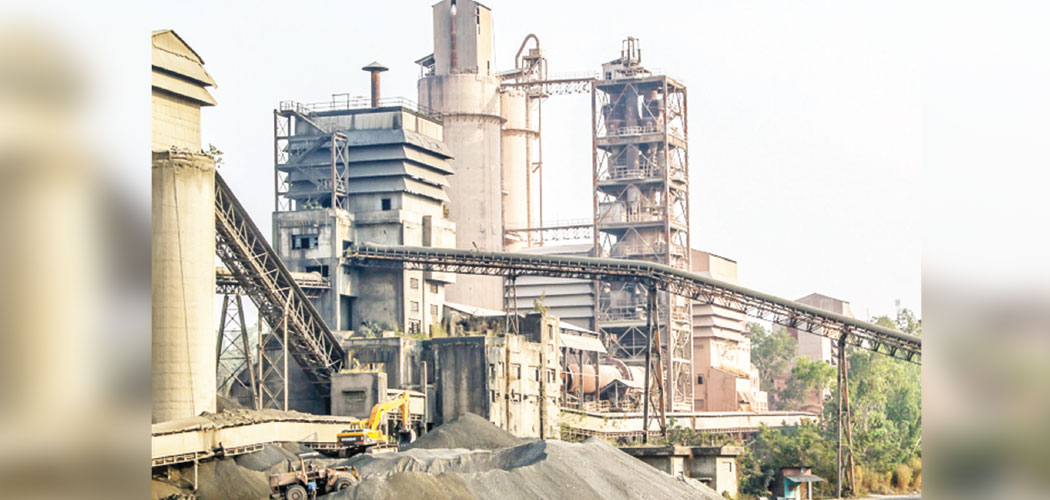

Kathmandu, May 11: Nepal's economy is increasingly shifting toward a service-driven structure without industrialisation emerging from agriculture, resulting in premature de-industrialisation.
According to the recently published 'Nepal’s Current Economic Situation Paper', by the Ministry of Finance, the contribution of agriculture and industry to the national economy has steadily declined over the past decade, while the service sector has continued to dominate.
In fiscal year 2015/16, agriculture contributed 28.4 per cent to the Gross Domestic Product (GDP), but its share declined to 25.2 per cent in 2024/25. During the same period, the industrial sector’s contribution dropped from 14.1 per cent to 12.8 per cent.
Meanwhile, the service sector expanded significantly, increasing its contribution to GDP from 57.5 per cent in 2015/16 to 62 per cent in 2024/25. The Finance Ministry stressed that Nepal now requires a structural transformation focused on increasing productivity and income generation.
Over the past decade, the country's annual average economic growth has remained modest at 4.2 per cent, with sharp fluctuations ranging from a contraction of 2.4 per cent to expansion of 9 per cent. Although the economy expanded by 4.61 per cent in fiscal year 2024/25, growth is projected to slow to 3.5 per cent in 2025/26, significantly below the pace of neighboruing South Asian economies.
Agricultural growth only 3% annually
The report noted that Nepal’s economy still heavily depends on traditional agriculture. The agriculture sector, which is the primary occupation of 62 per cent of the total population, contributes 25.2 per cent to the Gross Domestic Product.
Agricultural growth averaged only 3 per cent annually over the last decade. Crop productivity also remains lower than the South Asian average. Paddy productivity stands at 4.19 tonnes per hectare, wheat at 3 tonnes, and maize at 3.46 tonnes per hectare.
The Ministry of Finance underscored the need of increasing productivity through the modernisation and commercialisation of agriculture.
Similarly, the report found out that the condition of the manufacturing industry remains weak. Over the past decade, the contribution of the manufacturing sector to the Gross Domestic Product has averaged only 5.4 per cent.
During this period, while the overall economy expanded at an average rate of 4.2 per cent, the manufacturing industry grew by only 2.9 per cent on average.
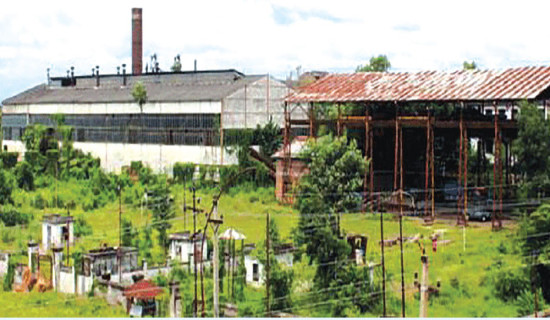
Due to factors such as inadequate investment, high dependence on imported raw materials, limited adoption of innovation and advanced technology, and high production costs, competitive capacity has weakened, resulting in a weak state of industrialization in the country, said the report.
As a result, Nepal has struggled to create a strong industrial foundation capable of generating productive employment and increasing exports. However, significant achievements have been made in electricity generation over the past decade.
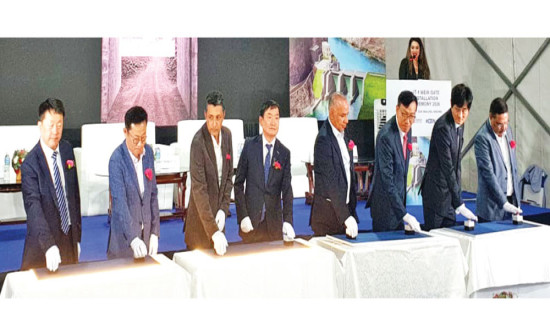
In the one-century period since the beginning of electricity production (up to mid-July 2011), the installed electricity generation capacity was 697.85 megawatts. However, within a relatively short period thereafter, this capacity increased by nearly six times, reaching 4,200 megawatts by mid-May 2026.
Decent employment opportunities have not been created
Although the service sector has expanded, sufficient decent employment opportunities have not been created. The expansion of the service sector has been concentrated mainly in trade, accommodation, public administration, and traditional financial services.
The development and expansion of high value-added sectors such as information technology, knowledge-based services, and innovative service industries remain relatively weak.
The Ministry of Finance said that it is necessary to build a competitive economy by expanding modern service sectors such as artificial intelligence, robotics, data centres, and digital technology, along with creating skilled employment opportunities.
The lack of productive industries and limited domestic employment opportunities have fueled rising labour migration. According to the Fourth Nepal Living Standards Survey, the unemployment rate in Nepal stands at 12.6 per cent.
Over the past decade, the number of Nepali workers obtaining labour approval for foreign employment has increased at an average annual rate of 28.6 per cent.
In the fiscal year 2024/25, a total of 839,000 Nepali workers obtained labour permits for foreign employment, including 506,000 new labour approvals and 333,000 renewed labour approvals.
Similarly, a total of 557,000 Nepali workers had obtained labour permits for foreign employment, including 283,000 new labour approvals and 274,000 renewed labour approvals by mid-May of the current fiscal year.
While remittances continue to support household consumption, poverty reduction, and external sector stability, experts caution that long-term dependence on foreign employment could weaken domestic human capital and reduce productive capacity within the country.




-original-thumb.jpg)