- Saturday, 30 May 2026

RSS NEWS COMMENTARY: Budget 2026/27: A push for digital transformation
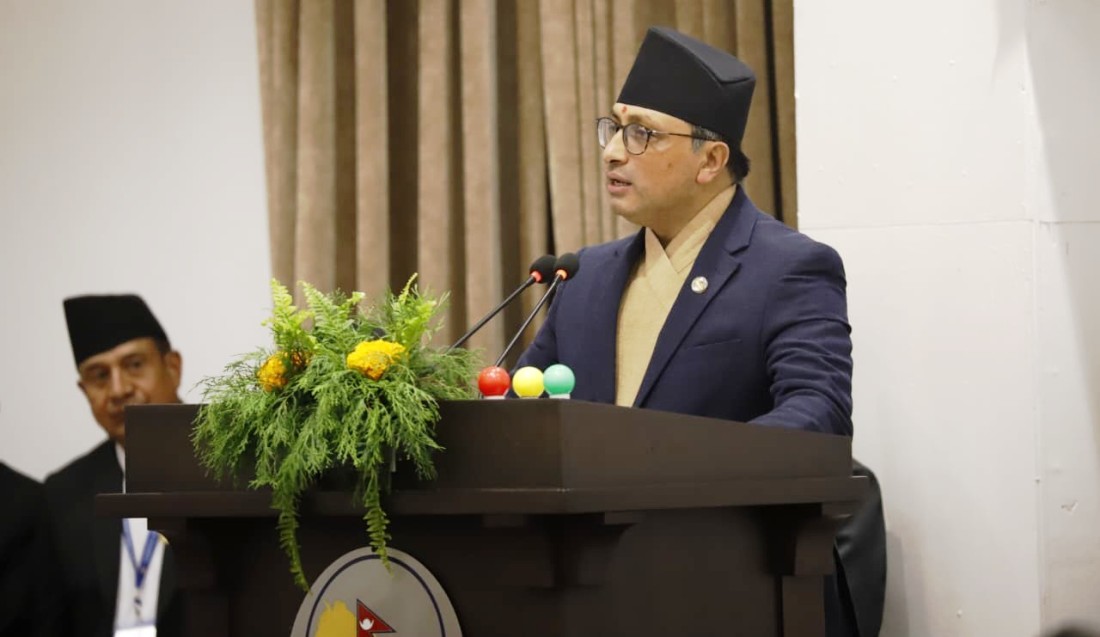
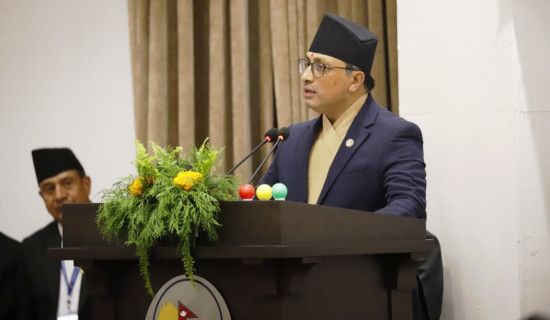
By Narayan Prasad Ghimire, Kathmandu, May 30: Finance Minister Dr Swarnim Wagle presented a Rs 2124 billion budget for the upcoming fiscal year, 2026/27 in the joint meeting of federal parliaments- the House of Representatives and the National Assembly on Friday.
The unveiling of annual budget is constitutionally stipulated- every Jestha 15 in the Lunar calendar, which also coincides with the Republic Day.
Since the government's annual estimates of its income and expenditure were made public, comments are pouring in from diverse sectors on whether the budget would be capable to propel the national economy, give a pace to development activities and cater social justice, thereby bolstering federal democratic system. Going by tradition, the opposition political parties have made cautious observations over it, though private businesspersons are reported to be upbeat about it.
Following the budget presentation, a RSS correspondent from Birgunj city, a trade hub and major customs entry point of Nepal, mentioned businesspersons' happiness over the budget, saying it would help make national economy dynamic. President of Birgunj Chamber of Commerce and Industries, Hari Prasad Gautam, observed though the government brought a large budget it has instilled hope in the private sector.
Minister Dr Wagle shared that government's target of 7 per cent economic growth while containing inflation at 6 per cent in the upcoming fiscal year. As was the case for several years, it is the deficit budget, requiring huge amount of loan to accomplish the targets. It entirely depends on how the government effectively generates and mobilizes resources to realize the budget targets and ensures a 'departure', a long time slogan.
Digital transformation in focus
There are indeed several salient features the budget has to deliver as per national aspiration of good governance, smooth service delivery and development. One among these is a clear push for digital drive. It deserves welcome, as the schemes forwarded by the government to materialize digital transformation are not only aligned with the national urgency of closing digital divide but also chasing the global digital spurt. Nepal cannot remain laggard at all while digital world is speedy with cutting-edge technology.
The government has laid emphasis on digital economy, which, however is not mere use of digital tools for delivery but internalization of both digitization and digitalization that contribute significantly to the national economy. It requires adequate data production, processing and use so that all other sectors of economy and services are linked to result in efficiency in service delivery, trust in system, skills and competence in workforce and spur in economic activities.
Even the major documents like commitment paper of the ruling party, Rastriya Swatantra Party (RSP), and the governance blueprint and good governance agenda unveiled immediately after the formation of present government had signaled a departure in services and reform in structures with accelerated adoption of digital technology. The government since then gave a pace to this drive, thereby wiping out hassles in administrative works and communication facilities.
The promise to make public service IT-friendly is expected to reduce corruption, improve employees' efficiency and make service delivery prompt, smooth and accountable to the citizen. The IT adoption in administration further wipes out redundancy, duplication, red-tapism and importantly the barnacle of bureaucracy, the corruption.
Digital public infrastructures
Now, the budget has prioritized digital public infrastructures (DPI), aiming at digital transformation. The DPI is globally launched movement, calling every government to catch the modern technological pace, bringing efficiency in service and stimulating economic activities.
According to the International Telecommunications Union (ITU), DPI is "foundational digital systems and technologies that support the delivery of public and private services to individuals and organizations. These systems are generally designed to be open, inclusive, and accessible, aiming to facilitate economic growth, social development, and enhance governance mechanisms."
Government's plan to establish an Artificial intelligence (AI) computing centre counts much on harnessing the AI potential in Nepal. It is not only for creating an AI ecosystem in the country but also to draw foreign investment in the modern frontier of technology, AI. It is worth noting that Nepal has a favourable climate for establishment of modern data centres where AI is indispensable. The increasing expansion of electricity in Nepal is another benefit for the AI enthusiasts and entrepreneurs for running data centres.
Production, processing, store and use of data are vital at present because the data has already been described and hailed as the new oil to global economy. The favourable climate is sought by the data entrepreneurs and tech giants to run the business smoothly.
Equally important is the announcement of providing fellowships to 15 Nepali scholars engaged in global companies to work in Nepal. At a time when Nepal has suffered much from brain drain, the AI fellowship scheme would encourage many high skilled Nepali youths living and working across the world to contribute to their motherland. The Nepali talents spread across the globe but deprived of a welcoming atmosphere may find this provision luring. However, its effective enforcement is imperative.
The pledge of 'matribhumi kosh' (motherland fund) to set up an AI factory not only connects technology and diaspora but also the Nepali youths at home and abroad. It is reinforcement of what Dr Wagle had claimed three years back that his party, RSP, would rise to prominence with the utilization of three Ds- digital spheres, diaspora and demography. In the budget, the government has finely stressed these three Ds- digital spheres through vibrant digital use for service delivery and paving way for digital transformation; diaspora through luring schemes to link them to Nepali land; and demography through special arrangements of linking especially vibrant and talent Nepali youths living in the country and abroad, such as establishment of motherland fund and fellowship.
In this connection, the government has allocated a total of Rs 5.093 billion for the IT sector, pledging structural reforms in IT, expansion of digital infrastructures and increased access to communication services. Even the submission of a bill related to the Telecommunications Authority was announced for revising the regulatory mechanism of the telecommunications sector.
Now, the onus lies on government to deliver as per promises by taking into confidence the public administration. The bureaucracy too has no option but to shun the old red-tape and dilly dally and give a boost to digital transformation the government has forwarded.(RSS)
-original-thumb.jpg)
-square-thumb.jpg)

-original-thumb.jpg)