- Sunday, 31 May 2026

Govt bets big on digital governance as PMO pushes for sweeping reforms
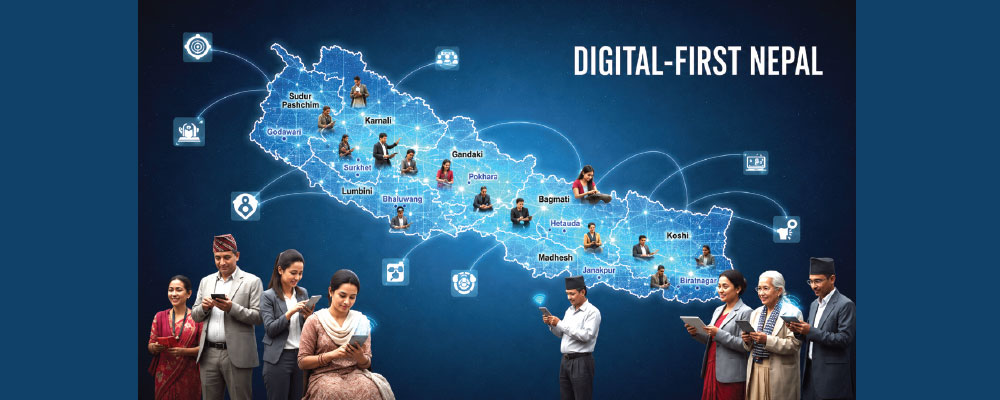

Kathmandu, May 31: The new government, led by Prime Minister Balendra Shah, has launched one of the country’s most ambitious governance reform drives in decades, placing digital transformation at the centre of the 100-point agenda aimed at reshaping how the state interacts with citizens.
The reform package, approved during the government’s first Cabinet meeting on March 27, promises to move the country away from its deeply bureaucratic, paper-laden administrative culture towards a faster, interconnected and largely paperless system of public service delivery.
For a country long accustomed with administrative delays, fragmented institutions and cumbersome public procedures, the announcement marks a significant shift.
The government says the reforms are designed to make public services quicker, more transparent and more accessible through digital governance and data-driven administration. The agenda includes plans for integrated digital platforms, electronic signatures, online appointments, automated file tracking, home delivery of government documents and a national data exchange system intended to allow state agencies to share information seamlessly.
'Submit once' to integrated platform
At the heart of the reforms is the idea that citizens should no longer need to repeatedly submit the same information and documents to different government offices. Officials plan to adopt a ‘submit once’ principle under which data provided to one agency can be used across government systems through an integrated digital infrastructure.
The administration has set an aggressive implementation timeline. Within 100 days, the government aims to strengthen the existing integrated office management system and make it more user-friendly across federal, provincial and local government bodies.
As stated and publicly announced, within just two months and five days of the formation of the government, citizen services have already been expanded to more than 60 districts across the country through a doorstep service model, enabling citizens to obtain services such as citizenship certificates and passports at their local level.
Similarly, in high-traffic public service offices such as the Land Administration Offices (formerly known as Malpot Offices), the government has successfully eliminated middlemen, ensuring that service seekers can now access services directly, without any additional payments or hidden costs.
Services such as driving licences, national identity cards, and police character certificates have also been integrated into the Nagarik App, further streamlining digital access to public services.
Another planned reform involves an “auto-fill” system linked to citizenship numbers. Citizens who have already updated personal details such as names and addresses in government databases would no longer need to repeatedly enter the same information while accessing public services.
The government also plans to introduce an online appointment system within three months. Citizens requiring physical visits to government offices would be able to choose available dates and times digitally before arriving at service centres.
Digital authentication
Among the most closely watched proposals is the expansion of electronic signature technology.
At present, digital signatures in the country largely rely on third-party certification systems that many users find cumbersome and expensive.
The new government intends to replace that process with authentication linked to the National
Identity Card, biometric verification or one-time password (OTP), says Prakash Dawadi, Information Technology Officer, and Information Officer for the Department of Information
Technology, under the Prime Minister's Office.
Officials believe the move could dramatically broaden the use of digital services by removing technical and procedural barriers that have limited adoption.
The Ministry of Home Affairs has been tasked with studying how National Identity Card numbers can become the foundation for authentication across all public services through a unified digital signature system. A report is expected to be submitted to the Office of the Prime Minister and Council of Ministers within a month, according to Joint Secretary and Spokesperson for the Ministry of Home Affairs, Ananda Kafle.
The reforms also seek to address one of the public’s most common frustrations: files remaining stuck inside government offices for weeks or months. A digital file-tracking system with automated alerts for senior officials is expected to be introduced within 30 days to monitor delays and increase accountability.
Integrated digital governance platform
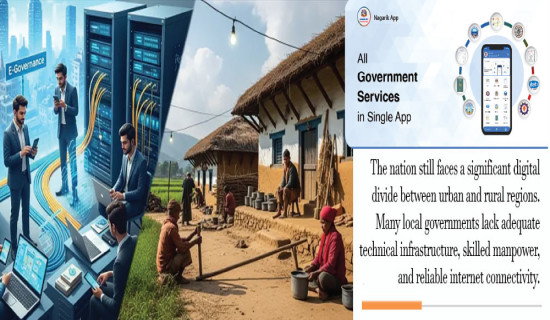
The government’s digital ambitions extend beyond individual services. Officials say they intend to establish a National Integrated Digital Governance Platform that would eventually unify public services into a single interconnected system.
Alongside that effort, the government plans to establish a National Data Exchange Platform based on digital public infrastructure principles. The system would allow federal, provincial and local government databases to communicate with each other, reducing duplication and improving coordination.
The government has also announced plans to draft new legislation on digital governance and personal data protection. The proposed laws are intended to strengthen transparency, protect citizen data and create legal foundations for expanded online governance, according to Dawadi.
An independent regulatory authority overseeing information technology and digital governance is also being proposed, according to the plan.
Institutional restructuring
Institutional restructuring forms another major component of the reform package. Within three months, the government plans to establish an Office of Information Technology and Electronic Governance under the Prime Minister’s Office. The existing Department of Information Technology would be dissolved, and related public agencies would be consolidated under the new structure, according to the Office of Prime Minister and Council of Ministers.
Hari Prasad Dhungana, an Associate Professor who teaches governance studies at Nepal Open University, said that the restructuring could help the country overcome long-standing problems of fragmented digital systems, weak interoperability, inconsistent standards and poor coordination among agencies.
Online, not in line
The government’s slogan, “Not in line (queue), but online,” has also become one of the defining themes of the new administration.
“This government has more opportunities than challenges, and with nearly two-thirds majority there is nothing to lose. If it can simply make the daily needs of the people easier and introduce a new sense of development and good governance, that alone would be more than enough,” said political scientist and Professor at Tribhuvan University, Krishna Hachhethu.
According to him, the government appears determined to distinguish itself from previous administrations that were widely criticised for inefficiency and slow decision-making.
Associate Professor Dhungana further stated that the new administration has attempted to break from traditional governing practices. “People felt frustrated by delays and inefficiency under previous governments,” he says. “The new administration is trying to demonstrate visible changes quickly,” he claims.
Recent improvements in the distribution of driving licences, which previously involved delays lasting months or even years, have been cited by supporters as early signs of administrative reform.
Broader economic goals
The government’s digital agenda is also linked to broader economic ambitions. Policymakers argue that modern telecommunications infrastructure and reliable internet connectivity will be essential if Nepal is to expand sectors such as digital services, tourism technology, online employment platforms, data centres and smart agriculture.
Without strong digital infrastructure, analysts say, many of the government’s wider economic promises may remain difficult to achieve.
“The scale and urgency of the current push signal a growing recognition within the state that digital governance is no longer optional, but essential,” says Dr. Rajib Subba, an information security expert and former DIG of Nepal Police.
According to Dr. Subba, for millions of Nepalis accustomed to queues, paperwork and repeated visits to government offices, the
success or failure of the reforms may ultimately be measured not by official announcements, but by whether public services finally become simpler, quicker and more reliable in
everyday life.