- Thursday, 11 June 2026

PIC collecting data for asset investigation


Kathmandu, May 22: The Property Inquiry Commission (PIC), Keshar Mahal, Kathmandu, has begun formally requesting data from multiple government and institutional bodies as it prepares for a large-scale property verification exercise covering more than 25,000 serving and retired public officials and political office-bearers across the country.
An official from the Commission confirmed over 25,000 individuals will be required to submit detailed asset declarations, including political leaders, civil servants, security personnel, judiciary members, and retired officials receiving pensions.
The move follows a recent directive issued by the Council of Ministers led by Prime Minister Balendra Shah, which instructed the Commission, headed by former Supreme Court Justice Rajendra Kumar Bhandari, to submit property declaration forms within 30 days.
The Commission has been mandated to collect, verify, and investigate details of assets held both within Nepal and abroad by individuals who held public office between fiscal year 2006/07 and mid-April, 2026.
The probe also extends to assets of families of those who served in public positions during the specified period.
As part of its initial work, the Commission has already issued public notices calling for complaints related to ‘unnaturally acquired assets’, regardless of whether the individuals fall directly under its jurisdiction. Officials said such complaints are expected to play a key role in prioritising investigations.
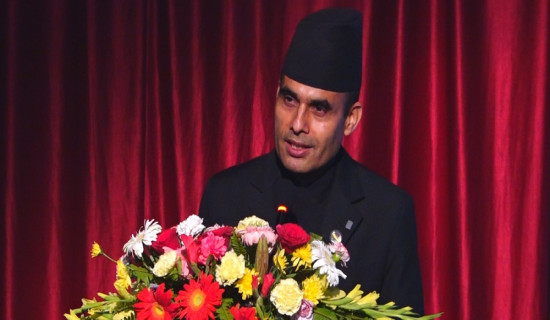
Ganesh KC, a former Deputy Inspector General (DIG) of Nepal Police and Spokesperson for the Commission, said initial assessments indicate that between 8,000 and 10,000 complaints may be received once the process gains momentum.
He confirmed that the Commission has begun coordinating with various institutions to obtain official records.
“Our initial estimate is that more than 25,000 officers may need to fill out the forms,” KC said. “We are also receiving complaints, and we expect a significant number as the process expands.”
According to him, the Commission has already written to the federal parliament requesting details of lawmakers and is preparing similar correspondence with provincial governments and other state bodies.
The scope of the investigation includes high-ranking civil servants, including first-class officers and equivalent positions, as well as second-class officers heading offices. In the first phase alone, approximately 13,300 current employees of federal and provincial governments are expected to be covered.
Sudan Khwakhali Shrestha, director and information officer for the Department of National Personnel Records (Civil), said arrangements have been made to facilitate submission of salary and income-related documents through digital platforms, including WhatsApp and email, to reduce administrative burden.
“In the first phase, we are covering more than 13,000 employees,” Shrestha said. “We have ensured digital access so that employees do not need to physically visit offices for documentation.”
According to a report, at least 3,000 retired civil servants, police personnel, and members of the judiciary who are currently receiving pensions are required to submit asset declaration forms. These include former secretaries, joint secretaries, high-ranking police officers, judges, and constitutional office holders.
The Commission’s mandate also covers political appointees, advisors, private secretaries, and other officials appointed by top constitutional authorities, including the President, Prime Minister, Chief Justice, and Speaker and Chairman of Lower and Upper Houses of Parliament, as well as provincial heads.
Officials estimate that political appointments across different governments could exceed 5,000 individuals, further expanding the scale of the investigation.
The Commission has also stated that individuals under investigation will be required to disclose comprehensive details of their movable and immovable assets, including sources of income such as salaries, business earnings, agriculture, foreign employment, remittances, share transactions, and loans.
KC stressed that compliance with the asset declaration process is mandatory. “This is both an obligation and an opportunity for public officials to declare their assets transparently,” he said. “It also serves as a civic responsibility and a form of accountability.”
The Commission has been allocated a one-year timeframe to complete its work and submit its findings. The Office of the Prime Minister and Council of Ministers has been tasked with providing necessary human resources, with an initial allocation of 38 staff members already approved.

-original-thumb.jpg)