- Thursday, 11 June 2026

Hydel licensing reforms proposed
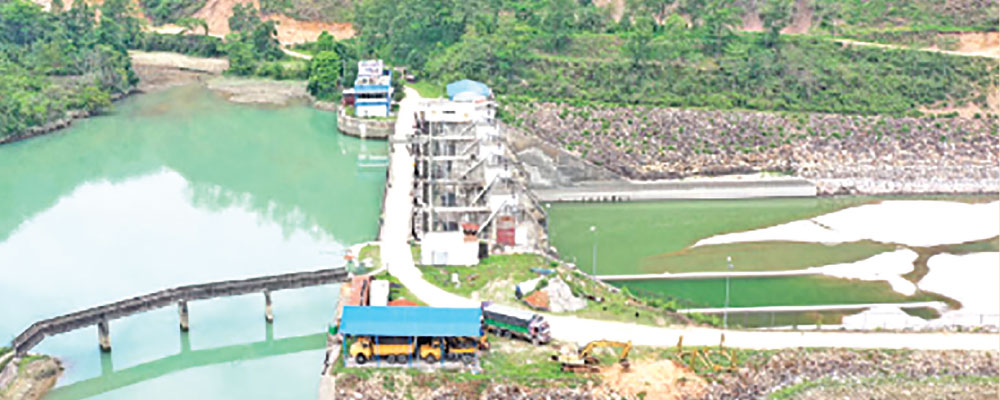
File Photo: TRN

By A Staff Reporter, Kathmandu, June 11: A high-level committee formed to review the status, progress and effectiveness of hydropower project licenses issued by the Department of Electricity Development has submitted its report to the government, recommending wide-ranging policy, legal and structural reforms to the hydropower licensing regime.
The committee handed over the report to Minister for Energy, Water Resources and Irrigation Biraj Bhakta Shrestha on Tuesday.
The five-member committee, chaired by Mohan Shakya, Joint Secretary at the Ministry of Energy, Water Resources and Irrigation, was constituted on 2 April under the government's 100-point Governance Reform Action Plan.
The committee comprised Dr. Diwas Bahadur Basnyat, Nikunj Bhandari, Shalikram Bhandari and Jeevan Rana Magar as members.
The committee has conducted a detailed study on the status and progress of the permits issued so far, identified the policy, technical, financial, and legal weaknesses in the permit distribution process, and submitted a report to the ministry with suggestions for improvement
Receiving the report, Minister Shrestha thanked the committee members for diligently fulfilling their responsibilities and said that the recommendations contained in the report would be promptly taken forward for implementation following legal and technical evaluation.
The report recommends initiating cancellation proceedings against licenses held by developers who have failed to commence construction for extended periods despite signing Power Purchase Agreements (PPAs), in accordance with Section 8 of the Electricity Act, 1992.
The report proposes a range of policy reforms aimed at making the licensing system more transparent, competitive and aligned with national interests.
It recommends reviewing conflicting and ambiguous provisions contained in the Electricity Act, 1992, Electricity Regulations, 1993, Hydropower Development Policy, 2001, and licensing directives, and introducing necessary legal amendments to ensure consistency.
The committee has also suggested eliminating overlaps in jurisdiction among the Investment Board, the Ministry of Industry and the Ministry of Energy regarding project licensing and investment approvals, with clearly defined responsibilities for each institution.
According to the report, important issues such as license amendments, management of the project bank, and the sale or transfer of licenses should be incorporated into higher-level legal instruments and addressed directly within the regulations rather than through directives.
The committee further highlighted the need to establish legal provisions in the national interest to address existing doubts regarding ownership transfer, operational management and revenue arrangements after the expiry of a project’s generation license period.
Recommending the replacement of the current “first come, first served” system with a competitive bidding mechanism, the committee also called for the enactment of a new Electricity Act that clearly defines provisions relating to electricity trade and delineates the powers and responsibilities of the federal, provincial and local governments.
The report recommends preparing a National Electricity Development Plan, including a transmission line master plan, an electricity demand master plan and a least-cost generation plan.
Similarly, it suggests introducing legal provisions requiring environmental approvals and Environmental Impact Assessment (EIA) processes related to forests, conservation areas, national parks and buffer zones to be completed within 12 months.
To remove obstacles in land acquisition, utilisation of forest areas, and the supply and use of explosives required for hydropower projects, the committee has also recommended introducing a “sunset law” and establishing a one-stop service mechanism through which all project-related permits and approvals can be obtained.