- Saturday, 30 May 2026

Govt targets addition of 1,040 MW to national grid in coming fiscal year
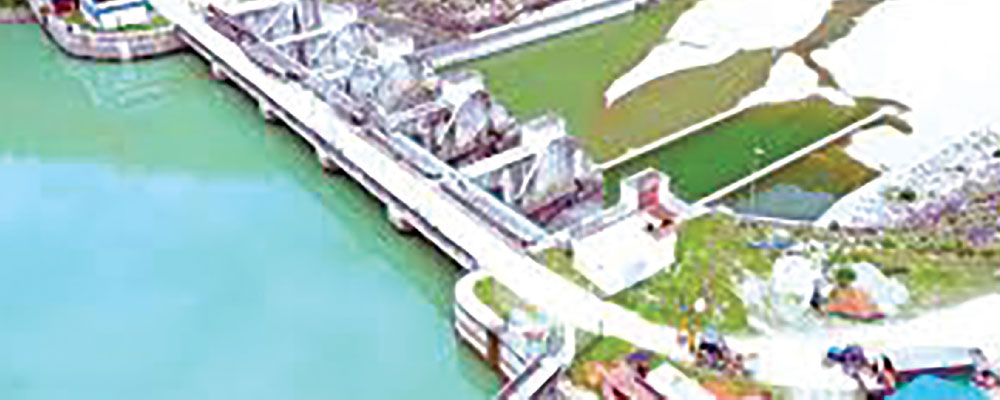

By A Staff Reporter, Kathmandu, May 30: The government has projected adding 1,040 megawatts of electricity to the national transmission system in the upcoming fiscal year, including 670 MW from hydropower projects and 370 MW from solar energy.
With this expansion, the country’s total installed capacity is expected to reach 5,535 MW.
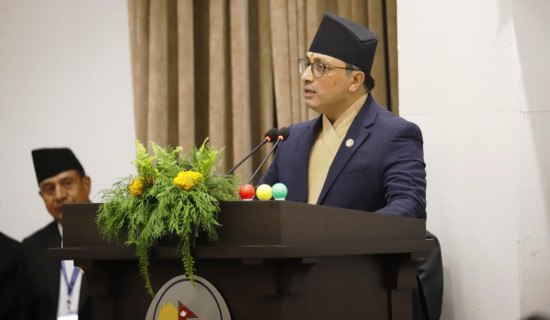
Presenting the budget for the next fiscal year 2026/27 at the joint session of the Parliament on Friday, Finance Minister Dr. Swarnim Wangle said that the government plans to complete construction of the 40 MW Rahughat Hydropower Project within the current fiscal year.
The government has allocated budget of Rs. 85.54 billion for electricity generation, transmission, and distribution infrastructure.
It also aims to accelerate ongoing works on major projects including the Tanahun Reservoir-based Hydropower Project, Upper Modi A, Upper Modi, Upper Trishuli-3B, and Budhiganga hydropower projects.
For large-scale hydropower development, financial arrangements and bidding processes will be initiated for several key projects, including the 1,061 MW Upper Arun, 828 MW Uttar Ganga, 210 MW Chainpur Seti, 99 MW Tamakoshi-5, and 77 MW Ghunsa Khola hydropower projects.
The budget proposed to advance the study for projects such as the 417 MW Nalgadh, 490 MW Arun-4, and 281 MW Naumure projects.
Similarly, construction bidding will be initiated for the 439 MW Betan Karnali Hydropower Project, which will involve investment participation from Employees Provident Fund contributors.
"We will proceed with the construction of the 1,200 MW Budhi Gandaki reservoir-based project under the empowered Authority model. We will complete the financial closure of the 670 MW Dudhkoshi reservoir-based project and begin the contracting process," said Finance Minister Dr. Wagle.
The government said that it will provide necessary facilitation to develop projects with a capacity of about 3,000 MW, including the 900 MW Arun III and the 669 MW Lower Arun, whose construction work has progressed through the Investment Board Nepal. For transmission infrastructure, Rs. 70 billion has been allocated to complete ongoing transmission lines and substations.
The Hetauda–Dhalkebar–Inaruwa 400 kV transmission line is expected to be completed within the current fiscal year.
The construction of new 400 kV lines, including Khimti–Barhabise–Kathmandu and Hetauda–Ratemate–Lapsiphedi–New Damauli–New Butwal corridors, will be expedited.
Cross-border transmission projects such as Butwal–Gorakhpur, Inaruwa–Purnia, Dhalkebar–Muzaffarpur–Sitamarhi, Lamki–Dododhara–Bareilly, Lamahi–Lucknow, Nijgadh–Motihari, and Chilime Hub–Kerung will also move forward.
The government will accelerate the Karnali corridor national transmission line and expand electrification in Karnali Province’s off-grid local levels.
In new energy initiatives, a 2.5 MW green hydrogen pilot plant will be implemented in Hetauda for commercial production, while a 100 MW battery energy storage system will be introduced in Kathmandu Valley to address peak-hour electricity shortages.
The budget has made a provision to issue green energy bonds and diaspora bonds for the development of hydropower project.
The private sector will be encouraged to invest in large-scale and reservoir-based hydropower projects.
Reservoir-based projects that secure 100 per cent investment financing will be allowed to issue up to 40 per cent of their IPO in the first year itself.
According to the budget, the long-pending restructuring of the Nepal Electricity Authority will be completed.
The authority will be divided into three separate companies responsible for electricity generation, transmission and distribution, and power trading.
"Licenses of power projects that have signed power purchase agreements (PPAs) but have failed to begin construction will be revoked, and arrangements will be made to sign new PPAs under the “take-or-pay” model," said Dr. Wangle.
The power purchase agreements for electricity projects with a capacity of less than 10 megawatts will be approved immediately.
Provisions will also be introduced to determine electricity purchase rates through competitive reduction during the dry season and sign procurement agreements accordingly.