- Saturday, 30 May 2026

National Vitality: Bedrock Of Modern Progress

Ideally, national vitality is the core strength of the state’s institutions’ effective, cohesive, purposeful action. Such vitality is central to steering the nation-state in a direction of a stable and progressive future. With high vitality, a nation can attain enough institutional muscle and leadership capabilities to keep and progress. It can overcome any crises plaguing it - be it ecological, social, economic, political or foreign policy. National vitality depends on a balance of intergenerational, social and gender justice where tradition meets the condition of technology-driven modernity and knowledge is refined by the wisdom of historical and cultural experience.
As an elan vital, the vital life- force of society, it allows the nation to adapt to changing geopolitical circumstances, builds self-defense and wards off threats of any kind. Statespersons, mellowed by varied experiences of life and time, help to stabilise the emotional exuberance of chrysalis years of adult people while the wealthy contribute to social development so that people are not coerced to accept blunt materialism (both market and dialectic) against Nepal’s spiritual evolution, ethnic, or geopolitical determinism, saddened by unnatural death or cultivating the fawning mind-set to any hegemon for the blessing to regime reviled by enlightened national and global audience.
Unifying forces
The wild growth of pre-modern powerful sects in Nepal and the boom of modern partial associations flag the national vitality to cope with the malaises of society, cultivate health and wellbeing of people and shore up a beautiful social mosaic for nation building. Their socialisation, mobilisation and constitutionalisation are vital steps to promote unifying forces of society essential to build this nation and advance overall sustainable progress. This means acculturation of Nepalis to the ethos of national values, culture and views is vital to make life cohesive, stable and predictable. It is also important to bridge the gender and social gaps in all aspects of national life so that both can reap equal opportunities and dynamise the life of society along multiple modernities where the stronger elements can uplift the weaker ones and create their stake in the national polity.
The self-definition of Nepalis as rational beings seeks to nullify their irrational behaviour. The remarkable trends unfolding at the systemic level compel a rethinking of national interests and a shift of politics from social and political differentiation to national unity and revitalisation compatible with the aspirations, beliefs and desires of Nepalis.
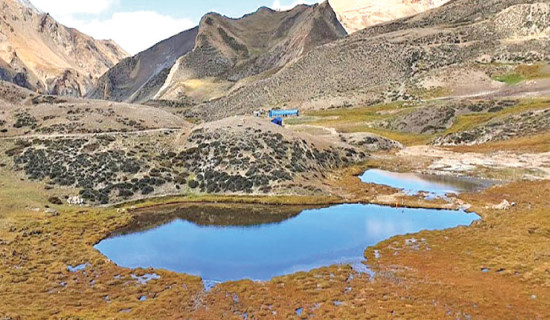
Opportunity of vertical geography: Nepal’s vertical geography and topographical diversity have offered the people both assets to defend the nation’s survival, preserve resources to diversify production and trade, refine settlement patterns through engineering feats and cherish multi-cultural fusion. Rich landscape and artistic layers for habitat and cultivation of food and fodder are a source of national power. But it has also set barriers to circulation, communication and transportation development. The emerging technological development, digitalisation and connectivity are expected to transcend the psychology of claustrophobia, landlockedness and unbalancing complex geopolitical determinism of its progress. Leverage of Nepal’s strategic geography lists not just locational advantage but also other factors such as trade, Gorkha recruitment, diaspora, business, family and cultural connection and labor migration.
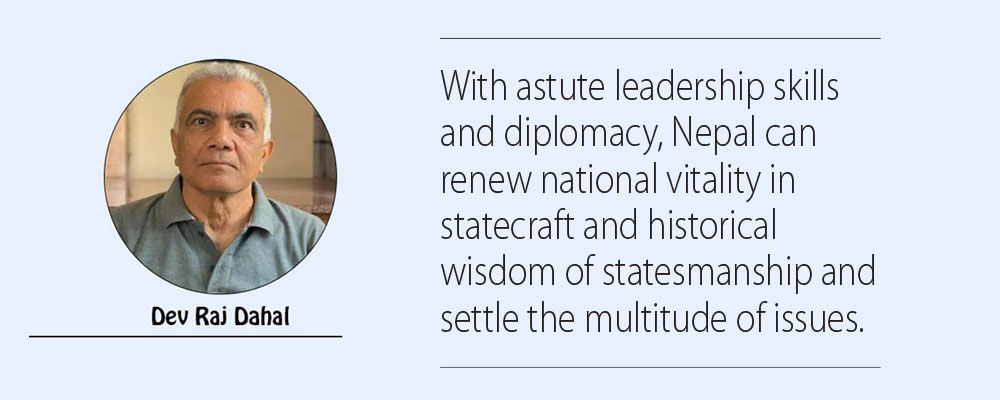
With astute leadership skills and diplomacy, Nepal can renew national vitality in statecraft and historical wisdom of statesmanship and settle the multitude of issues locking both neighbours, India and China in a security dilemma and cognitive cringe to see a wider multi-polar world. Those howling against Prime Minister Balendra Shah’s preoccupation with national priorities are forgetful of the drab result of globe-tottering show and self-accountability. The practice of its native philosophy of Panchsheel and non-alignment marks a paradigm shift from earning sympathy for regime change to cultivating national dignity and pride in independence. Shah’s government has reclaimed the state as a national instrument of security, survival, progress and identity and seeks to utilise the constitution as a vision of national unity. It can sedate the centrifugal forces acting along geopolitical lines and silence the jarring voices of deep state for leadership change.
To be sure, national vitality can spring from the institutional muscle of constitutional and public interest bodies in their impersonal performance, not policy and institution capture by a select group of elites aiming to dent good social relationships and weaken the effectiveness of governance in goal attainment. The government is, therefore, seeking to create institutional integrity, transform the existing political culture and create a modern political order where the rulers are accountable for their actions beyond the domination of the balance of power of rival political parties or their collusion without any sanity or creative policy option. The purpose of the government to reclaim the state is to use it, like East Asian nations, for a government that delivers and exercises authority that is territorial, not client-based, regime-oriented, or globalized.
Freedom of will: National vitality provides a condition of free will for Nepali people and the nation, enabling both to act with conscious choice uninhibited by circumstances, tradition, treaties or the condescending attitude of outsiders. Free will is the hallmark of national and popular sovereignty entrenched in the Nepali constitution and international recognition. Democracy aims to expand the domain of freedom and reasonable and timely change. But in Nepal, those weary of change and its consequences are planning to hit the streets and create a condition of political instability which is inimical to progress. The corruption of public offices for long hobbled the national integrity system of governance and eroded the moral fibres of Nepali society. This fibre is highly important to glue them to the public interests and beef up the supply side of public goods. This demands rescuing democracy and the welfare state from the neoliberal and comprador classes who appropriated public resources for private gain and eased the flow of poor to international job markets expecting hopping remittances.
Economic strength: Economy cannot grow without proper mixing of land, labour, capital and technology and preservation of the environment. Production must catch up with the scale of consumption with improved technologies, entrepreneurship, a capable workforce and quality institutions to enhance productivity, alleviate poverty, generate employment and retain the youths within the nation for economic dynamism, innovation and change. The topographical diversity of Nepal offers diverse resource endowment-hydro power, strategic commodities, production and diversification potential and cultural and historical sites for tourist attraction. They promote shared national identity and spread the soft power of culture to brace the vitality of this nation. The only question is how democracy, as national ideology, can be utilized for nation building.
Yet the earlier policy of structural adjustment constrained Nepal’s choice of policy based on manufacturing and drifted to what Adam Smith calls “unproductive service sectors,” relying largely on imported goods, private sectors, financial capitalism and IT. Even Joseph Schumpeter placed entrepreneurs and innovators for economic growth. Douglas North stressed the quality of institutions and rule of law as keystones of progress. They shape incentive structures for production and export and the rise of national vitality relative to individual profits that fuel national vulnerability, social and economic polarisation, and erosion of trust in governance.
To enhance the national image, the nation has to control cooperative irregularities, ease graduation to developing nations and remove the tag of grey zone and black list to its air safety.
National progress cannot be engineered by foreign aid and investment alone but by the will of the people, leadership, culture, resources and institutions. The state holds authority within its sovereign boundaries and has the capacity to control deviant, alienated and obstreperous actors if it unshackles itself from debt, dependency and acute import.
Premature deagrarianisation and de-industrialisation hobbled its real economy, led to a decline in jobs and spiked excessive imports of food. The government failed to manage the tyranny of the political status quo maintained by a regime of syndicate and nihilism of anarchy and radicalism. Deep state, free riders and bichaulias have created a powerful network inside the political parties, business and state institutions and promoted a raft of interests to keep the constitutional and institutional status quo, distorted the operation of the market and tied media and civil society to its web of clientalisation.
Efficacy of public administration
The nation lost ingenuity and stamina to innovate and compete in the international market while the government failed to provide people an incentive to save, invest and earn to provide impetus to a big lift-off of prosperity. To overcome the risk of a patrimonial regime, the government’s efforts to alleviate poverty, employment opportunities, health and education are essential, as these elements are engines of social modernisation. The government’s effort to bring the efficacy of public administration to act impartially in the supply of public goods is critical.
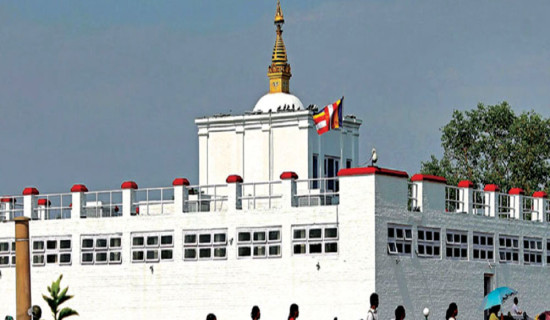
Social integration: In a heterogeneous nation of 125 ethnic and caste groups, 123 languages and over 150 distinct cults, national vitality can be harnessed through social cohesion and social discipline among the people and build their trust and cooperation at national scale. With the formation of a new government, youth bulge and timeless enlightenment values of Hindu-Buddhist and countless cults are gaining salience over universal ideologies. It is likely to turn soft power and national culture autonomous of academic fads and media socialisation. Preservation of nature, culture, art, museums, architecture, temples, monasteries, rituals and refined practices treasure memory and project national identity. Richness of the nation’s cultural artifacts liberates people from parochialism and immerses them in global civilisation.
The hill traits of Nepal’s martial culture and adventurous life, while the flat land of Tarai embodies fecundity of agriculture, industry, literature and philosophy, while the valleys of various places represent synthesis of both and help to forge civic virtues of unity in diversity. Educated intellectuals as an organic part of society must be able to hone sociability, civility and cultured life and act as the moral conscience of society. The government is struggling to restore the nation’s glorious dignity by giving explicit expression of internal autonomy and external sovereignty. It is adding great enthusiasm for attitudinal and institutional change through a process of returning, amending and transforming national life and resetting external relationships to capture the spirit of equality of ties rather than succumbing to imperial or hegemonic clutch animus to national freedom of maneuver
(Former Reader at the Department of Political Science, TU, Dahal writes on political and social issues.)