- Saturday, 30 May 2026

Reform Momentum Crucial For Investment
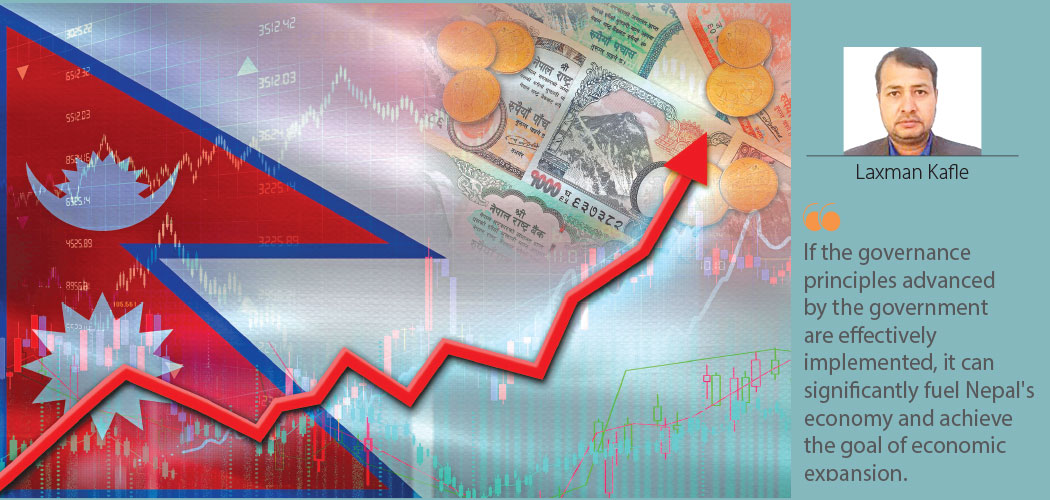

Economic growth and job creation are the fundamental pillars of long-term prosperity for a developing country like Nepal. Yet, despite its prospects, Nepal's economic trajectory over the past decades has been constrained by structural challenges such as low industrial productivity, high import dependence, weak capital formation and persistent governance deficits. Over the past decade, an average economic growth rate has been 4.2 per cent. During this period, the economy experienced fluctuations ranging from a contraction of 2.4 per cent to an expansion of up to 9 per cent. The industrial sector has remained weak due to low investment, high dependence on raw materials, low adoption of innovation and advanced technology, and high production cost. The average contribution of the productive industrial sector to Gross Domestic Product (GDP) has been only 5.4 per cent over the decade.
The economic growth rate for the current fiscal year is expected to be 3.68 per cent against the current budget, which had set a target of 6 per cent growth. It is estimated that the size of the economy will reach Rs 6,600 billion. It shows that the country has struggled to maintain consistent and sustainable progress. The overall investment situation has deteriorated due to weak capital expenditure by the government and a decline in private sector investment. Private sector investment has averaged 19.6 per cent of GDP in the past decade, but its ratio has gradually decreased after the COVID-19 pandemic and reached 14.7 per cent in fiscal years 2024/25.
Slowdown in investment
The slowdown in investment makes it difficult to achieve sustainable, inclusive and high economic growth and create jobs. It is necessary to increase investment by improving the business environment, the government's capital spending capacity, and aggregate demand. Frequent changes of governments have been badly hitting the governance and development endeavours for years. In this context, the newly formed government with almost a two-thirds majority led by the Rastriya Swatantra Party (RSP) has generated optimism.
The government's ambitious vision to achieve an average annual economic growth rate of 7 per cent, raise per capita income to USD 3,000 and expand the size of the economy to USD 100 billion within five to seven years signals a bold departure from incremental progress toward transformative change. With its reforms-oriented agenda and strong public mandate received from the election after the Gen Z movement on September 8-9, 2025, for transparency, the government faces a critical test – translating the principles of good governance into tangible economic growth.
Achieving the targeted economic goals requires more than just resources and policies. It is good governance that ensures transparency, accountability, efficiency and the rule of law. It also fosters an investment-friendly climate. When the government institutions operate transparently and are accountable, both the domestic and foreign investors gain confidence. If corruption is checked, the projects are completed on time and resources are not misused, thereby contributing to infrastructure development, industrial expansion and increased production. Senior economist and former member of the National Planning Commission Dr. Chandramani Adhikari said that realistic budget preparation, along with leakage control in budget expenditure and institutional efficiency, are preconditions for the proper utilisation of resources.
The size of the budget has not been realistic. On the one hand, the allocation of resources for the target budget has not been achieved, and on the other hand, the size of the budget allocation has become ambitious. “Huge amounts of the budget are spent on building construction and vehicle maintenance every year, where a large portion is lost to leakage. If we save a significant amount from such leakages, it could be used for capital expenditures,” he said.
The new government should focus on policy, institutional and operational reforms. Good governance strengthens policy implementation. For this, institutional reforms with capacity enhancement are a must. Many policies are well-designed, but weak implementation remains a major challenge. A competent and accountable administrative system can translate policies into action, accelerating economic activities and development outcomes.
Government initiatives
Recognising these challenges, the government has introduced various reform measures aimed at strengthening governance and improving the overall business environment. On March 29, the government unveiled an ambitious 100-point work plan that reflects a comprehensive approach to institutional reforms and public sector efficiency in line with the RSP manifesto. The Ministry of Finance has announced a set of reform measures aimed at stabilising the economy and improving the overall business climate, signalling a shift toward tighter fiscal discipline and structural change. One of the immediate steps includes a significant reduction in fuel benefits provided to the government employees and officials. This initiative is expected to curb public spending and promote more efficient use of resources within the government institutions.
The government plans to repeal outdated and obstructive laws and regulations, including the Department of Revenue Investigation, as recommended in the report of the High-Level Economic Reforms Suggestion Commission 2081. By revoking nearly two dozen such laws, the government aims to streamline regulations, reduce inefficiency and foster a more conductive environment for entrepreneurship and investment. The adoption of an e-procurement system, online public service delivery and real-time budget tracking can reduce discretionary power and limit rent-seeking behaviour.
Kamlesh Kumar Agrawal, president of the Nepal Chamber of Commerce, said that along with stable policies, the bureaucratic mechanism should be sound and efficient for proper implementation of policies, and processes should be expedited. “Making the administrative mechanism sound and efficient is fundamental to maintaining good governance and ensuring fast service delivery, which ultimately accelerates economic activities. When files no longer remain stuck on one desk and decisions are made quickly, it encourages businessmen to invest,” he said.
Improved procurement law
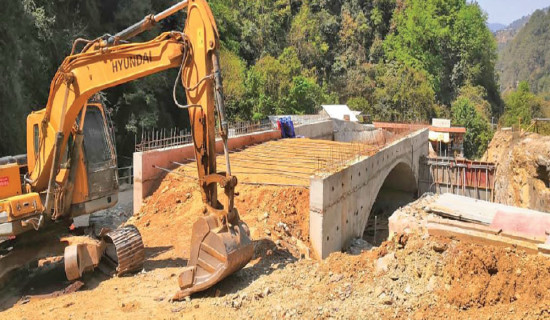
Similarly, it is necessary to consult stakeholders when formulating policies. However, policies should first be drafted by a team of subject specialists, which helps ensure proper implementation. The Procurement Act is a key instrument for ensuring the effective use of public funds. However, infrastructure projects have long been plagued by delays, cost overruns, and substandard work, often linked to weak oversight and corrupt practices. To address these issues, the government has introduced a second amendment to the Public Procurement Act through an ordinance. The amendments aim to control delays, cost escalation, substandard work and corruption in the public procurement process. The revised Act incorporates modern concepts such as value for money, life cycle costing, e-government marketplaces and performance-based approaches. It is necessary to prioritise quality over the lowest bidding system. Additionally, good governance in procurement must extend beyond federal institutions to provincial and local governments.
Sustainable economic development and job creations are not possible without good governance. If the governance principles advanced by the government are effectively implemented, it can significantly fuel Nepal's economy and achieve the goal of economic expansion. The government should address systematic problems to break cycles of corruption and inefficiency. Then only can it create an environment where trust and stability thrive. A foundation for a brighter and more equitable future can be built by fostering a culture of accountability and citizen engagement. Good governance is an ongoing process that requires the efforts of all segments of society. Oversight agencies should also be made effective to ensure the proper implementation of policies and make the concerned bodies more accountable in public expenditure.
(Kafle is a journalist at The Rising Nepal.)





-original-thumb.jpg)