- Monday, 8 June 2026

No vehicles in Asan on Saturdays
KMC initiates 'Vehicle-Free Asan' program in effect from New Year
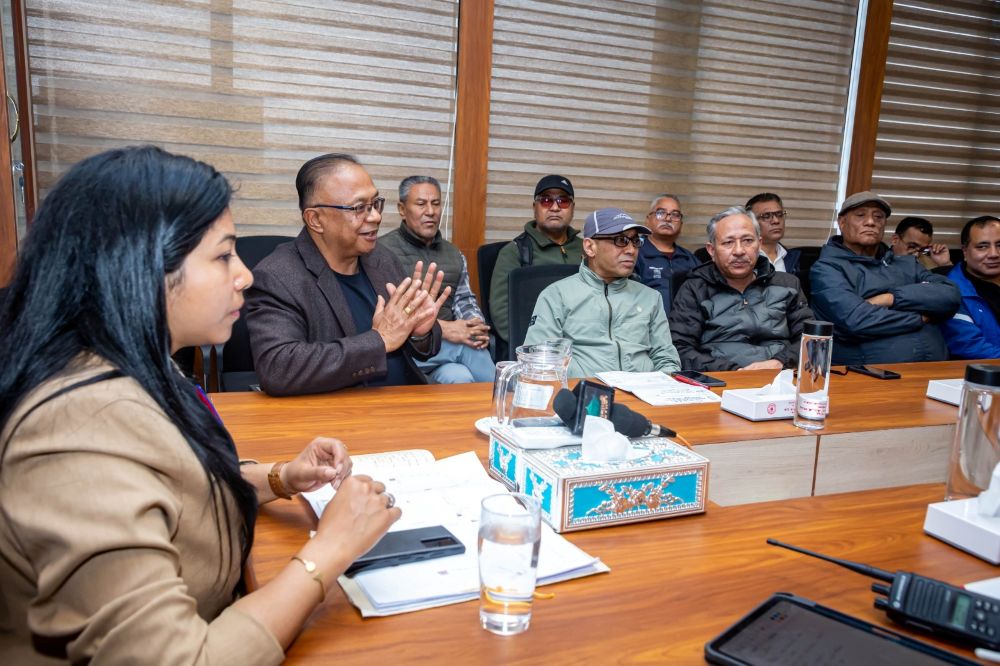
Meeting being held in chairmanship of Acting Mayor of KMC Sunita Dangol. Photo: KMC
By TRN Online, Kathmadnu, April 9: In an effort to preserve the originality and cultural heritage of the Asan area in Kathmandu, a decision has been made to prohibit the entry of vehicles every Saturday starting from Nepali year Baisakh 5, 2083 BS.
The move aims to promote social, cultural, and commercial activities in the historic marketplace.
Earlier, local organizations, clubs, and community groups had planned to launch the program from April 11, but a meeting chaired by Acting Mayor of the Kathmandu Metropolitan City (KMC) Sunita Dangol decided to postpone the implementation by one week to ensure better preparation.
The meeting was attended by Chief Administrative Officer Saroj Guragain, Wardchair Yogesh Khadgi, Head of Administration Mahesh Kafle, officials from concerned offices, representatives of local organizations, clubs, and community members.
Speaking at the meeting, Acting Mayor Dangol said, “Asan is a place that serves everything from gold to salt and supports religious and social functions from birth to death. It is our responsibility to preserve its ancient and cultural significance.”
She emphasized that the program would be launched under the leadership of the ward office with active participation from stakeholders, partners, and the local community to ensure its long-term sustainability.
According to Dangol, the program will be implemented by giving top priority to the convenience, mobility, and safety of locals.
Ward Chair Yogesh Kumar Khadgi said the initiative has been moved forward with the support of local organizations, clubs, and the community.
He added that the program would help preserve the originality of Asan Bazaar while also contributing to air pollution control and improvement of the urban environment.
Under the “Vehicle-Free Asan” program, vehicle entry will be prohibited every Saturday in the areas from Kamalakshi Chowk to Asan, Bhotahiti Chowk to Asan, and Mahabouddha to Asan within of Kathmandu Metropolitan City-27.
Alternative routes will be provided for vehicles heading toward destinations through the restricted area.
The area will be developed as a heritage route to promote traditional local trade and indigenous businesses.
Original cultural programs and social activities will also be organized.
The responsibility for the operation and management of the program has been assigned to the Metropolitan Police Force.







-original-thumb.jpg)