- Saturday, 2 May 2026

Data And Information Are New Wealth

For centuries, wealth was a concept of land, gold, silver, and other variable physical resources. Later on, when the era of the Industrial Revolution began, factories, machinery, and later oil became the main sources of economic power. But now in the 21st century, however, a new resource has emerged as the most valuable asset in the world: data and information. Nowadays, many countries and corporations are competing for control over data and information because this data helps in innovations, to shape economies, and influence societies.
We live in a digital world where nearly every activity generates data. When we log on to different sites for activities such as using Google, shopping on Daraz, scrolling through Facebook, or watching shows on Netflix, we create digital footprints. These activities we do on the internet create data containing information about our behaviour, interests, habits, our connections, our spending habits, etc.
Valuable resources
When the data is raw, it might have a limited value, but after it is processed and analysed using different data processing tools, Artificial Intelligence, and machine learning, it can create valuable resources that provide meaningful information. This valuable information helps businesses, government, and other corporate companies to predict customer behaviour, identify their needs, and act accordingly to reduce risks and create more personalised services. For example, E-commerce platforms suggest products based on previous searches and purchases, streaming services suggest movies and series according to viewing history, banks detect suspicious transactions by analysing unusual patterns, and ride-sharing apps calculate demand and adjust prices in real time.
Companies that master data analysis often dominate markets. In fact, many of the world’s most valuable corporations today are technology firms whose primary asset is not physical goods but data. Data isn’t just valuable for companies, it’s a big deal for entire countries, too. Governments rely on data every day to make real decisions about healthcare, roads, schools, and keeping people safe. In developed cities, traffic sensors and GPS keep cars moving and help cut down on pollution. Countries that pour money into digital infrastructure and better data systems are setting up to lead the global economy. They’re in a head-to-head race when it comes to AI, and the main fuel for that race is data. The more high-quality data a country has, the better and smarter its technology gets.
This whole data-driven world has spun up brand-new industries and jobs. Data scientists, cybersecurity pros, AI engineers, digital marketers, or anyone. There are startups out there built on nothing but analysing data and turning it into profit. But it’s not just the big players cashing in. Even small businesses get a real boost from data. A small shop can check social media to see what people are into. Farmers pull up weather apps to figure out the best time to plant their crops. Content creators dig through their stats to tweak their videos or posts and keep folks coming back. Data isn’t just for the big guys; when people can tap into it, it gives everyone an edge, from solo hustlers to family-run businesses.
Let’s be honest, having all this data isn’t just cool; it’s a pain sometimes. Personal info gets stolen or twisted for scams all the time. We’ve all read about those massive data breaches where millions end up with their private details floating around. No wonder people stress about cybersecurity. Not everyone gets a fair shot at technology. Some people just don’t have the right tools or even decent internet, especially in rural areas or poorer countries.
Privacy
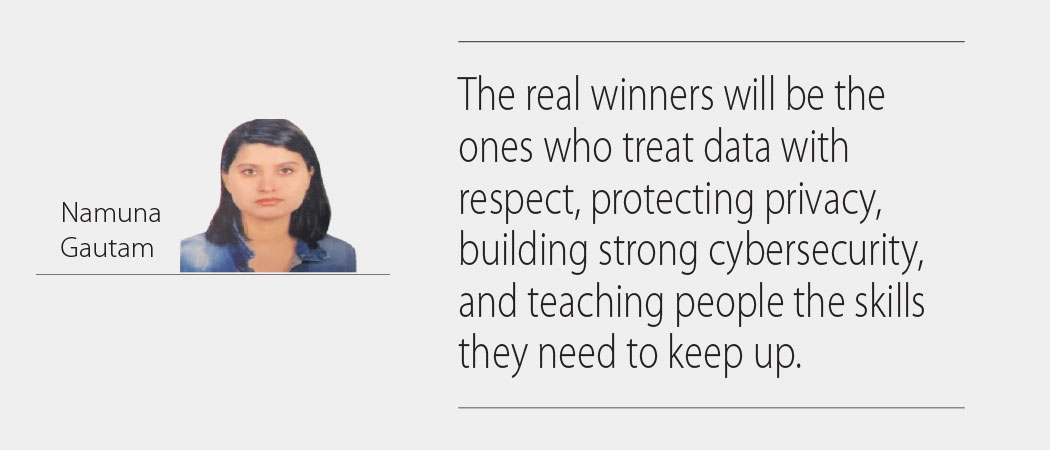
Data’s only going to get bigger from here. Tech isn’t slowing down; the flood of data is just starting. Imagine self-driving cars constantly scanning the road, smart homes picking up on our routines, health monitors tracking every tiny change, and in factories, machines are always talking to each other. All of it runs on as data is collected and shared, which makes sense of more data than ever before. The real winners will be the ones who treat data with respect, protecting privacy, building strong cybersecurity, and teaching people the skills they need to keep up.
Here’s the bottom line: Data is the new gold. Actually, it’s even better because when data is shared, it doesn’t run out. It gets more valuable. It powers new ideas, lifts up economies, and quietly changes how we live every single day. Still, just like any kind of wealth, data needs to be handled carefully. We have to protect privacy, stick to strong values, and make sure everyone can benefit, not just a lucky few. Over the next few decades, the people and organisations that know how to gather, understand, and protect data will call the shots. No doubt about it, data and information are the real wealth of our age.
(Gautam is an IT officer at the Agriculture Development Bank Limited.)