- Friday, 1 May 2026

India’s import rules eclipse Nepali tea market

by Prem Adhikari,Pashupatinagar, may,1: Nepali tea, a large portion of which is exported to neighbouring India, is likely to face a market crisis after India imposed stricter regulations on tea imports.
India has introduced new rules effective from May 1, 2026, making the import of Nepali tea more difficult. Under the new provision, every shipment of tea exported to India must undergo mandatory laboratory testing for each vehicle.
Previously, testing one vehicle allowed clearance for tea loaded in up to ten vehicles.
With the new rule requiring separate testing for each vehicle and each consignment, the export process will become more complicated and expensive.
Gopal Kattel, General Secretary of the Suryodaya Tea Producers Association and a tea entrepreneur, said that India has introduced a complicated procedure in which a fee of 11,500 Indian rupees is charged for each consignment and each vehicle sample test, and it takes more than 15 days for the test report to arrive.
According to him, during the testing period, Nepali tea must either be kept in the vehicles or stored in warehouses. Due to the additional cost of storage or vehicle holding during this period, Nepali traders will facing difficulties in exporting tea.
Nepali tea entrepreneurs have described India’s move as an 'unofficial blockade' on Nepali tea.
Kattel said that under the provisions of new procedures, Nepali traders are no longer in a position to export tea to India.
There is a mandatory rule that if the tea is tested once and sent for re-testing due to the amount of pesticide, an additional 11,500 Indian rupees must be paid, and if the pesticide is found a second time, the tea cannot be returned and is confiscated by the Indian government as unfit for consumption.
According to the National Tea and Coffee Development Board, Nepal exports approximately 15,600 tonnes of tea annually, of which 86 per cent goes to India.
Indra Adhikari, Regional Chief of the Board, said India has been creating obstacles for Nepali tea exports for years, and this latest decision could severely impact the market. He emphasised the need for diplomatic efforts by the federal government to resolve the issue.
In previous years, India often halted Nepali tea imports at the start of the tea harvest season citing quality concerns. This time, however, the stricter rules have been formally implemented, raising concerns among stakeholders about serious market disruption.
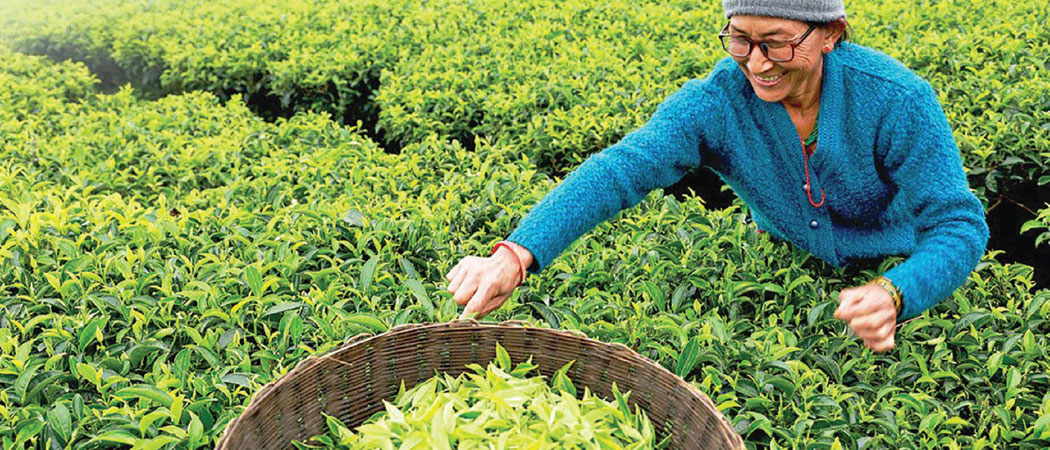
Tea is cultivated in 31 districts of Nepal, including Jhapa, Ilam, Panchthar, and Dhankuta. The organic and orthodox tea produced in these regions is internationally recognised for its quality. A large portion of Nepal’s tea is exported to third countries via India.
Entrepreneurs have repeatedly submitted memorandums to the government in the past, urging solutions to ongoing export issues, but no effective action has been taken.
India has often accused Nepali tea of being low-quality and containing pesticide residues.
However, while restricting processed tea, India continues to purchase green tea leaves from Nepal, which are then sold in the global market under the “Darjeeling Tea” brand.
Deepak Khanal, spokesperson for the board, said that after receiving a letter from the Tea Board of India on February 10, the board had already informed the ministry and urged government-level intervention.
He added that although there have been discussions, further diplomatic action is now the responsibility of the ministry. He also stressed that India should recognise Nepal’s food laboratory certification to ensure smooth exports.
If a timely diplomatic solution is not found, the Nepali tea industry could face long-term damage, putting the livelihoods of thousands of farmers and workers at risk.
Niskal Rai, a Member of Parliament from Ilam Constituency No. 1, said he had previously raised the issue in parliament and urged the Prime Minister to take up the matter with the Indian government.
Tea cultivation in Nepal began in 1863 when Colonel Gajaraj Singh Thapa established a tea estate in Ilam. Since then, the industry has faced ongoing challenges.
According to data from the National Tea and Coffee Development Board, for the fiscal year 2024/25, tea is cultivated on 20,602 hectares of land in Nepal. The country produces around 26.1 million kilograms of processed tea annually.
Nepal has 15,132 tea farmers, 170 tea estates, and about 120 small and medium processing units, providing employment to around 60,000 people.
According to the Department of Customs, Nepal exported 15.6 million kilograms of tea, earning Rs. 4.59 billion i22n the fiscal year 2024/25.