- Sunday, 31 May 2026

The Painting That Breathes
 shivani gurung
shivani gurung
shivani gurung
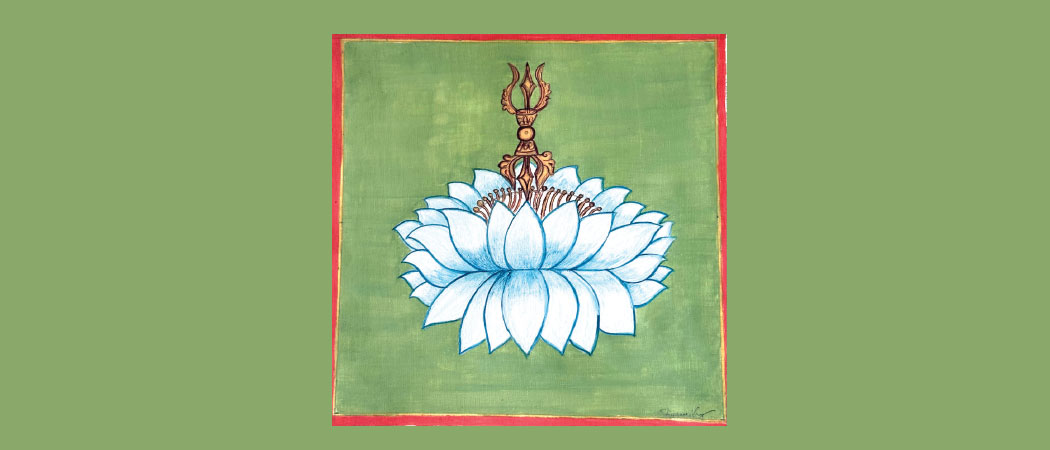
I sat behind the cherry-red wooden desk and gazed upon the view of Shivapuri Hill in front of my eyes. As my delicate artwork of a Paubha sat drying in front of the crisp, chilly air of Narayanthan. From the first day, I began my journey of learning the beauty of the art called Paubha. With the hints of cosmic energy around me, a beautiful rainbow formed upon one of my aunts' precious Paubha works as we sat preparing for my first lecture. Reflecting the divine energy of Surya (the sun) through a rainbow cloth with Buddha's feet imprinted. A gift received by my Ama (mother) from my Bajaii (grandmother), which my mom then passed down to my Fupu (aunt), whom I consider my mentor (Dr Renuka Gurung Pradhan). The translucent, rainbow light formed various colours as the light reflected through the cloth as we viewed it in awe; the cloth, standing upon the window for years, never once created the beauty of a rainbow…
My aunt began explaining the intricate and symbolic meaning behind every step of creating the living art of Pauba. She defined the art as "the sacred devotional painting tradition of Nepal". The artwork is created by a “Punyakar” or “Pun” chosen by the one and only “Vajracharya" (priest). Upon selecting auspicious dates, times, and locations, the artwork is then created as a living entity—cosmic divine souls upon each artwork are called upon with each stroke of the paintbrush. From the beginning, women started by weaving the canvas, and kids under the age of 12, who are considered devious, played with the tools in the creation of the artwork. The women sang joyfully to goddesses Sarswati and Lakshmi (Sarswati, the goddess of art, and Lakshmi, the goddess of spiritual prosperity). From the process of crushed minerals, gold, silver,
The beginning of the life of the goddesses painted upon the canvas is now a living entity. From the process of the eyes being painted last (called the Mikha Cwoyegu), due to the sacred meaning of coming to life as the eyes are painted by each stroke, each breath of the goddesses begins pulsating on the canvas. The journey of learning about Paubha being explained to me sparked curiosity in my heart, which my Fupu once faced as a student as well. “What happened to the old Paubhas of Nepal?” Due to the Paubha art being a creation of goddesses as living entities, glass was not used to preserve the artwork, as nowadays the focus of the artwork is seen as a collection of assets rather than the sacred ritual of puja (prayer). The artwork was not framed and put into a glass structure in order to let the goddesses of the paintings breathe. As humans need oxygen to survive, the artwork, which is symbolic of a living goddess, needs space to breathe as well. This caused the artwork to slowly deteriorate as Newari people and families continued to use incense, fire, and water to pray to the goddesses, which eventually affected the artwork's intricate details of paint. When this time did come, just as humans are created upon Mother Earth, the Vajracharya, who holds the divine energy of the universe, is then informed, which leads to the cremation of the artwork. The end of the goddess's life as a living entity. Being burned into ashes and cells to spread across the same earth we came from. There is so much allure behind the history of Paubha, yet also the struggles of my aunt to preserve the artwork as a woman due to socio-religious taboos and gender norms.
My heart ached to hear the struggles she endured to advocate for the preservation of the sacred historical aspect of Paubha. As she took no acceptance of grants, she taught thousands of students internationally about the art of Paubha. She participated in exhibitions at Oxford University and the King's Foundation School of Traditional Arts in London. She sat patiently for hours, days, years, and decades, painting the artwork with her sole soul, her sole passion as she painted. Calling upon the spirits of Sai Ram and the universe to guide her paintbrush to life as the breath came into the art of the goddess. On the contrary, male figures took on groups of people to paint paintings, forgetting the historical existence of paubhas, to sell paintings at high rates of pricing for materialistic gain, which falls under demonic materialistic illusion. To add on, as a woman in the historical patriarchal system of history, it affected the way she tried to gain intellect about the artwork. Historically, women had no role in painting the artwork of Paubha, only because the technique was passed down from men to men generationally, as women were first seen as impure due to socio- and religious taboos of menstrual cycles and due to the fear that women being married into another household would take the sacred knowledge of Paubha and spread it upon different houses. In the fear of losing the sacrosanctity of Paubha, the methods of preservation inevitably led to the artwork's historical symbolic meaning being lost.
Year 12 graduated, Maryland USA