- Saturday, 2 May 2026

Labour Day fails to ease hardship for Saptari daily wage workers
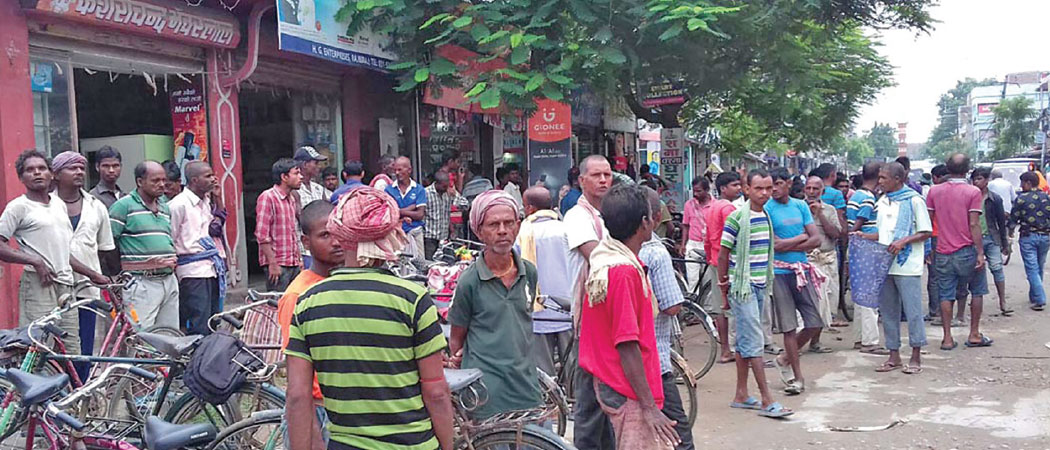
Photo: TRN Daily wage labourers in Saptari.

By Dhirendra Prasad Sah,Rajbiraj, May 2: While much of the world marked International Labour Day on Friday, hundreds of daily wage workers in Rajbiraj spent the day grappling with a far more immediate concern: securing enough work to afford their next meal.
Fifty-two-year-old Somnath Yadav, a resident of Rupani Rural Municipality in Saptari, has been visiting the local labour market for more than a decade in search of daily work. Like any other day, he arrived early on Friday morning, hoping to be hired.
Similarly, Kailu Sada of Rajbiraj Municipality-9 waited alongside others at the labour market, watching passers-by with the hope that someone might offer him work. However, by midday, he returned home empty-handed. Fighting back tears, he said he was worried about how he would buy rice for his family. “How will we eat today?” he asked.
At the makeshift labour market located along the roadside, south of Gajendra Chowk, the commercial heart of Rajbiraj, hundreds of workers like Yadav and Sada gather daily. Despite the global recognition of workers’ rights and dignity on Labour Day, many here remain unaware of the occasion, preoccupied instead with meeting basic needs such as food and shelter.
According to 75-year-old local garment businessman Than Singh Bhansali, labourers from both rural and urban parts of the district have been coming here for years in search of daily employment.
He estimates that around 75 per cent of them fail to find work on most days and return home empty-handed.
Individuals, contractors, and builders come directly to Gajendra Chowk to hire labourers for tasks such as farming, construction, and cleaning. Known for decades as a hub for daily wage workers, labourers begin gathering from as early as 8:00 am.
Another worker, Shyamsundar Khang, said that those who secure jobs typically work until 5:00 pm and earn between Rs. 700 and Rs. 800 per day. “We bring our own food from home and are given about an hour’s break in the afternoon,” he said. “Even then, the pay is minimal for a full day’s labour.”
However, work is not guaranteed. “We only get jobs for around 10 days a month. The remaining 20 days, we return home without earning anything,” he added. On average, between 150 and 200 workers gather at the site each day, though no official records exist.
Ajay Sada, another labourer, shared the emotional toll of uncertainty. “When we find work, we can buy rice, lentils, and vegetables, and our families are happy. But when we return empty-handed, it is very painful,” he said. “No one has really thought about workers like us.”
The lack of industries, factories, and employment opportunities in the district has left many dependent on irregular daily wages. With no land or alternative sources of income and limited access to credit, many are unable to pursue other forms of employment or business.
“For us, getting work is our celebration,” said one labourer. “That is our Labour Day.”