- Sunday, 17 May 2026

Govt to amend Procurement Act in 30 days
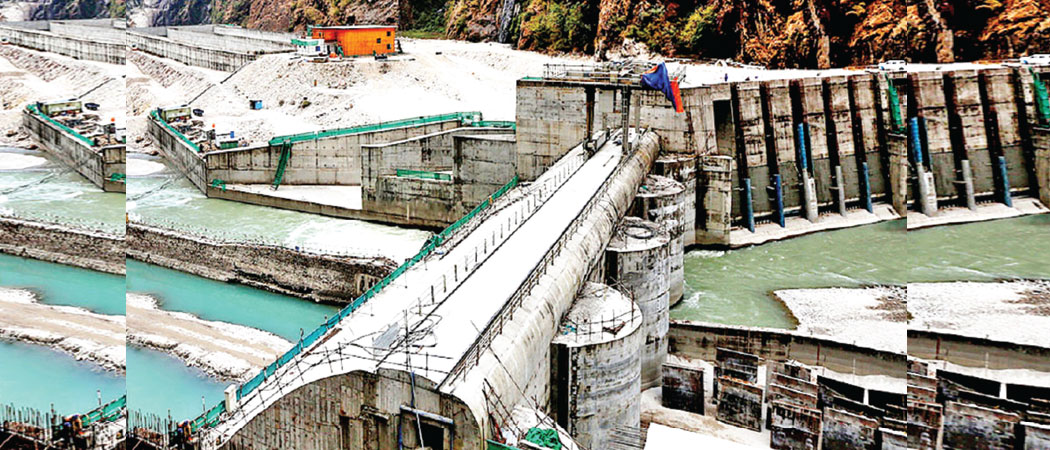

Kathmandu, Mar. 30: The newly formed government led by Prime Minister Balendra Shah has decided to amend the Public Procurement Act within next 30 days to improve the physical infrastructure construction sector.
This commitment was made through the “100-Point Governance Reform Action Plan” endorsed by the Cabinet held on Friday and unveiled by the government late Saturday.
The amendments aim to control delays, cost escalation, substandard work, and corruption in the public procurement process. The government plans to introduce broad reforms in the procurement system and project management.
The revised Act will incorporate modern concepts such as Value for Money, Life Cycle Costing, e-Government Market Place, and Performance-Based approaches. The government aims to make the procurement process fully digital, transparent, and tracking while promoting fair competition.
To bring clarity to development projects, a national-level project pipeline will be prepared. All projects will be prioritised based on economic, social, and environmental criteria, and appropriate investment modalities (government funding, public-private partnerships, foreign investment, etc.) will be determined.
This task will be completed by the National Planning Commission within two months. To resolve issues of long-stalled and troubled projects, a high-level study team will be formed within 30 days and the team will evaluate the viability of such projects and recommend whether to continue or cancel them.
Additionally, if coordination among multiple agencies is required for the construction and operation of projects, the Office of the Prime Minister and Council of Ministers will facilitate and coordinate promptly.
Similarly, for nationally significant and large strategic projects, a fast-track mechanism will be introduced to integrate and automate processes such as land acquisition, tree cutting, and environmental impact assessments. These will be directly monitored by the Office of the Prime Minister and Council of Ministers.
The government will now undertake projects itself that repeatedly fail in the contracting process or are not awarded contracts even after tendering twice. Necessary laws, manpower, and equipment will be arranged within 30 days to directly implement such projects through government infrastructure construction company.
A 'data-based end-to-end e-procurement' monitoring system will be implemented within 90 days to prevent irregularities from project selection to payment. Furthermore, a draft of an 'umbrella act' on project facilitation will be prepared within 60 days to remove various institutional hassles and legal obstacles.
The government's action plan states that a 'project monitoring schedule' will be immediately formulated and implemented to reduce the suffering in road infrastructure, and 'weighbridges' will be established in strategic areas of highways within next 45 days.
Decisions on pending issues, including PPAs, approval of power project licenses, to be made within six months
Likewise, the government has announced a series of policy measures aimed at accelerating economic transformation through reforms in the energy and water resources sectors.
The government has said that long-pending decisions related to Power Purchase Agreements (PPAs) and approvals for licenses for electricity projects will be finalised within a maximum of 180 days. This commitment was made aiming to end administrative delays in the energy and water resources sectors and create an investment-friendly environment.
According to the plan, the energy sector will be developed as a key foundation for the country’s economic transformation. To accelerate development, obstacles in electricity generation, transmission, distribution, and export will be removed, and pending project decisions will be resolved within 180 days.
The government has also proposed preparing an energy export strategy within one month. Additionally, the government plans to immediately implement a strategy focused on exporting electricity to high-value markets, particularly during peak evening hours.
Furthermore, a roadmap for the structural reform of the Nepal Electricity Authority will be prepared and implemented without delay.
The government has also planned to develop a multi-dimensional financial structure—including government, private, foreign, and diaspora investment—for the long-term financial management of the energy sector. The clear timelines will be set for all concerned agencies to effectively implement these reforms.
In the water supply and sanitation sector, the government has decided to establish a high-level “Integrated Drinking Water Coordination Taskforce” under the leadership of the Office of the Prime Minister and Council of Ministers.
The taskforce will include representatives from Kathmandu Upatyaka Khanepani Limited, Nepal Water Supply Corporation, and the Department of Water Supply and Sewerage Management.
The taskforce is expected to submit a proposal for an integrated structure and reforms within 30 days to address long-standing coordination gaps among agencies. The government will also initiate restoration of the Phewa Lake watershed area in Pokhara within three months. The plan includes removing encroachments, managing landslides, protecting water sources, and implementing climate adaptation measures with stakeholder participation.
The Urban Development Bill and the Solid Waste Management Bill will be presented to the Council of Ministers within two months for approval to be presented to the Federal Parliament.







-original-thumb.jpg)