- Saturday, 16 May 2026

Language: Mere Vehicle
 Prem Narayan Bhusal
Prem Narayan Bhusal
Prem Narayan Bhusal
Not long ago, I was talking to a young girl who studies in a Nepali medium class at a government school in Kathmandu. In the middle of our conversation, she said something very simple: “I don’t feel like going to school anymore.” At first, I almost ignored it. Children say things like that all the time. But something about the way she said it made me ask one more question. “Why?” She didn’t answer immediately. Then, slowly, she began to explain.
It wasn’t her studies. She wasn’t failing or struggling to understand. In fact, she said she liked learning. What she didn’t like was how things felt inside her school. There are two sections: Nepali medium and English medium. On paper, it is just a difference of language. But in daily life, it looks like much more than that. The English medium students have a separate assembly. They seem more confident, or at least they appear that way to her. They are better dressed, more organized. Their classes start on time. Teachers are there, teaching, moving through lessons. Her class does not always feel like that.
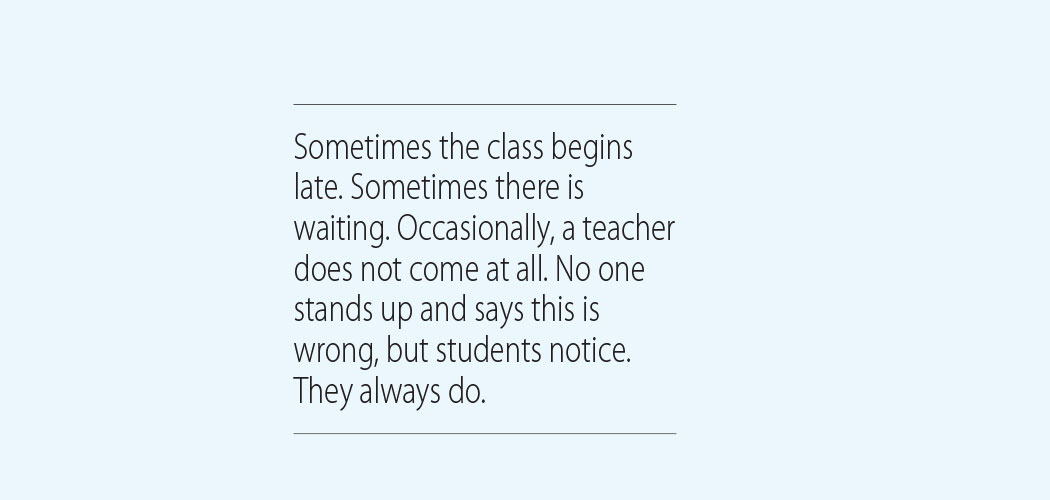
Sometimes the class begins late. Sometimes there is waiting. Occasionally, a teacher does not come at all. No one stands up and says this is wrong, but students notice. They always do. She has already understood something that no one has clearly explained there are two groups in the same school. And she knows where she belongs.
Now, when her parents ask her to get ready for school, she does not rush like before. Sometimes she delays. Sometimes she refuses. Often, she asks the same question: “Can you put me in English medium?” Her parents don’t dismiss her. They just don’t have a way to solve it. The fees are higher. That’s the reality. There is no argument about it. And this is where things become heavier than they first appear. It is no longer just about school. It becomes about what is possible and what is not.
Out of curiosity, I spoke with a few students from different backgrounds some from government schools, some from private ones. One thing stood out. Many government school students said they were proud of their schools. They were aware of their family situation, but they did not see it as something to be ashamed of. A few even said that many successful people studied in government schools, which gave them confidence. But when the conversation turned to students studying in different mediums within the same school, the tone shifted.
Almost every Nepali medium student I spoke to said something similar. They were not worried about private schools. That comparison did not matter much to them. What bothered them was closer they did not feel equal where they were. They talked about small things. How teachers spoke. How often classes started on time. Who received more attention? None of these sounded dramatic on their own. But together, they formed a pattern and that pattern was hard to ignore. So maybe the question we need to ask is not about language at all. Maybe the real question is: how are we treating students?
There is a strong belief that English medium automatically means better education. But that is not always true. Good teaching does not depend only on language. A teacher who is committed can make any classroom meaningful. In fact, many children understand better when they are taught in their own language, especially in the early years. This is not a new idea. It is something our education policies have said for a long time start with the mother tongue, then gradually introduce other languages.
Now a days, in many government schools, two systems are running side by side. It may help with competition or reputation, but inside the school, it creates a kind of quiet separation. A child may not use big words like “inequality.” But they know when something feels unfair. They know when they are being treated differently and those feelings do not stay small. They affect confidence. They affect interest. Sometimes, they affect whether a child even wants to come to school. That should worry us.
Schools need to think carefully about this. The medium of instruction should not decide the quality of attention a child receives. It should not decide punctuality, discipline, or respect. Because if it does, then we are teaching something else along with the syllabus. School should be a place where children feel they belong. Language is just a tool. It should not become a measure of value. If we fail to notice this now, the gap will not stay inside classrooms. It will stay with children, long after they leave school and that is a much bigger problem than it seems at first.