- Monday, 25 May 2026

Fuel price hikes drive up cost of essentials
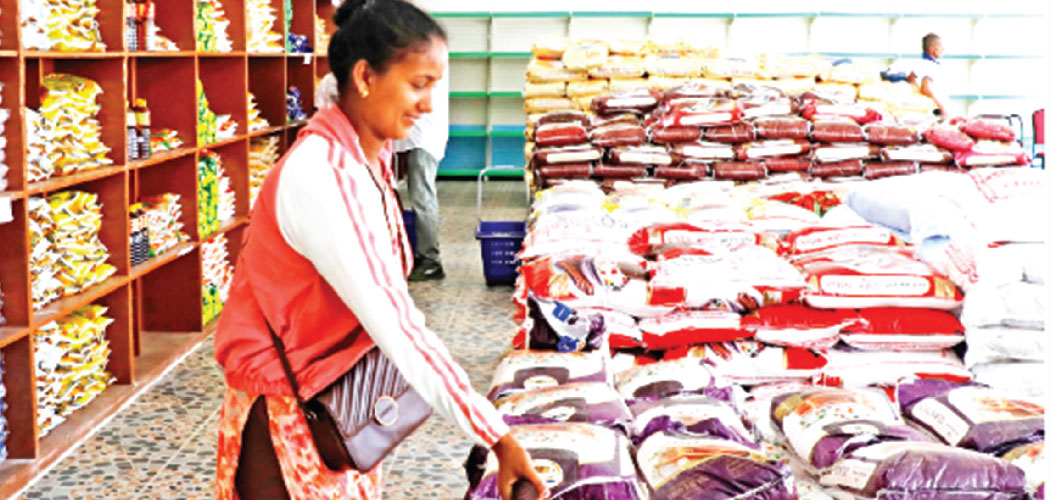

Kathmandu, May 3: Household budgets across Nepal are coming under increasing pressure as the prices of essential commodities, particularly rice and cooking oil, have risen sharply over the past few weeks.
The surge is largely attributed to escalating global tensions, including the Iran-Israel and US conflicts, which have disrupted supply chains and driven up the cost of petroleum products.
As fuel prices climb, production and transportation costs have followed suit, pushing up the prices of both imported and domestically produced goods.
Retailers report that rice and cooking oil prices have increased by around 15 per cent within a month, while other grocery items such as lentils, beaten rice, chickpeas, and cowpeas have seen more modest hikes of 2 to 5 per cent.
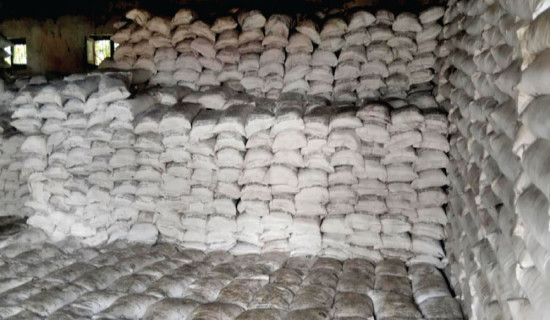
According to Rajendra Shrestha, a retailer from Bhaktapur, rice prices have jumped by as much as Rs. 400 per 20-kg sack, depending on the variety.
For instance, Newari rice now costs Rs. 3,500 per sack (20 kgs), up from Rs. 3,100, while Jira Masino rice has risen to Rs. 2,200 from Rs. 1,800.
Cooking oil prices have also climbed, with sunflower oil now retailing at around Rs. 300 per litre while mustard oil reached up to Rs. 380 per litre.
He said that the prices of lentils and pulses have increased nominally by Rs. 3–5 per kg.
According to him, beaten rice is currently being sold at Rs. 110 per kg, cowpeas at Rs. 160 per kg, chickpeas at Rs. 160 per kg, sunflower oil at Rs. 300 per litre, and peanuts at Rs. 230 per kg.
"In the past few weeks, following a surge in petroleum product prices caused by the Middle East war, the prices of major essential commodities have been increased by wholesalers by Rs. 1–2 per kg each time we purchase from them," he said.
Despite these increases, Shrestha noted that consumer behaviour has helped prevent more drastic price hikes. “People are buying only what they need instead of hoarding, which has kept demand relatively stable,” he said.
He said that consumers do not want to stockpile rice during this summer season, as during this period, rice and pulses are prone to pests and spoil quickly.
Pabitra Bajracharya, President of the Nepal Retailers Association, emphasised that retailers are not responsible for the rising prices.
He said that cooking oil, which was sold at Rs. 275–280 per litre until recently, is now being sold at around Rs. 300 per litre.
Similarly, the prices of other food items such as beaten rice and lentils have fluctuated slightly.
"Retailers are merely intermediaries,” Bajracharya said. “Producers supply goods with updated price lists and higher Maximum Retail Price (MRP) printed on the packages. We are not allowed to charge even one rupee more than the printed MRP, and we do not do so.”
He said that if retailers still have old stock, it is sold at the previous price. However, once new stock arrives at higher prices, retailers are compelled to sell accordingly.
He added that when prices rise in the market, retailers face direct criticism and questions from consumers.
Bajracharya said that the prices of essential goods have not increased in line with rumours linking price hikes to rising petroleum, transportation, and import costs.
He also claimed that the increase in essential goods prices has not matched the rise in petroleum prices, even though higher fuel costs affect all sectors of the economy and daily life.
However, he warned that the impact of rising petroleum prices may be reflected in further increases in essential goods in the coming days.
Fuel prices in Nepal have seen a steep increase over the past month, with petrol priced at Rs. 219 per litre and diesel at Rs. 237 per litre.
However, with the latest price adjustment by the Nepal Oil Corporation, petrol has been reduced to Rs. 217 per litre, while diesel and kerosene now cost Rs. 225 per litre each.
Liquefied petroleum gas (LPG) cylinders have reached Rs. 2,160. The NOC has adjusted fuel prices five times in recent weeks, significantly impacting overall market costs.
While the price increases in essential goods have not yet fully matched the sharp rise in fuel costs, experts warn that further hikes may be imminent as the effects continue to ripple through the economy.







-original-thumb.jpg)