- Sunday, 7 June 2026

Fuel import bill jumps to Rs. 212B
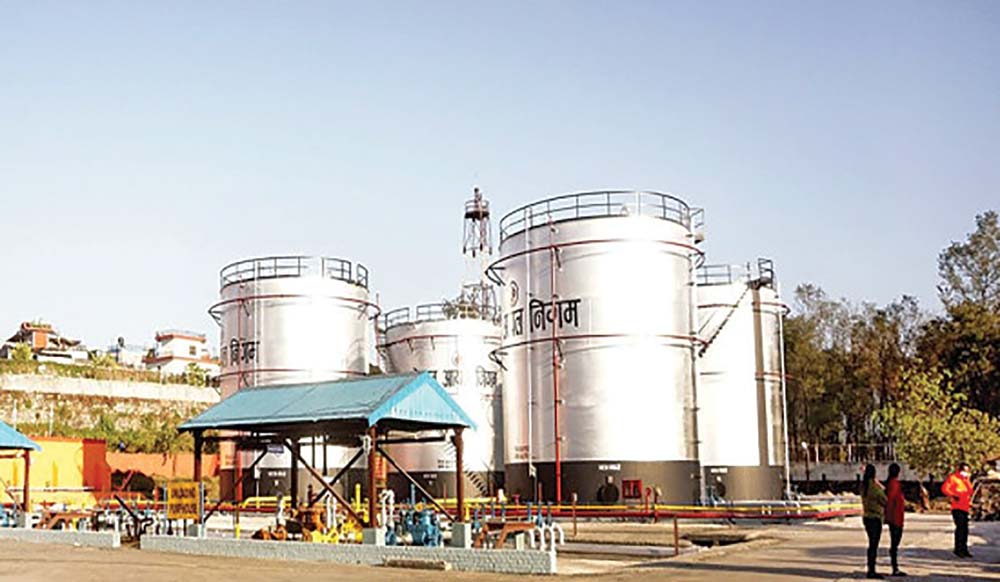

Kathmandu, Apr. 24: Nepal has witnessed a sharp rise in fuel import expenditure over the past month, driven by escalating international petroleum prices linked to tensions in the Middle East.
According to the latest data released by the Department of Customs, the country imported petroleum products—including liquefied petroleum gas (LPG)—worth over Rs. 34.86 billion between mid-March and mid-April 2026.
Cumulatively, petroleum imports have reached nearly Rs. 212 billion so far in the current fiscal year, up from Rs. 177 billion recorded by mid-March.
In terms of volume, Nepal imported 56,460 kilolitres of petrol, 138,585 kilolitres of diesel, 16,528 kilolitres of aviation turbine fuel (ATF), and 38,800 tonnes of LPG during the one-month period.
By mid-April, total imports stood at 568,366 kilolitres of petrol, 1,035,033 kilolitres of diesel, 161,339 kilolitres of ATF, 6,572 kilolitres of kerosene, and 411,081 tonnes of LPG. The government revenue from petroleum imports also rose, with Rs. 11.22 billion collected in the past month alone, bringing the fiscal year total to Rs. 85.20 billion.
Overall, fuel import spending increased by 5.5 per cent in the first nine months of the current fiscal year compared to the same period last year. The country imported petroleum products worth Rs. 201 billion during the first nine months of the last fiscal year 2024/25.
According to Manoj Kumar Thakur, spokesperson for the Nepal Oil Corporation (NOC), rising global fuel prices have significantly increased both import costs and domestic consumption expenditure. Fuel prices in Nepal have climbed steeply, with petrol now costing Rs. 219 per litre, diesel Rs. 237 per litre, and aviation fuel for domestic flights Rs. 262 per litre. The LPG cylinders are priced at Rs. 2,010.
Over the past month, NOC has raised fuel prices four times. During this period, diesel and kerosene prices increased by Rs. 95 per litre, while petrol rose by Rs. 62 per litre and cooking gas by Rs. 100 per cylinder.
Previously, petrol was priced at Rs. 157 per litre, and diesel and kerosene at Rs. 142 per litre. Despite the government’s decision to provide a 50 per cent discount on customs duty and infrastructure development tax for petroleum products, NOC said it was forced to hike prices due to mounting losses.
The corporation also noted that domestic prices have not fully matched international rates in an effort to protect consumers. NOC reported a loss of Rs. 7.81 billion over the past 15 days alone. Diesel sales remain particularly problematic, with a loss of Rs. 99.16 per litre, while petrol is being sold at cost price. Petrol consumption up despite Sunday holiday, diesel use down
Similarly, the government had granted a public holiday on Sundays to help ensure a smoother fuel supply by reducing overall fuel consumption. In the 15 days following the implementation of the Sunday public holiday since April 6, the consumption of petrol increased while that of diesel decreased, said Thakur.
Petrol consumption rose by 1,033 kilolitres, while diesel consumption dropped by 13,340 kilolitres in the last 15 days compared to the 15 days prior to the government’s decision.
He said that petrol consumption reached 29,250 kilolitres in the 15 days after April 6, whereas it was limited to 28,216 kilolitres in the 15 days before April 5.
However, diesel consumption declined to 56,227 kilolitres in the last 15 days, down from 69,567 kilolitres. Thakur added that the NOC has reduced bulk diesel sales by 20 per cent due to increasing losses in diesel sales.
Even after the latest price revision, NOC reports a loss of Rs. 99.16 per litre on diesel sales. However, petrol is being sold at cost price.
He further said that construction activities have also been affected due to significant price hikes in diesel and other construction materials, which has led to reduced diesel consumption over the past 15 days.




-original-thumb.jpg)