- Tuesday, 2 June 2026

Banana prices triple in Kathmandu amid supply crunch, import restriction
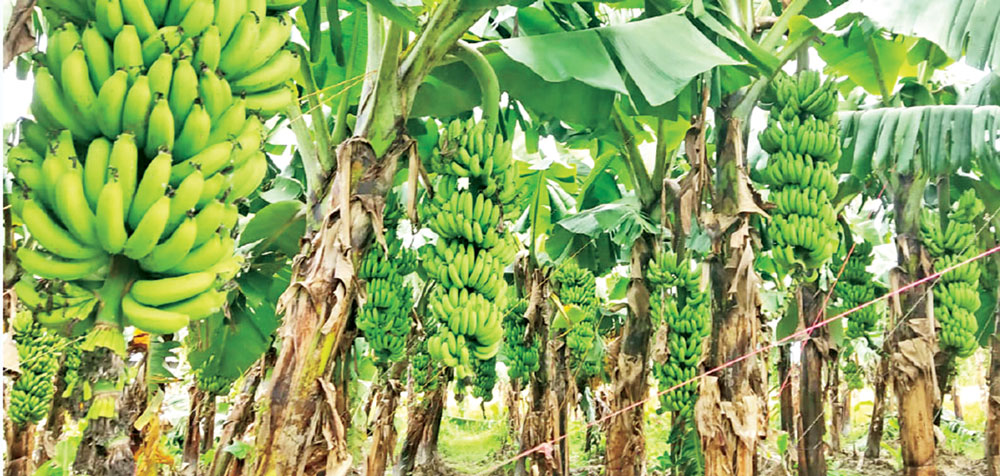

Kathmandu, Apr. 15: Consumers across the Kathmandu Valley are facing an unexpected surge in banana prices, with rates tripling in recent days due to a mismatch between high demand and limited supply. At present, bananas are being sold at Rs. 250 to Rs. 300 per dozen in local markets—far above the usual price range of Rs. 100 to Rs. 150.
Many consumers have expressed shock at the sudden increase.
Bhoj Raj Banstola, a resident of Matidivi, said he recently paid Rs. 310 for a dozen of large bananas.
“I was shocked with the price. Just three days ago, I bought a dozen for Rs. 250, and now it has jumped to Rs. 310,” he said, adding that he had never experienced such a steep price hike before.
Traders attribute the spike to reduced domestic production and a government-imposed ban on banana imports.
The restriction was introduced following recommendations from farmers to prevent the spread of the dangerous TR-4 (Panama) disease, which threatens banana crops.
The Plant Quarantine and Pesticide Management Centre imposed the ban on September 18, 2025, due to the possible risk of TR-4, which is considered dangerous for banana farming in Nepal.
Earlier, in September, banana farmers had requested traders to stop imports when local production was sufficient to meet domestic demand.
According to Amar Baniya, president of the Nepal Fruit Wholesaler Association, the ongoing import ban has significantly limited supply in the market.
“Local production is currently very low, and the main harvesting season for the G-9 (Grande Naine) variety will begin only from Bhadra. This supply gap has driven prices up,” he explained.
Illegal imports grow, affecting farmers and revenue
Baniya also claimed that illegal imports from India are contributing to market instability.
“Some traders involved in illegal trade are selling bananas at arbitrary prices. This not only burdens consumers but also causes the government to lose millions in revenue daily,” he said.
“The price of bananas is increasing due to rising demand, especially with the increasing heat. Demand is expected to rise further,” he said.
Currently, bananas are being sold for up to Rs. 300 per dozen, and prices may increase further with the upcoming Mother’s Day festival.
Baniya said that the association has completely banned the sale of illegally imported bananas at fruits wholesale market Kuleshwor.
He added that bananas worth Rs. 300,000 were seized by the association at fruits market Kuleshwor after being brought into the market illegally on Tuesday morning.He also informed that illegal imports are being supplied to retailers from places such as Jadibuti.
Some registered agro firms are reportedly issuing fake bills for imported bananas by labeling them as locally produced, making monitoring more difficult.
Farmers back strict enforcement of import ban
Meanwhile, banana producers have defended the import ban, stating that it has helped local farmers receive fair prices. Bishnu Hari Panta, president of the Federation of Nepal Banana Producers’ Ad Hoc Committee, said domestic production currently meets about 70 per cent of demand.
However, he acknowledged that the remaining shortfall has contributed to price increases and warned against artificial inflation by middlemen.
He expressed optimism that supply will improve from Shrawan onward, as more farmers have taken up banana cultivation following the import ban.
“The decision has encouraged farmers. In the long run, it will benefit both producers and consumers,” he said.
He urged the government to strictly enforce the ban on banana imports and to monitor the market to control artificial price hikes.
He added that the import ban has helped farmers receive fair prices for their produce.
“In the past, bananas would rot in farms due to lack of market access. Now, farmers are encouraged as they are getting better prices,” he said.
He warned that without the import ban, farmers might have been displaced, and the country would have had to spend large amounts on imports.
Banana is cultivated commercially in more than two dozen districts, including Jhapa, Chitwan, Morang, Udayapur, Sunsari, Nuwakot, Dhading, Nawalparasi, Rupandehi, Banke, and Bardiya.
According to the statistics, the total area under banana cultivation is 27,261 hectares, with a productive area of 27,284 hectares.
Annual production stands at around 404,671 tonnes, with a productivity of 17 tonnes per hectare.
The G-9 banana is a high-yield, disease-resistant, tissue-cultured variety gaining popularity in Nepal, especially in the Tarai region, including Chitwan and Jhapa.
“It is reasonable to impose import restrictions when local production is sufficient. However, when production is low and demand is high, imports should be allowed to stabilise the market and provide relief to consumers,” said Baniya.
He stated that local production would be sufficient from Bhadra to Mangsir.
We traders support prioritizing local products. However, imports should be allowed to control banana price hikes and provide relief to consumers during shortages,” he said
On December 26, 2025, the Federation of Fruit and Vegetable Entrepreneurs, Nepal, urged authorities to lift the import ban to balance demand and supply giving priority to the local produce.
Banana imports decline sharply
According to the Department of Customs, about 19,439 tonnes of bananas worth Rs. 765 million were imported by mid-March of the current fiscal year 2025/26.
Only 5 tonnes were imported in the month of Magh. The government collected Rs. 107 million in revenue from banana imports by mid-March.
Likewise, about 16,045 tonnes of banana worth Rs. 633 million were imported during the first three months of Shrawan, Bhadra and Ashoj of the current fiscal year.
This shows a sharp decline in imports after the ban was imposed.
By mid-March of the previous fiscal year, about 28,028 tonnes of bananas worth Rs. 1.15 billion had been imported.
Call for stricter market monitoring
Stakeholders remain divided on the policy. While farmers support strict enforcement of the import ban, traders argue that easing restrictions temporarily could help stabilize the market and provide relief to consumers.
As prices continue to climb, consumers are calling on the government to intensify market monitoring and take action against unfair pricing practices.
President Panta said that the government should control the illegal import of banana and also intensify the market monitoring to control unnatural price hikes of banana.



-original-thumb.jpg)
-square-thumb.jpg)
-square-thumb.jpg)