- Monday, 1 June 2026

Takes Steps For Milk Quality And Safety
World Milk Day is celebrated every year on June 1. The Day provides an opportunity to focus attention on milk and to publicise activities connected with milk and the milk industry. On this day, the goodness of milk and dairy industry issues are discussed and disseminated for the larger benefit of the public. Milk provides essential nutrients that support bone health, growth, and immune function, making it crucial for both children and adults. World Milk Day unites countries, organisations, and communities to recognise and amplify the dairy sector’s impact on sustainable agriculture, economic development, and global health.
In 2024, a total of 982 million tonnes of milk were produced worldwide, an increase of 1.4 per cent from the year 2023. The largest milk producer, India, produced 245 million tonnes during 2024. Nepal produced 2,718,177 tonnes during FY 2081/82 (2025), according to FAO and IDF reports. This year’s World Milk Day theme is "Celebrating Women Farmers." Nepal has been celebrating this day since 2011.
Economy
In Nepal, the dairy sector is one of the key drivers of the national economy. After paddy, milk is the largest agricultural commodity, and its contribution to national GDP and livestock GDP is around 5.5 per cent and 63 per cent, respectively. Milk brings the urban money to the rural area at least once a day, making the rural economy vibrant. As the milk money is mostly managed by the women head, it is used for improving livelihoods. Dairy also creates jobs in milk collection, dairy cooperative management, and the dairy inputs service provider chain.
The dairy value chain connects farmers to consumers through a series of value chain stakeholders like processors and marketers. Unique dairy products like Yak cheese are produced in the high alpine region which has recently been promoted by our youth Prime Minister Balendra Shah, accelerating its sales.
At the same time, the national dairy sector has been grappling with a series of problems, basically due to party-led interference, the appointment of political people without much understanding of profession as heads of policy body like National Dairy Development Board, as well as chief executive of parent dairy organisation called Dairy Development Corporation. Most dairy industries lack trained manpower for floor level work, middle or supervisory level as well as highly trained dairy technologists and quality control managers.
Specialised hands-on training courses and facilities do not exist, though existing training and educational institutions are running classroom-based diploma and degree courses. Under bilateral Indian fellowships, 45 to 50 Nepali students studied graduate and postgraduate dairy technology and returned home. Now, they are in the job market. Some are absorbed by the private sector dairy industries. Though the government institutions like NDDB, DDC, DLS as well as agriculture ministry seriously need this type of manpower, they are not serious about employing them, who are highly skilled and trained in large-scale commercial dairy plants in India.
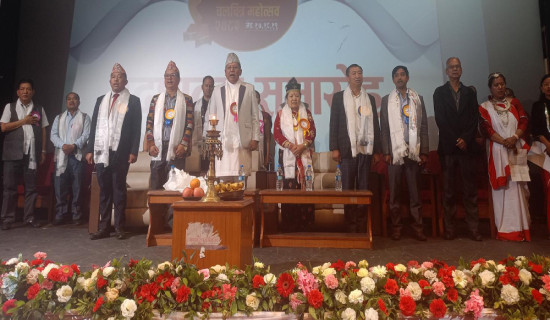
The quality of raw milk, pasteurised milk and dairy products are one of the major concerns of local consumers, which is why they are looking for fresh milk direct from the farm to be sure of the milk quality. Thus, to discuss the quality and overall dairy sectoral issues, a national dairy seminar titled “Nepali Dairy Sector: At the Crossroads of Survival—Act Now to Save It.” was organised by Food and Dairy Technology Coop Society Ltd in collaboration with the national institutions like National Dairy Development Board, Department of Food Technology and Quality Control, Dairy Development Corporation, Nepal Dairy Science Association (NDSA) and the Central Dairy Cooperative Association of Nepal.
The seminar concluded that Nepal’s dairy sector is facing system-wide challenges in quality, governance, and market structure. Despite its critical role in rural livelihoods and nutrition, the sector is constrained by poor milk quality, weak regulatory enforcement, and inefficient supply chains. Evidence highlighted widespread milk adulteration (10–20 per cent water addition), significant microbial contamination, and Aflatoxin M1 presence across the supply chain, raising serious food safety concerns. Approximately 80 per cent of milk is traded informally, limiting quality control and traceability. Additional constraints include uniform pricing systems, weak cold chain infrastructure, and seasonal supply imbalances, all contributing to declining consumer trust and reduced competitiveness.
Opportunities
That said, strong local and export opportunities exist in value-added products such as Himalayan cheese (chhurpi), technology adoption, and supply chain modernisation. One piece of good news is that mandatory legal standards for Himalayan cheese have been formulated and implemented by the government. However, FMD-free international certification is required to be eligible to export livestock products like milk and meat.
Key recommendations made by the seminar included revising milk standards to align with SAARC neighbouring countries and international benchmarks (Codex/SPS) to discourage adulteration; mandatory licensing of milk vendors and control of loose milk sales in urban areas; prioritising milk quality and safety through mandatory testing and traceability systems; strengthening regulatory enforcement and institutional capacity; introducing seasonal and quality-based milk pricing systems; investing in cold chain and processing infrastructure; promoting value addition, exports, and technology adoption; and developing an integrated national dairy strategy.
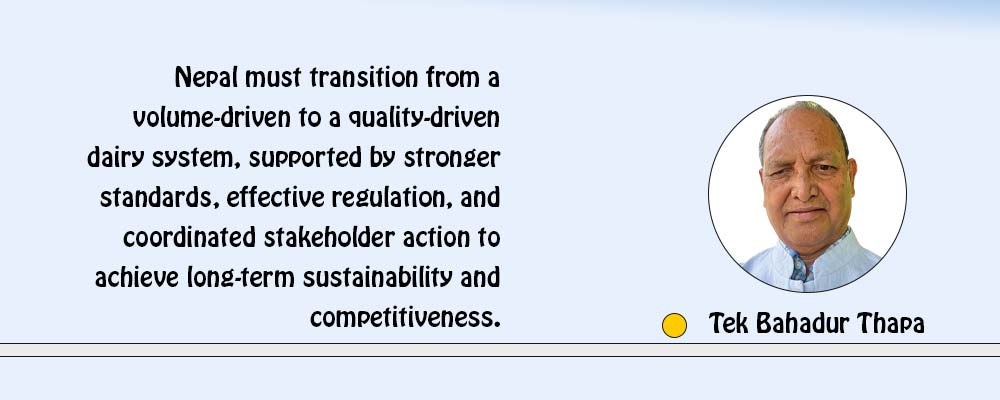
Nepal must transition from a volume-driven to a quality-driven dairy system, supported by stronger standards, effective regulation, and coordinated stakeholder action to achieve long-term sustainability and competitiveness.
(The author is founder chairman of Nepal Dairy Science Association.)