- Monday, 4 May 2026

Major political parties unveil ambitious agricultural reform agendas
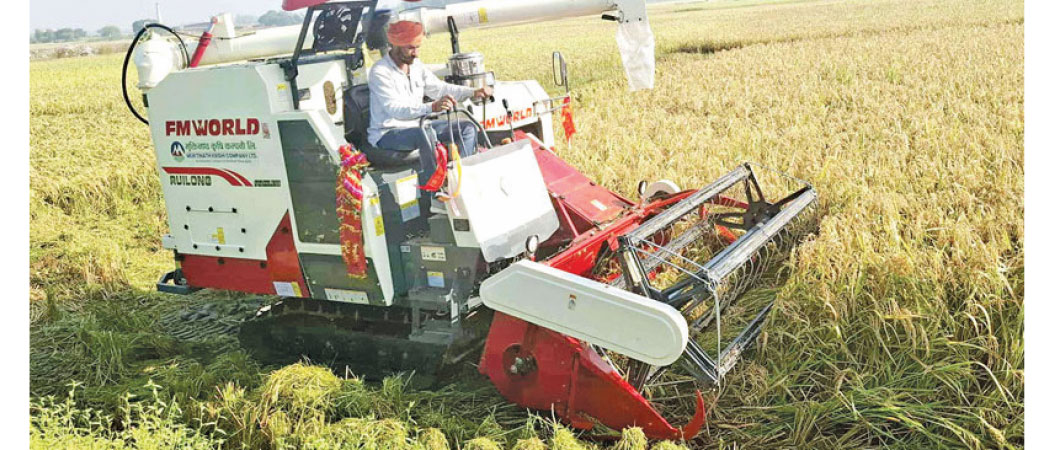

Kathmandu, Feb. 28: Major political parties have placed agricultural transformation at the centre of their election manifestos, pledging comprehensive reforms aimed at achieving food self-sufficiency, modernising farming practices, increasing farmer incomes, and reducing imports.
Almost all political parties, including the Nepali Congress, the Communist Party of Nepal (Unified Marxist–Leninist), Nepali Communist Party, Rastriya Swatantra Party and Ujyalo Nepal Party, have unveiled their election manifestos outlining their priorities for national development.
Nepali Congress: 'Agricultural investment decade' and farmer-centred reform
The Nepali Congress has pledged to make Nepal self-reliant in major food commodities, including grains, vegetables, fruits, fish, milk, meat, and eggs.
The party proposes establishing buffer stock systems through expanded storage and cold chain facilities to stabilise supply and prices.
The manifesto includes a policy of amending the legal provisions related to land use, availability of indigenous and advanced seeds, and providing timely fertiliser to farmers at the prescribed price.
A plan has also been put forward to establish a fertiliser factory in the Tarai region by utilising it during times of high domestic electricity production.
It is mentioned that small farmers will be provided with Kisan Credit Cards, insurance, concessional loans and insurance payments within 15 days by scientifically classifying farmers to make the agricultural profession respectable.
Landless and marginalised farmers will be encouraged through cash grants and value addition programmes.
It is stated that arrangements will be made for sustainable solutions to damage caused by wildlife, utilisation of barren land, expansion of investment in modern irrigation and 50 per cent subsidy on irrigation electricity.
A ‘land bank’ will be established at the local level, and a commercial agriculture programme targeting youth will be launched.
Tax exemptions for processing industries based on domestic products, subsidies for cold storage and transportation, and the establishment of agricultural input and machinery industries are also included.
Celebrating the coming decade as the ‘Agricultural Investment Decade’, the federal, provincial and local levels have set a target of investing 5, 10 and 15 per cent of the budget in agriculture, respectively.
The policy manifesto mentions significantly reducing the import of main agricultural products within five years, making pesticide testing mandatory at customs checkpoints, and attracting youth to agriculture through digital technology.
"We will launch various programmes targeting returnees and youth for agricultural industry and rural employment," read the manifesto.
The party said that it will provide easy access to improved varieties and technologies developed by the Nepal Agricultural Research Council through the local level for farmers.
"We will develop an environmentally friendly agricultural system by adopting soil conservation, good agricultural practices, organic fertilisers, solar energy-based irrigation, rain harvesting, and climate-friendly technologies," it said.
CPN-UML: Commercialisation and large-scale agribusiness focus
The CPN-UML has outlined a plan to transform traditional farming into modern commercial agribusiness enterprises.
The party aims to create profitable, large-scale agricultural industries operated by entrepreneurial youth.
Under the slogan “Modern Farming, Advanced Enterprise – Employment in Agriculture, Adequate Income,” the party has pledged sweeping policy and legal reforms to restructure the agricultural economy.
The manifesto emphasises converting subsistence farming into profitable agribusiness led by entrepreneurial youth, supported by modern machinery, technology, and improved infrastructure.
Medium- and large-scale farms engaged in crops, livestock, poultry, fisheries, and beekeeping will receive concessional loans, insurance coverage, and access to public land at subsidised lease rates.
A key proposal is the establishment of a comprehensive “land bank ecosystem,” integrating land access, financing, minimum support prices, crop insurance, and advance purchase agreements with commercial producers.
The party also plans to promote organic fertilisers, pest management, and conservation of indigenous seeds through community seed banks and research-driven breed improvement programmes.
To strengthen technical capacity, CPN-UML has pledged to deploy skilled agricultural technicians to every ward and promote agricultural education from the grassroots level.
It also promises to enhance coordination among research, education, and extension services while ensuring transparency and accountability in subsidies and support price mechanisms.
The infrastructure development will be prioritised, including irrigation, road connectivity, reliable electricity, and the timely supply of quality seeds and fertilisers.
The party aims to establish agro-processing zones and logistics nodes to facilitate storage, grading, processing, and market access.
The manifesto also envisions positioning Nepal as a hub for organic production, supporting certification, branding, and exports.
Production-based export subsidies will be provided for high-value crops, while staple food producers will receive targeted support to enhance food security.
Additionally, the party has committed to resolving long-standing land ownership and landlessness issues permanently.
Nepali Communist Party: Legal reform, irrigation expansion
The Nepali Communist Party has unveiled a comprehensive agriculture and rural economy transformation plan, prioritising food self-sufficiency, farmer rights, and large-scale irrigation expansion.
Under its proposed reforms, the party has pledged to enact a Unified Agriculture Act and a Farmers’ Rights Act within one year.
It also plans to implement the previously announced “Agriculture Investment Decade 2081–2091,” mobilising public, private, cooperative, and donor investments to drive transformative projects in the sector.
Farmers will be classified based on production and ownership, with identity cards distributed nationwide within a year.
The National Farmers Commission will be strengthened to ensure direct farmer participation in policymaking.
The Ministry of Agriculture and its subordinate bodies will be restructured to align with the federal system, while a long-term agricultural strategy will be rewritten with farmer involvement.
According to the manifesto, a three-tier coordination mechanism will be established: federal authorities will handle policy and advanced research, while provincial and local governments will oversee programme implementation, seed distribution, and technical services.
Integrated agricultural service centres and laboratories will be set up in all local levels, with at least one agricultural technician and one veterinarian assigned to each ward.
The party has also committed to ensuring minimum wages, social security, and insurance for agricultural workers, along with establishing a National Agricultural Disaster Fund to protect farmers from floods, droughts, hailstorms, and epidemics.
A digital farmer database will be created through regular agricultural censuses, and subsidies, insurance, and support price systems will be made transparent and accountable.
On irrigation, the party aims to expand irrigation coverage to 80 per cent of irrigable land and 60 per cent of total cultivable land within five years.
The party has proposed to implement the Integrated Karnali Irrigation Special Programme in Karnali Province.
Major national pride projects—including Sikta, Babai, Rani-Jamara-Kulariya, Mahakali-III, Bheri-Babai Diversion, and Sunkoshi-Marin Diversion—will be completed on schedule, alongside expanded solar, lift, and surface irrigation systems nationwide.
Rastriya Swatantra Party: Policy stability, tech-driven agriculture
The Rastriya Swatantra Party (RSP) has framed agriculture as the backbone of economic reform, promising policy stability, transparent subsidies, reliable insurance systems, and technology-driven productivity.
The party said it would ensure policy stability, stable markets, transparent subsidies, reliable crop insurance, adequate irrigation, and technology-based production systems to build confidence that “one can become prosperous through agriculture in Nepal.”
The party pledged to prioritise agriculture not only for production and trade balance, but also as a key pillar for food and nutritional security, positioning it as a central driver of the national economy.
To promote import substitution, the party plans to pursue trade agreements that support domestic producers and introduce legal and customs reforms to boost self-sufficiency in crops that can be produced within Nepal.
It said that it will implement effective measures such as tax exemptions, concessions and investment incentives, giving special priority to the processing and value-added industries of agricultural produce.
"We will expand 'Fintech' and 'Agritech' to increase agricultural productivity through the use of technology," said the party. The party is committed to effectively implementing the necessary policy arrangements and incentive programmes to promote the utilisation of barren agricultural land and land consolidation.
It has pledged to increase agricultural production and reduce production costs by increasing investment with priority in irrigation, chemical fertilisers and agricultural mechanisation.
"We will restructure the Nepal Agricultural Research Council to increase overall production and productivity by effectively contributing to agricultural production growth, cost reduction, climate adaptation and value chain development.
Ujyalo Nepal Party: Substantial support to farmers, irrigation facility
The Ujyalo Nepal Party has announced a comprehensive set of agricultural and irrigation commitments as part of its election manifesto, promising substantial support to farmers and structural development across the country.
Key proposals include direct grants for farmers through digital ID systems to support irrigation, fertilizers, seeds, and insurance, with funds transferred straight into beneficiaries’ bank accounts.
The party aims to transform 50 per cent of agricultural land into organic farming zones within five years, alongside guaranteed procurement of organic produce at 20 per cent above cost price.
The arrangements will be made to provide concessional loans of up to Rs. 2.5 million to young farmer groups for 5 years. The manifesto also pledges free electricity for agricultural irrigation and subsidised power for commercial farming activities such as fish, poultry, goat farming, mushroom cultivation, and tea production.
On infrastructure, the party vows to complete major national irrigation projects—including Sunkoshi–Marin, Bheri–Babai and others—to provide surface irrigation to 300,000 hectares, promoting the slogan “Water of Hills to Madhes; People of Madhes to the Hills.”
Additionally, it promises cluster based underground irrigation in the Tarai and lift irrigation in hilly regions, aiming to expand irrigated land significantly over five years.
-square-thumb.jpg)


-original-thumb.jpg)