- Tuesday, 2 June 2026

Cardamom exports surge on higher prices, output
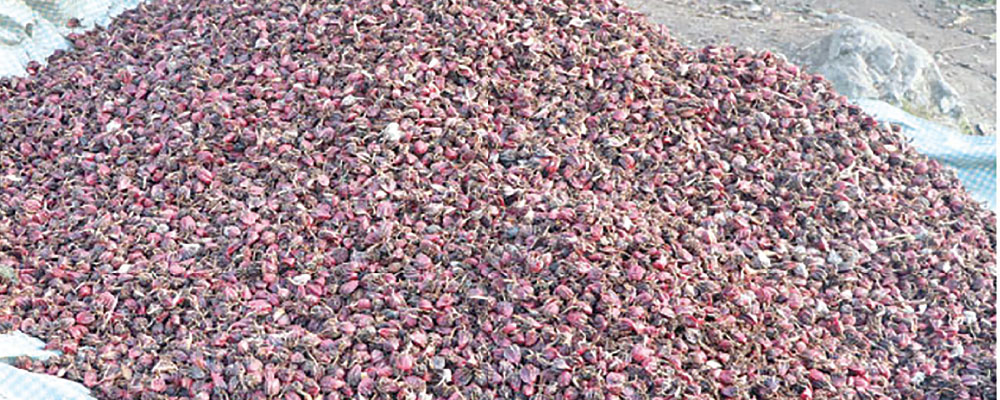

Kathmandu, Jan. 25: Nepal’s export of large cardamom, one of the country’s major agricultural export commodities, recorded significant growth during the first half of the current fiscal year 2025/26, driven by higher prices and increased production.
According to statistics from the Department of Customs, cardamom worth Rs. 7.19 billion was exported during the first six months (from July 2025 to mid-January 2026) of the current fiscal year.
This represents a 57.67 per cent increase compared to the corresponding period of the previous fiscal year, when exports stood at Rs. 4.56 billion during the first half of FY 2024/25.
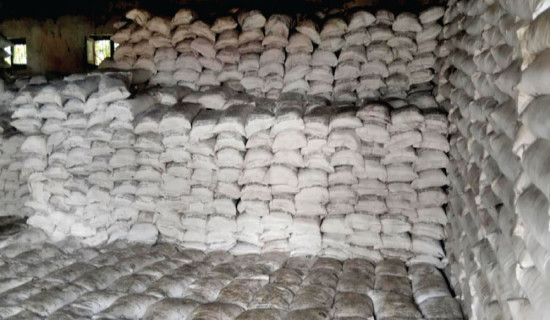
The growth was also reflected in export volume. Nepal exported 3,461 tonnes of cardamom during the review period, up from 2,674 tonnes in the corresponding period last year. The export of cardamom had reached an all-time high of around Rs. 8.27 billion during the fiscal year 2022/23, when about 9,990 tonnes were exported.
However, exports declined to Rs. 7.94 billion in FY 2023/24 and further to Rs. 7.68 billion in FY 2024/25. President of the Federation of Large Cardamom Entrepreneurs of Nepal Deepak Nepal attributed the current surge in exports mainly to a significant rise in prices at the beginning of the season.
“Farmers were able to sell cardamom at prices ranging from Rs. 90,000 to Rs. 95,000 per man (40 kg) from the start of the season in August. During the peak production season in November, prices even reached Rs. 100,000 per man,” he said.
According to him, this is the highest price farmers have received in the past ten years. The all-time record price, however, was set in 2010, when cardamom fetched as much as Rs. 120,000 per man.
He expressed hope that prices could surpass that record this year due to insufficient stock in major producing countries, including Nepal, India, and Bhutan. Price fluctuations in the domestic market largely depend on production levels in these three countries.
The stocks of cardamom were sold out last year due to price increment than the previous years, he said. Normally, farmers and traders keep stock of cardamom themselves when the prices fall and sell when prices rise.
In addition to higher prices, production has also increased this year. “We estimate cardamom production in Nepal has increased by 20 per cent compared to last year,” said Nepal. The country is expected to produce around 7,000 tonnes of cardamom this year, up from 5,800 tonnes last year.
Most of Nepal’s cardamom is exported to India, making domestic prices heavily dependent on the Indian market. Nepal remains the world’s largest producer of large cardamom, accounting for 55 per cent of global production, followed by India with 35 per cent and Bhutan with 10 per cent.
India is also the largest consumer, accounting for more than 83 per cent of global consumption.
The large cardamom is grown predominantly in Eastern Nepal where four districts Taplejung, Sankhuwasabha, Panchthar and Ilam account for more than 80 per cent of national production.
Taplejung district occupies the first position in producing cardamom while Sankhuwasabha is the second highest producer. Taplejung holds 44 per cent and Sankhuwasabha 22 per cent of the country’s total cardamom production.
Cardamom is cultivated in a total of 43 districts, where around 18,500 hectares of land is under cultivation.