- Thursday, 21 May 2026

Gold hits unprecedented highs amid global turmoil
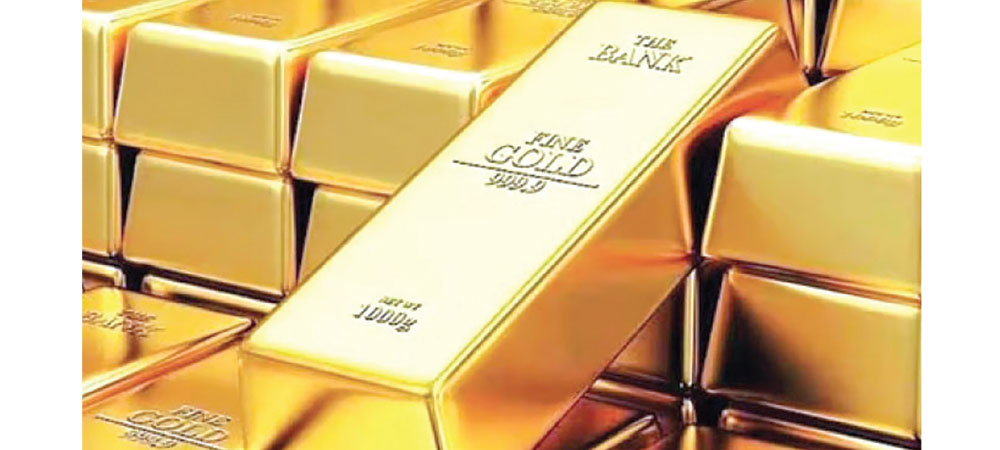

Kathmandu, Feb.1: Gold price, which was on constant rise in recent months, has, of late, skyrocketed in local and international markets. It has jumped to unprecedented Rs. 340,000 per tola in the Nepali market on Thursday.
The price rise has come as a shocking event, as Nepalis had never imagined a few months ago that the gold price would cross the mark of Rs. 300,000 per tola. Yet this has become a reality. The unprecedented surge reflects strong spillover effects from its soaring international prices and rising global economic uncertainty.
The price of the precious yellow metal has been reaching a new high every week in recent days. On Thursday, gold reached a historic high of Rs. 339,300, followed by another sharp rise on Thursday, when it recorded a single-day increase of Rs. 20,500 per tola—the largest jump in a day in Nepal’s bullion market.
However, the price of gold declined by the same amount of Rs. 20,500 per tola on Friday and traded at Rs. 318,800 per tola.
Gold prices in Nepal are closely aligned with international market trends. The recent surge has also been largely driven by the rising global prices. Heightened geopolitical tensions, shrinking investment opportunities due to uncertainty, and growing fears of a global economic slowdown have prompted investors worldwide to shift toward gold.
Over the past two weeks alone, gold prices in Nepal have increased around by Rs. 62,000 per tola.
The rise in gold price looks more dramatic when we compare its prices of the past three years. In the last three years, gold prices have climbed by almost Rs. 233,000 per tola, including a sharp increase of Rs. 180,000 per tola in a single year.
Gold was priced at Rs. 106,000 per tola in January 2023. It rose to Rs. 118,400 in 2024, and reached Rs. 160,000 in 2025 before crossing the mark of Rs. 340,000 per tola last week. Two decades ago, in January 2006, gold was priced at just Rs. 14,800 per tola in Nepal, while in 1995 it was around Rs. 7,000 per tola.
Along with gold, the price of silver has also increased following its growing demand. Silver price reached record high at Rs. 7,505 per tola in domestic market on Thursday. The silver price also dropped to Rs. 7,065 per tola on Friday. Economists and bullion traders attribute the rapid price rise of gold to its surging international demand driven by geopolitical instability.
The Russia-Ukraine war and the expanding tensions in the Gaza-Israel region, along with broader regional uncertainties, have motivated investors to accumulate gold. “Gold has once again proven its status as a safe-haven asset,” they said, noting that investors worldwide are increasingly shifting funds toward precious metals amid global economic and political instability.
With international gold prices continuing to climb, experts warn that prices in Nepal could remain highly volatile in the coming days, potentially setting even higher records if global uncertainties persist.
Gold's global market
Prices of gold and silver have been soaring in the international market, because of heightened geopolitical uncertainty and growing investor preference for safe-haven assets, particularly precious metals, said Dr. Gunakar Bhatta, former executive director of Nepal Rastra Bank (NRB).
“International investors are increasingly shifting toward the commodity market, especially gold and silver, amid expectations of further interest rate cuts by the US Federal Reserve.
The recent reduction in interest rates by the Fed, along with signals that rates may be lowered further, has reduced returns on traditional financial instruments, prompting people to spend more in gold," he said.
Uncertainty has also intensified following policy decisions adopted by US President Donald Trump. These moves, combined with reported pressure on Federal Reserve leadership to further reduce interest rates, have increased market volatility and investor anxiety. As a result, many investors are seeking protection in safe-haven assets such as gold, he added.
Domestic gold market expert Tej Ratna Shakya noted that investors have increasingly turned to gold as global conflicts, economic contraction, and alternative investment sectors have weakened.
“Previously, the dollar, stock markets, and oil were the preferred investment options. However, as stock markets have weakened and global demand for oil has declined, gold has emerged as the top choice for investors,” he said.
According to Shakya, in the past, strong stock markets encouraged investors to sell gold and invest in equities, while market downturns encouraged a return to gold.
He also pointed out that the traditional inverse relationship between the dollar and gold is weakening. “Even when the dollar is weak, investors are increasingly choosing gold over the dollar as a safe alternative,” he said.
Economist Dr. Chandra Mani Adhikari said central banks worldwide have begun increasing their gold reserves at the expense of the US dollar as the greenback is weakening. This shift has significantly boosted global demand for gold, pushing prices sharply higher.
The central banks have added more than 1,000 tonnes of gold to their reserves in 2025 alone.
Meanwhile, petroleum products—another major component of the global commodity market—have experienced a declining demand due to slowing global economic activity. Reduced confidence in energy markets has indirectly strengthened gold’s appeal as a stable investment option, Dr. Bhatta said.
As a result of these combined factors, gold reached a new all-time high on Thursday, touching $5,555 per ounce—representing a 100 per cent increase over the past one year.
Adhikari added that gold prices could rise further as the traditional structure of the global economic system is weakening amid growing international economic uncertainty.
Correction likely
Over the past year, the price of gold in the international market has doubled.
Gold, which was priced at USD 2,700 per ounce at the end of January 2025, has now climbed to around USD 5,555 per ounce—an increase widely regarded as unnatural.
As a result, gold prices in Nepal have surged by approximately Rs. 180,000 per tola, reaching nearly Rs. 340,000 per tola.
According to Shakya, there is a strong possibility of a correction—or even a crash—in gold prices.
He cited historical trends to support this view. In 1998, gold had reached USD 858 per ounce but later fell to USD 248 per ounce.
At that time, European markets dominated global gold holdings, and when European countries auctioned their reserves—considering gold an unproductive asset—prices declined significantly.
Similarly, gold was priced at around USD 400 per ounce in 2002 and gradually rose to USD 1,900 per ounce by 2011. Following a market correction, however, prices dropped to approximately USD 1,050 per ounce by the end of that year.
Based on these historical patterns, international analysts believe the gold market may once again undergo a correction. However, no one knows when and how such a correction will occur.
In the international market, the price of gold, which reached USD 5,555 per ounce on Thursday, dropped to USD 5,218 per ounce before settling at USD 4,891 per ounce. This means gold price is likely to drop down to Rs. 300,000 Sunday.
Shakya said that the price of gold fell in the international market due to sell-offs. However, it is not certain that the price of gold will continue to decline.
Despite this possibility, market analysts suggest that gold prices could still rise to USD 6,000 per ounce in the international market this year.
If this level is reached, the price of gold in Nepal is expected to exceed Rs. 400,000 per tola.
Dr. Adhikari said that although the recent surge in international gold prices appears unnatural, strong demand from investors and central banks worldwide has encouraged continued investment in gold, driving prices higher.
Effect on Nepali economy
Nepal does not have strong investment-driven demand for gold. Instead, gold consumption is largely shaped by social, cultural, and traditional practices, particularly during weddings and religious ceremonies. As a result, the immediate macroeconomic impact of rising gold prices remains limited.
However, gold has long been regarded as a form of liquid wealth in Nepal. Many households view the yellow metal as a substitute for cash, and tend to purchase jewellery not only for cultural reasons but also as a financial safeguard that can be sold during times of need.
Despite this role, the sharp rise in gold prices is expected to place a heavy burden on consumers, said Shakya, who is also a gold trader.
“Families planning weddings or cultural events will need to allocate significantly more money to buy ornaments. Consequently, domestic demand for gold is likely to decline,” he said.
Economist Dr. Bhatta said that higher gold prices increase Nepal’s import bill, putting pressure on the balance of payments, although elevated prices also tend to suppress demand.
“When prices rise sharply, people adjust their purchases according to their capacity. Those who planned to buy five tola of gold will reduce their purchases,” he explained.
Shakya added that recent US tax policies have weakened the Indian currency against the US dollar as investors' interest in the Indian market has declined, indirectly affecting the Nepali rupee.
The Nepali currency has now fallen to its weakest level, with one US dollar costing around Rs. 147.48.
The depreciation of the rupee has further pushed up gold prices in the domestic market.
Currently, the Nepal Rastra Bank has allowed commercial banks to import 25 kilograms of gold per day to meet domestic demand.
There are about 25,000 gold and silver businesses operating across Nepal, employing nearly 300,000 people, including artisans and other workers.
Shakya warned that bullion traders risk being pushed out of the market, putting investments worth over Rs. 100 billion in the bullion sector at risk.
The continued surge in gold prices has placed significant financial pressure on Nepali households, particularly during cultural and religious occasions where gold plays an essential role.
With prices at record highs, families are finding it increasingly difficult to afford even small quantities of gold. Middle- and lower-income households have been hit the hardest, with many forced to take loans, use savings, or cut back on essential expenses to meet cultural obligations.
Traders report that families are reducing the quantity of gold purchased for ceremonies, opting for lighter jewellery, or turning to other options.
“The sharp rise in gold prices has clearly exceeded the purchasing power of ordinary Nepalis,” Shakya said, adding that while demand from wealthy individuals remains normal, overall trading activity has declined. “Few people are coming to sell gold rather than buy it.”
He noted that many households regularly bought small amounts of gold and recycled old jewellery for weddings and other ceremonies.
Although gold trading has dropped sharply, buying and selling of silver has begun to pick up in the local market.
Dr. Adhikari warned that sustained increases in gold prices could further erode consumer purchasing power and strain household budgets, especially given gold’s cultural significance.
Although individuals are not legally allowed to purchase raw gold in Nepal, Shakya estimates that investment in gold through jewellery continues to rise.
Potential risks for Nepal
The surge in international gold prices has raised concerns about possible capital flight from countries like Nepal, said Dr. Bhatta.
Although Nepal does not have policies allowing investment in raw gold or direct participation in international gold markets, Nepali investors may still use informal channels to invest abroad, drawn by rising prices and gold’s reputation as a safe-haven asset, he added.
Meanwhile, foreign investment inflows into India have weakened due to US tariff policies.
This has contributed to the depreciation of Indian currencies against the US dollar, despite economic progress. Because of Nepal’s close economic ties with India and pegged currency, Nepal may also be affected by it.
Meanwhile, there are also indications that domestic investment in gold has increased in recent years.
According to Shakya, about 5 per cent of people invested in gold in 2009, reflecting an early trend. “At present, investors are increasingly turning to gold due to the lack of attractive opportunities in the stock market and other sectors,” he said.



-square-thumb.jpg)


-original-thumb.jpg)