- Friday, 29 May 2026

Capital spending sits at 15%, deficit hits Rs. 119B
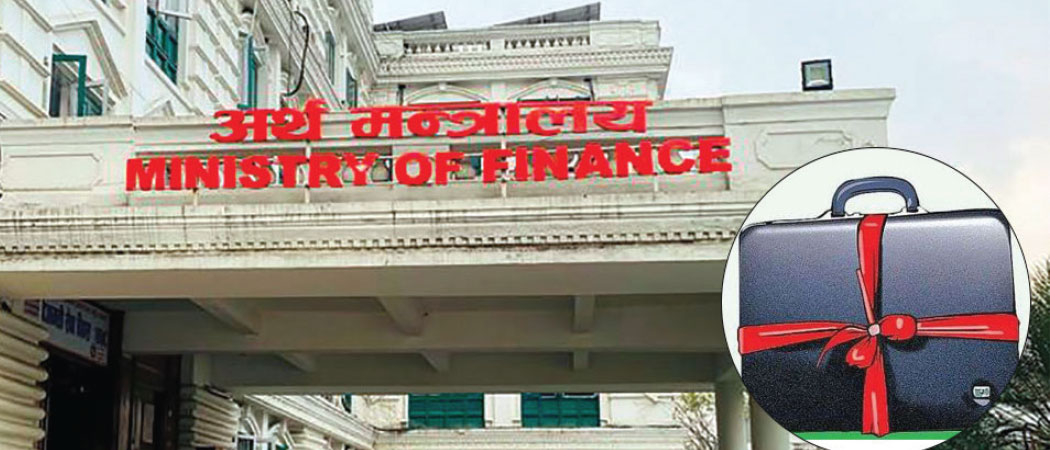

Kathmandu, Feb. 14: The government’s capital expenditure has remained sluggish in the first seven months of the current fiscal year 2025/26, with spending reaching only 15.62 per cent of the allocated amount as of February 12.
According to the daily receipt and payment status report of the Financial Comptroller General Office under the Ministry of Finance, the government spent Rs. 63.72 billion out of the Rs. 407.88 billion allocated for capital expenditure between July 17, 2025 and February 12, 2026.
The pace of capital spending is slower compared to the same period last fiscal year 2024/25, when 19.42 per cent (Rs. 68.41 billion) of the Rs. 352.35 billion allocation had been spent in the first seven months.
Presenting the half-yearly budget review on Tuesday, the Ministry of Finance attributed the weak capital expenditure to inadequate prior project preparation, complications in land acquisition and forest area utilisation, and damage to physical infrastructure caused by the Gen Z movement.
In contrast, recurrent expenditure of the government has risen.
The government spent Rs. 562.37 billion under recurrent expenditure during the review period, which is 47.62 per cent of the Rs. 1,180.98 billion allocated for the current fiscal year.
In the same period last fiscal year, recurrent spending stood at 45.82 per cent (Rs. 522.62 billion) of the Rs. 1,140.66 billion allocation.
Under the financing heading, the government spent Rs. 175.27 billion in the first seven months—46.71 per cent of the total allocation of Rs. 375.24 billion.
Overall, the government has spent Rs. 801.37 billion, or 40.8 per cent of the total annual budget of Rs. 1,964.11 billion, during the review period. Analyzing the half-yearly performance, the government has revised the estimation of budget expenditure and revenue collection.
With total income standing at Rs. 682.16 billion—44.49 per cent of the annual receipts target—the government recorded a deficit of Rs. 119.21 billion in the first seven months of the fiscal year due to higher expenditure than income.
The Ministry of Finance has estimated that only 85.96 per cent of the initially allocated budget will be spent in the current fiscal year.
It projects total expenditure at Rs. 1,688.32 billion, around Rs. 275 billion less than the original budget.
Recurrent expenditure is projected to reach Rs. 1,125.97 billion, while capital expenditure is estimated at Rs. 243.30 billion by the end of the fiscal year.
Revenue collection up by 3.5 %
Similarly, the revenue of around Rs. 665.02 billion has been collected in the first seven months of the current fiscal year 2025/26.
According to the report, the revenue collection of the government during the review period stands at Rs. 665.02 billion which is 44.93 per cent of the initial annual target (Rs. 1,480.30 billion).
Out of the total revenue collection, tax revenue stood at Rs. 599.31 billion or 45.21 per cent and non-tax revenue stood at Rs. 65.71 billion or 42.55 per cent of the annual target.
Of the total revenue collection target of Rs. 1,480 billion, Rs. 1,325.58 billion is to be raised under tax revenue and Rs. 154.41 billion under non-tax revenue in the current fiscal year.
During the review period of the current fiscal year, grants of only Rs. 12.83 billion have been received by the government. It is 24.02 per cent of the annual target of the government.
The government has set an annual target of Rs. 53.44 billion grants for the current fiscal year. Similarly, the government has received Rs. 4.3 billion under other recipients in the first seven months of the current fiscal year.
The revenue collection has increased by 3.5 per cent during the review period as compared to the same period last year. The government had collected revenue of Rs. 642.85 billion during the first seven months of the last fiscal year.
Meanwhile, the Ministry has revised the revenue and miscellaneous receipts estimate downward to Rs. 1,298 billion for the current fiscal year, compared to the earlier target of Rs. 1,480 billion.
Additional liabilities not included in the budget for relief and reconstruction have been created, while tax exemptions given to industrial establishments and business laxity have led to a contraction in revenue collection, the ministry said.



-original-thumb.jpg)