- Saturday, 2 May 2026

Senior Citizens Need Emotional Warmth

Nepal is changing rapidly. Migration from villages to cities and foreign countries has become a common reality. Remittance strengthens the economy, modern houses replace old ones, and educational opportunities have expanded. Yet behind this visible progress, a silent pain continues to grow the loneliness and neglect of senior citizens. In many villages, elderly parents now live alone. Their sons and daughters are working abroad or are settled in cities. The house stands firm, but the courtyard feels empty. Phone calls have replaced daily conversations. Money arrives through banks, but emotional presence is missing. For many senior citizens, the most difficult burden is not financial hardship but silent isolation.
Urban life has not solved the problem. The practice of nuclear families has reduced intergenerational bonding. Even when elderly parents stay in the same home, meaningful conversation is rare. After returning from the office or business, family members often remain occupied with mobile phones, laptops, and television. Technology has connected the world but, but in many homes, it has quietly disconnected hearts. Old age is a sensitive and sacred stage of life. It is often compared with childhood. Just as children seek affection and reassurance, elderly parents also long for love, patience, and care. At this age, many have already lost close friends and sometimes even life partners. Physical strength weakens, eyesight fades, hearing declines, and chronic diseases such as diabetes, high blood pressure, and dementia become common.
Asking for respect
Senior citizens have spent their lives struggling for their children. They worked tirelessly to provide education, secure property, and build social status. They sacrificed comfort for the brighter future of the next generation. A recent incident in my own neighbourhood deeply disturbed me. An elderly father, aged 82, had worked hard throughout his life to make his children successful. He managed to send his son to Australia for better opportunities. The son became settled there. A few years ago, he invited his parents to stay with him for two or three months. However, he could not adjust to the new environment and returned to Nepal. For the last six months of his life, the father remained seriously ill. The son was in contact by phone and promised several times that he would come to Nepal soon. He wished to see his son and grandson one last time.
He longed to rest his final breath in the lap of his own child. But the son could not manage the time to visit. When the news of the father’s death was immediately conveyed to him, his response was painful: “Oh, he died? Please do whatever rituals are needed there. I cannot come to Nepal. I will perform the ceremony here.” My mind could not escape one question: Why do parents struggle their whole life for the betterment of their children, and what do they receive in return?
The growth of old age homes over the past two decades also indicates both compassion and crisis. Institutions like Pashupati Briddhashram have provided shelter to many elderly people. Some senior citizens voluntarily choose such places for spiritual peace. In such cases, families remain supportive and maintain regular contact. However, there are also cases where elderly parents are placed in old age homes without genuine consent. Once admitted, visits become rare. Emotional ties gradually weaken.
Recognising these issues, Nepal introduced the Senior Citizen Act, 2079 (2022), 1st edition. The Act clearly states that caring for senior citizens is not only a moral duty of the family but also a legal responsibility supported by the state. It provides social security for those without support and legal action against neglect and abuse. Additional punishment is imposed for crimes committed against individuals above 75 years of age. Local governments are empowered to ensure protection and welfare. These legal provisions are important. They send a clear message that elderly rights are human rights. However, the law alone cannot create compassion. Justice for senior citizens must begin within families. It must grow from ethical awareness and emotional responsibility.
Wisdom of society
Senior citizens are not burdens. They are the memory and wisdom of society. Their experiences guide younger generations. Listening to them strengthens families. Ignoring them weakens social values. Nepali Sanatan culture has long taught us: “Matri Devo Bhava, Pitri Devo Bhava” regard mother and father as divine. This principle is not outdated. It remains a foundation of civilised society. Modernisation should not erase gratitude. Economic success should not silence emotional duty. The incident of my neighbour continues to remind me that justice for senior citizens is not only about law, allowance, or policy.
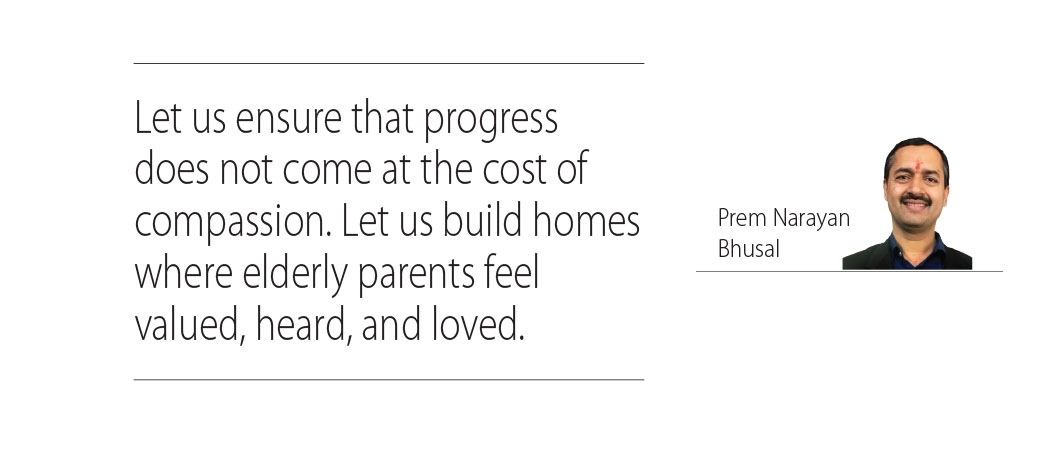
Today’s youth are tomorrow’s elderly. The way we treat our parents today shapes the society we will inherit. If we fail to respect aging today, we risk facing the same emptiness tomorrow. Nepal stands between tradition and modernisation. Let us ensure that progress does not come at the cost of compassion. Let us build homes where elderly parents feel valued, heard, and loved. Only then can we truly say that justice for senior citizens has been served not merely in law books, but in real life.
(Bhusal is a psychological counsellor.)
-square-thumb.jpg)