- Monday, 25 May 2026

Nepal becomes fertile ground for proliferation of political parties
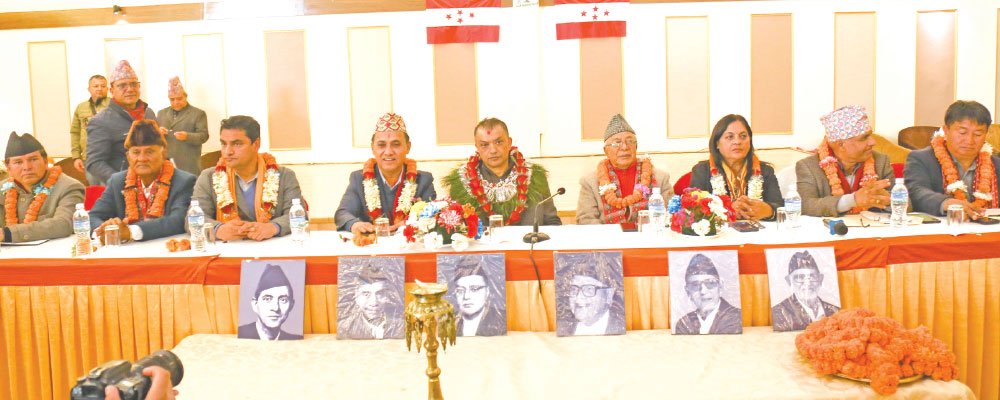
Kathmandu, Jan. 18: Nepal has witnessed a sharp rise in the number of registered political parties since the restoration of multiparty democracy, particularly after the adoption of federalism and proportional representation.
While political pluralism is a symbol of democracy, the unchecked growth of parties raises questions about purpose, governance, and democratic efficiency.
Historical growth of political parties
There were only 10-12 political parties during the democratic movement and before the Panchayat system. Over the past 75 years, this number has risen to 137, excluding six parties that were recently deregistered by the Election Commission (EC).
In the early years following the 1950-51 democratic movement, only 10-12 political parties were active, including Nepali Congress, Communist Party Nepal, Gorkha Parishad, and Praja Parishad, which were founded to struggle against the autocratic Rana regime. Among them, only nine parties contested the first parliamentary elections held in 1959.
Political parties were banned after King Mahendra dissolved Parliament and introduced the Panchayat system in 1960. During the period 1960–1990, no parties were officially recognised, although Nepali Congress and communist factions continued to operate secretly.
Following the restoration of multiparty democracy after the 1990 People’s Movement, dozens of parties registered with the Election Commission. By the 1991 general election, around 20 parties were officially recognised and contested for parliamentary seats.
The number of parties continued to grow over time. By the mid-1990s, around 30–40 parties had been registered, increasing further after Nepal became a Federal Democratic Republic in 2008. Over 70 parties were registered by the 2008 Constituent Assembly (CA) election, of which 54 took part in the polls.
In the second CA election, 139 parties were registered, of which 122 contested. In the 2017 general election, 122 parties were registered, and 95 participated. In the 2022 general election, 84 parties registered with the EC to contest the federal and provincial elections.
Now the number has reached 137
According to the EC, 25 new parties were registered after elections to the House of Representatives (HoR) were declared following the September 8–9 Gen Z movement.
Of the 143 parties registered with the Commission, 114 are taking part in the upcoming polls.
Among them, 102 parties will contest independently, and 12 parties have formed five alliances to contest under a single election symbol, each alliance receiving a separate symbol. After the EC scrapped the registration of six parties that failed to pay the required fund, the total number stands at 137.
Scenario in South Asia and beyond
India, the world’s most populous country and the seventh largest by area, has more than 2,500 registered political parties, although only a few enjoy national status.
As of September 2025, there are six national parties, 58 sub-national ones, and 2,046 unrecognised parties. However, power is concentrated in a few parties.
As of the 2024 elections, Pakistan had 167 officially registered political parties. Bangladesh has 59 registered parties.
Similarly, there are at least 55 national political parties in the USA and 238 at the state level, while Norway, considered the strongest democratic country, has about 22 parties listed in the official party register.
Factors behind proliferation of parties
Professor of political science, Lok Raj Baral, said many seasonal parties emerge during elections.
“Over time, most of them disappear. Many fail even to secure the minimum number of votes and are eliminated during elections. Some have already dissolved or been abandoned.”
Former Chief Election Commissioner Neelkantha Upreti said that after the conflict and the peace process, Nepal adopted a mixed electoral system.
“The system was described as mixed, but in practice it never became a fully integrated mixed system. Even winning a single seat could be enough to become a minister. This sent a clear signal that politics offered quick rewards. As a result, many Nepalis felt encouraged to open their own parties.”
Upreti added: “Nepal has registered an excessive number of parties, which is neither necessary nor healthy for democratic practice. Party formation has become easy.”
He said a small group can register a party, appoint a chairperson, gain social status, merge with larger parties for electoral advantage, contest elections, win a seat, and then seek ministerial positions. "This has weakened the foundations of stable democracy.”
He noted that Nepal’s democracy has remained perpetually new. “It was described as new in 2007, again so in 2015, and it is still described as new today. Political stability has never been achieved. ‘Multi’ does not mean an unlimited number of parties.”
Upreti highlighted that countries such as the UK and the US function largely within two- or three-party frameworks.
Elsewhere, political systems tend to mature by reducing fragmentation. Similar trends are visible in India, Bangladesh, Sri Lanka, and Pakistan. Despite a longer democratic experience, Nepal has struggled to achieve meaningful reform. Ultimately, this is not a failure of the system but of political mindset, culture, and conduct.
Challenges of party proliferation
Experts warn that the proliferation of parties could fragment Parliament, making it difficult to form stable governments.
Governments rise and fall frequently because small groups withdraw support whenever their interests are not satisfied. As a result, long-term governance and development become nearly impossible.
Meena Vaidya Malla, a professor and former head of the Political Science Department at Tribhuvan University, said that while multiparty democracy allows parties to form governments and play an essential role, the sheer number of parties in a small country like Nepal is unusually high.
She added that while more parties can foster inclusive participation by giving a voice to the voiceless and representing Nepal’s ethnic and cultural diversity, having over 100 parties is economically inefficient and burdens the state.
“It also leads to excessive vote fragmentation. Parties with similar ideologies compete separately, splitting votes and weakening collective outcomes, often resulting in weak governments that struggle to remain stable.”
Over time, she warned, this creates a cycle of political instability, delays policy decisions, and slows development, benefiting neither the country nor its citizens.
New forces in evolving political landscape
After the Gen Z movement, public frustration with traditional parties has grown significantly. At least 25 new parties have been registered under the leadership of prominent figures, raising concerns about the future shape of Parliament.
With the House of Representatives election scheduled for 5 March, attention is increasingly focused on new political forces such as the Rastriya Swatantra Party and Kul Man Ghising-led Ujyalo Nepal, which have gained significant prominence over time.
Baral dismissed the recent surge as a temporary electoral phenomenon rather than a meaningful shift.
He noted that most new parties lack a clear mission or grassroots base and will likely be eliminated for failing to meet minimum vote thresholds.
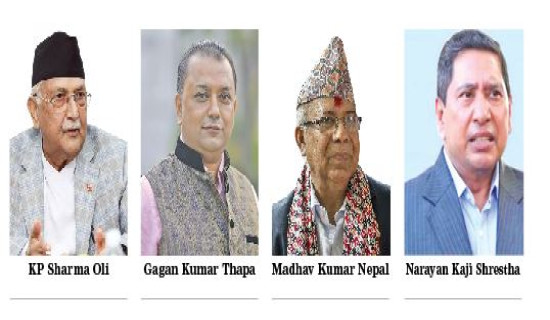
He added that public disillusionment stems from old parties’ lack of forward-looking economic programmes and self-interest of ageing leaders prioritising power over principles.
Factors such as unemployment, lack of opportunities, poor governance, and corruption have fueled this disillusionment. Frequent power-sharing arrangements among the same leaders and parties have further eroded public trust.
Way forward
Political parties must undertake comprehensive reforms and reinvent themselves, enhancing internal democracy, promoting inclusiveness, and strengthening transparency and accountability, noted Baral.
Adopting a participatory, issues-based approach and prioritising the concerns of youth and minorities could help parties regain public trust.
Upreti said reforming the electoral system is crucial, he added. He stated that a fully proportional representation system with a reasonable threshold (3–5%) could reduce party proliferation while ensuring fair representation.
Baral added that even though many parties are registered, only a few major parties will survive long-term if they embrace progressive reforms and groom a new generation of leaders.
Leadership is the key. The future of any party depends on forward-looking leadership and people-oriented programmes, especially in economic development, he added.
Traditional parties with outdated practices will inevitably decline. Resolving internal disputes and emerging credible leadership can gradually restore public trust.