- Saturday, 2 May 2026

Pakistan is in 'open war' with Afghanistan after latest strikes

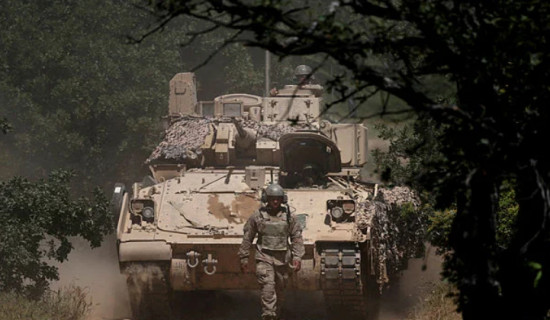
Islamabad, Feb. 28: Pakistan and Afghanistan exchanged cross-border attacks overnight in a dramatic escalation of tensions that led to Pakistan’s defense minister to say on Friday that the two countries are in a state of “open war.”
Afghanistan launched a cross-border attack on Pakistan late Thursday, saying it was in retaliation for deadly Pakistani airstrikes on Afghan border areas Sunday. Pakistan then carried out airstrikes in Kabul and two other Afghan provinces early Friday, saying it targeted military installations.
“We have targeted important military targets in Pakistan, sending a message that our hands can reach their throats and that we will respond to every evil act of Pakistan,” Afghan government spokesman Zabiullah Mujahid said in televised comments from Kandahar Friday. “Pakistan has never sought to resolve problems through dialogue.”
After the Afghan strikes, Pakistan's Defense Minister Khawaja Mohammad Asif said in a post on X: “Our patience has now run out. Now it is open war between us.”
Asif said Pakistan had hoped for peace in Afghanistan after the withdrawal of NATO forces in 2021 and expected the Taliban, which seized power in the country, to focus on the welfare of the Afghan people and regional stability.
Instead, he said the Taliban had turned Afghanistan “into a colony of India,” with which Pakistan has periodically engaged in wars, clashes and skirmishes since gaining independence from British colonial rule in 1947.
India's ties with Afghanistan have improved recently, with offers of enhanced bilateral trade, to the annoyance of Islamabad.
Tensions have been high for months, with border clashes in October killing dozens of soldiers, civilians and suspected militants. Pakistan accuses Afghanistan’s Taliban government of harboring militant groups that then stage attacks across the border and also of allying with its archrival India.
A Qatari-mediated ceasefire ended the fighting, although the two sides still occasionally trade fire. Several rounds of peace talks in Istanbul in November failed to produce a formal agreement.
International calls for restraint
Turkey's Foreign Minister Hakan Fidan held separate phone calls with his Pakistani, Afghan, Qatari and Saudi counterparts on Friday to discuss the conflict, a Turkish official said, without providing details on the talks. The official spoke on condition of anonymity in line with government policy.
In October, Turkey, Qatar and Saudi Arabia had facilitated talks between the sides.
U.N. Secretary-General António Guterres urged both sides to protect civilians as required under international law and “to continue to seek to resolve any differences through diplomacy,” (AP)