- Monday, 25 May 2026

EC revises PR quotas for March 5 HoR polls
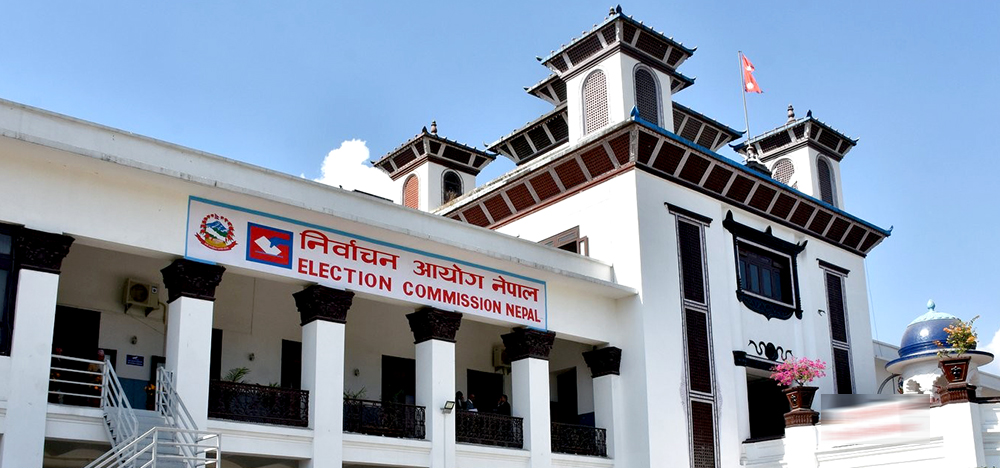

Kathmandu, Dec. 22: The Election Commission (EC) has finalised the percentage allocation for inclusive groups under the proportional representation (PR) electoral system for the upcoming House of Representatives (HoR) elections. The finalisation is based on the National Census 2021.
According to the Commission, the revised allocation has been determined in line with the House of Representatives Member Election Act (First Amendment) Ordinance, 2025, which was issued on Friday.
President Ramchandra Paudel issued the ordinance on Thursday on the recommendation of the government.
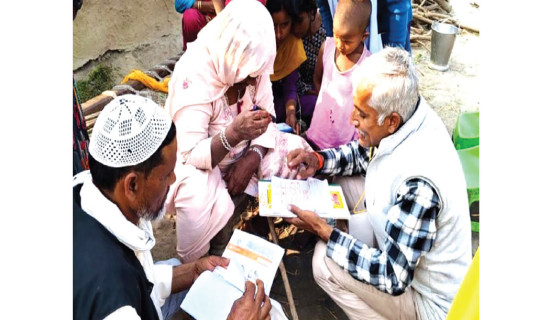
The amendment revises Schedule 1 of the House of Representatives Member Election Act, 2017. Previously, PR quotas were determined using demographic data from the 2011 Census. The new ordinance updates these quotas to reflect changes in population distribution as per the 2021 Census.
EC Spokesperson Narayan Prasad Bhattarai said the ordinance was issued to address demographic shifts among groups protected under the PR electoral system. “The population distribution has changed since the 2011 Census, making it necessary to revise the quota system,” he said.
Under the ordinance, political parties are required to recommend candidates for the PR system strictly in accordance with the updated inclusive group percentages derived from the latest census. Parties must submit closed lists of candidates that accurately reflect these revised demographic proportions.
The Election Commission has set December 28 and 29 as the deadline for political parties to submit the closed lists of their PR candidate.
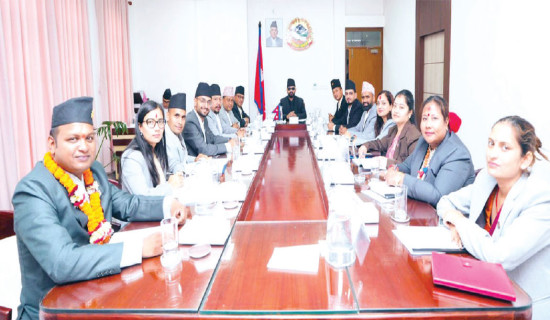
As the deadline approaches, the Commission has decided to conduct training sessions for political parties to ensure proper understanding of the revised procedures and methodology.
A two-day training programme will be conducted for 184 representatives from 93 political parties registered to contest the HoR elections. “Each party has sent two representatives for the training, where they will be briefed on how to recommend candidates under the PR system based on the new population percentages,” Bhattarai said.
Explaining the revised system, Bhattarai noted, “If a party wins 110 seats under the PR system and a particular group constitutes 10 per cent of the population, the party must allocate 10 per cent of its PR seats to that group. This is how the new cluster-based allocation will work.” Out of the total 275 members of the House of Representatives, 165 will be elected through the first-past-the-post system, while 110 members will be elected under the proportional representation system.
Bhattarai also informed that an all-party meeting will be held on Monday in the presence of Prime Minister Sushila Karki, Election Commission officials, political party representatives, and other concerned stakeholders to discuss key election-related issues, including preparedness and security arrangements.