- Sunday, 7 June 2026

Karnali Province formulates 57 laws in six years


By Lalit Basel,Surkhet, Feb. 26: The Karnali Provincial Assembly has formulated a total of 57 laws in its two terms to date. During the inaugural term of 2017, the Assembly formulated 53 laws and four in the first year of the second term. In the first term of the PA, 50 additional Bills were awaiting endorsement.
As the Assembly forges ahead into its ongoing second, seven new laws have been introduced, with six already securing approval and three currently under consideration. This underscores the Assembly’s unwavering commitment to the ongoing evolution of its legal framework.
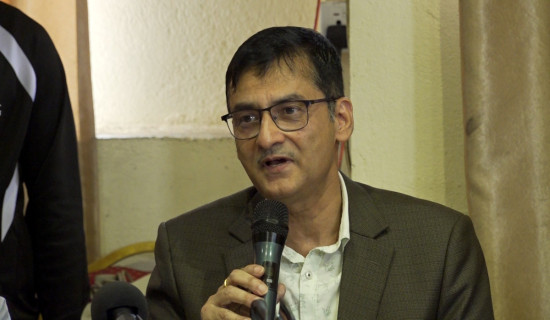
Jivraj Budhathoki, Secretary of the Karnali Provincial Assembly, shared this information at an interaction programme organised jointly by the Nepal Law Society Kathmandu, and the Office of the Chief Minister and the Council of Ministers. The enacted laws includes the Karnali Province Training Institute Bill, Karnali Province Economic Act, Karnali Province Appropriation Bill, and Province Civil Service Regulations.
Out of the 57 laws, 13 are statute laws, while the remaining 44 cover various legal aspects. Budhathoki stressed the importance of local governance, suggesting that the Provincial Assembly should focus on legislation related to governance and administration at local levels to enhance interaction and coordination between provinces and local entities.
During the programme, stakeholders such as Dhanraj Gyawali, former secretary of the Ministry of Law, Justice, and Parliamentary Affairs, emphasised the need for all three levels of government to acknowledge and accept each other’s existence for a robust federal system. Krishna Bahadur, the Internal Affairs and Law Minister of Karnali Province, highlighted the lack of coordination amongthe three levels of government, specifically citing issues related to the distribution of natural resources and revenue.
Pushpa Bhusal, Nepali Congress central committee member and former Deputy Speaker of the House of Representatives, stressed the importance of effective coordination between provincial and local governments for the successful implementation of
federalism. While acknowledging the existing challenges, Bhusal suggested that enacting laws for coordination and cooperation could address these issues and facilitate smoother governance.
The programme provided a comprehensive platform for discussions on the progress and challenges in Karnali’s legislative landscape, emphasising the need for continued efforts in legal development and intergovernmental coordination.