- Sunday, 31 May 2026

Helambu Himalayan Great Trail moves slowly
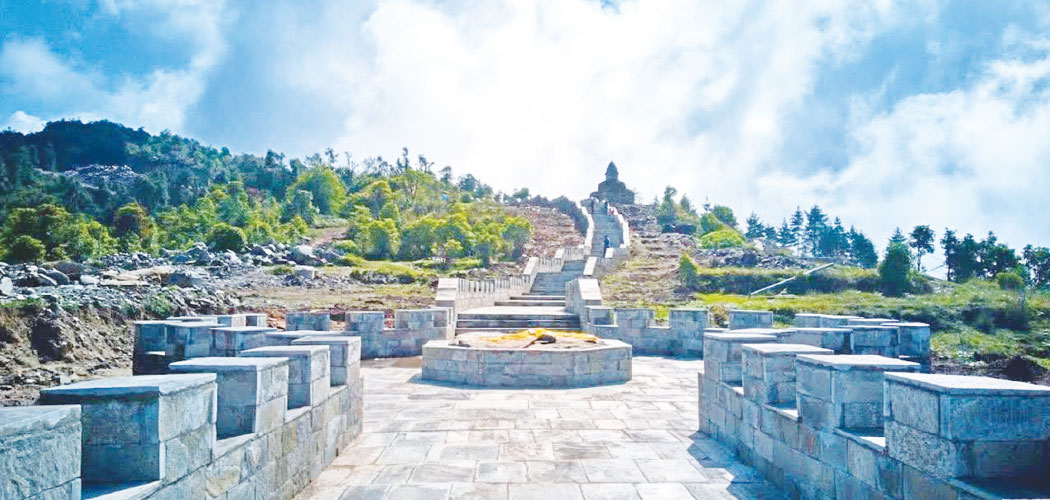
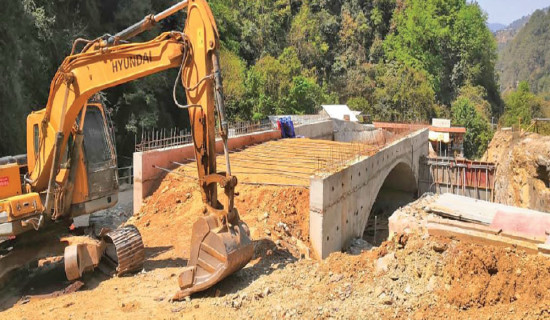
Photo: TRN The under construction Helambu Himalayan Great Trail, a pride tourism project of Helambu Rural Municipality in Sindhupalchowk.

By Chitra Kumar Mijar,Sindhupalchowk, May 9: The construction of the Helambu Himalayan Great Trail, a national pride tourism project of Helambu Rural Municipality, has progressed slowly, with only 7 kilometres completed out of the planned 60 kilometres in the past five years.
According to Chairperson of Helambu Rural Municipality Nima Gyalzen Sherpa, approximately Rs. 150 million has already been spent on the project through contributions from the rural municipality, the Department of Tourism, the Bagmati Provincial Government and other sources.
Sherpa said the Bagmati Provincial government alone allocated Rs. 45 million for the project, but added that a much larger investment would be needed to complete the ambitious trail.
The total estimated cost of the project is around Rs. 3.5 billion to complete construction as per its planned design.
The project has faced repeated delays due to insufficient budget, the COVID-19 pandemic, floods, landslides and the impacts of climate change.
The Great Trail is being developed across areas of Helambu Rural Municipality, Panchpokhari Thangpal Rural Municipality and parts of Nuwakot district.
Construction is being carried out using locally sourced stones from the Hyolmo region of Sindhupalchok.
Designed in the style of traditional Hyolmo Buddhist prayer walls, the trail begins from Buddha Park in Helambu.
The work is currently underway on resting areas at every 400 metres, along with stairways and pathways stretching from Nagidanda to Shermathang and Rinpochedanda.
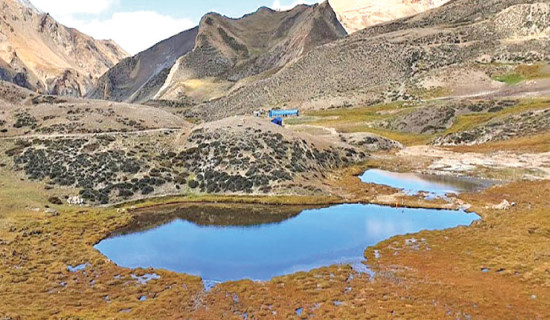
The trail section from Nagidanda to Rinpochedanda offers magnificent Himalayan and scenic views.
From Buddha Park, travellers can reach Ama Yangri, Bhemethang, Milarepa Cave, Palchok Bhagyeshwori Temple, as well as various monasteries and religious sites.
Local stones have been hand-carved with traditional patterns and used in the trail, while slate stones are being used for stairways.
Local residents have started earning income by selling stones from their land for use in the trail construction.
The trail extends from an altitude of 2,400 metres to 5,000 metres above sea level.
Visitors can directly observe the traditional art, culture, dress, lifestyle, and customs of the Hyolmo, Sherpa, Tamang, Lama, and Gurung communities along the route.
From the trail, mountain flights can view around 80 per cent of the central and eastern Himalayan ranges, along with other scenic landscapes.
The Jugal Mountain range and dozens of other snow-capped mountains can also be seen directly from the trail.
During the trek, visitors may encounter wildlife such as red pandas, yaks, musk deer, Danphe, pheasants, bears, mountain sheep and gorals within the nearby national park.
From Semisidang on the trail, Gosainkunda can be reached within just one kilometre.
Religious and pilgrimage sites, including Panchpokhari, Bhairabkunda, and several lakes, are also accessible through the same trail.
The rural municipality has already completed a Detailed Project Report (DPR) for a bungee jump and has started moving the project forward.
Feasibility studies for canyoning and paragliding have also been carried out to offer adventure tourism activities along the trail.
The Melamchi water supply source at Ambathan, which supplies drinking water to Kathmandu Valley, can also be directly observed from the trail area.
The Helambu Himalayan Great Trail can be accessed from Kathmandu via Sankhu in about 55 kilometres or through Sundarijal in approximately 50 kilometres.


-original-thumb.jpg)
-square-thumb.jpg)