- Friday, 29 May 2026

Country likely to see weaker monsoon, hotter temperatures this season
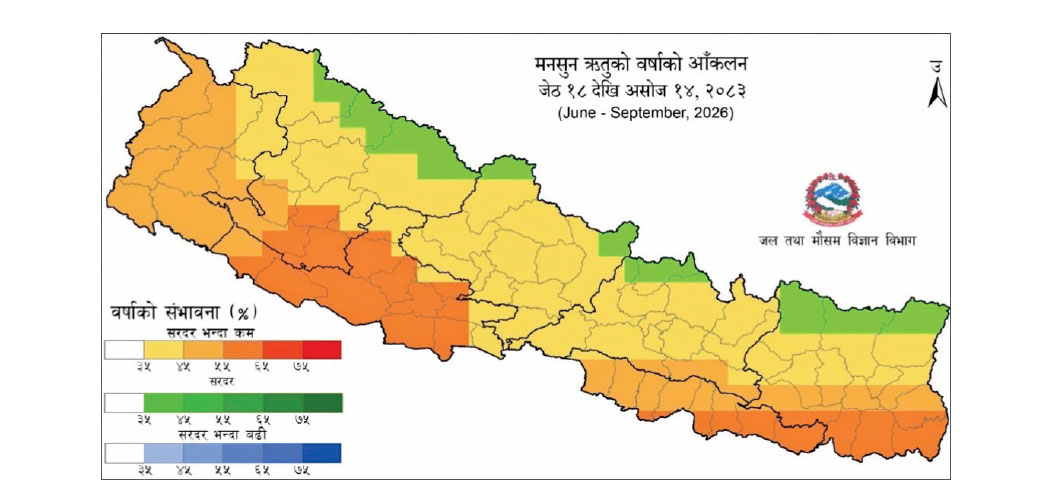

By A Staff Reporter, Kathmandu, May 9: Nepal is likely to witness a weaker-than-normal monsoon this year, with below-average rainfall and hotter temperatures across most parts of the country during the monsoon season 2026, which lasts from June 1 to September 30.
According to the ‘National Season Outlook for Monsoon Season 2026’ released by the Department of Hydrology and Meteorology (DHM) on Friday, most parts of the country are likely to receive below-average rainfall during the season.
Similarly, both maximum and minimum temperatures are likely to remain above average across the country.
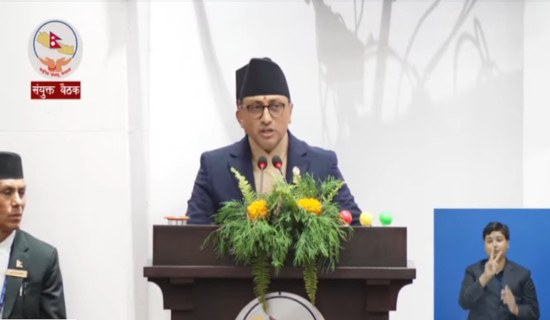
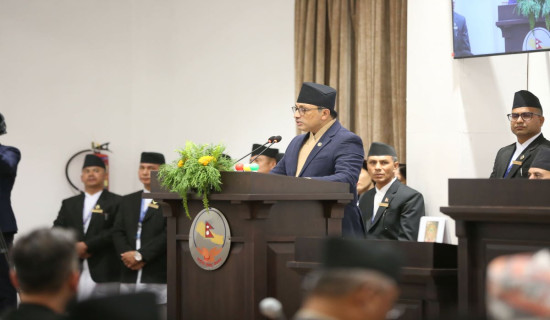
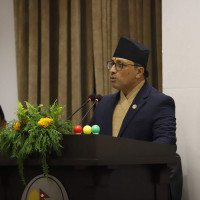
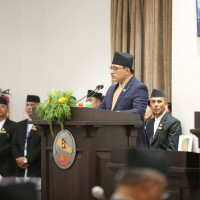
Addressing the ‘National Monsoon Forum 2026’, Biraj Bhakta Shrestha, Minister for Energy, Water Resources and Irrigation, has said that the pattern of monsoon is becoming increasingly uncertain and unpredictable due to climate change. He stressed the need to further strengthen reliable weather forecast and early warning systems.
Minister Shrestha said the monsoon forum is not merely a formal platform for presenting seasonal forecasts, but also an important convergence point linking science, development programme implementation and disaster preparedness.
He added that the demand for weather forecasting services has been rising rapidly in recent times and pointed out that much remains to be done to achieve the goal set by the Hydrology and Meteorology Policy-2081 of ensuring “timely, quality and reliable water, weather and climate services for all.”
According to Minister Shrestha, improving the quality of hydrological and meteorological services requires the expansion of the national network of observation centres, sustainable management, promotion of research and studies, and the development of location-specific forecasting systems through the use of modern technology.
He stressed the need to connect weather forecasting and early warning systems with innovative technologies and deliver them to the public through SMS, digital platforms and all available means of communication.
Minister Shrestha also said that hydrological and meteorological information would not only help reduce disaster risks but also support sectors such as tourism, health, physical infrastructure and water resource management. He said forecasting systems would make significant contributions to transportation and infrastructure construction, healthcare management, agricultural production and irrigation management.
He further said that rainfall and river flow forecasts would support effective reservoir management and the implementation of electricity generation plans, adding that monsoon outlooks play an important role in making pre-monsoon disaster preparedness action plans more effective.
Recalling that the flood early warning system operated in recent years through SMS and bulletins had alerted millions of citizens in time and significantly contributed to minimising loss of lives and property, he said greater attention must now be paid to the technical and human resource aspects of the hydrological and meteorological information system. He added that the ministry was ready to provide the necessary support and coordination for this purpose.
Speaking at the programme, Secretary at the Ministry of Energy, Water Resources and Irrigation, Sarita Dawadi, and Director General at DHM, Dr. Archana Shrestha, recalled that the 16th Plan has set a target of forecasting weather for all four seasons, adding that the government is moving towards making the hydrological and meteorological information system more technology-friendly, modern and reliable.
Presenting the monsoon season outlook (preliminary assessment), Sudarshan Humagain, a meteorologist at the DHM, said southern Karnali, most parts of Lumbini, eastern Madhes and southern Koshi provinces have a 55 to 65 per cent probability of receiving below-average rainfall.
Most parts of Sudurpashchim, western Madhes and central Koshi provinces are likely to receive below-average rainfall, with a 45 to 55 per cent probability, Humagain said.
Meanwhile, northern Karnali and northern Koshi provinces are expected to witness near-average rainfall, with a probability ranging between 35 and 45 per cent.
The outlook also projected above-average temperatures across the country during the monsoon season. Most parts of the country have a 45 to 55 per cent probability of experiencing higher-than-normal maximum temperatures, while north-eastern Sudurpaschim and northern Karnali provinces face even higher likelihood of warmer daytime temperatures, ranging from 55 to 65 per cent.
Similarly, minimum temperatures are also expected to remain above average, particularly in northern Sudurpaschim, Karnali and Bagmati provinces, indicating warmer-than-normal nights during the monsoon period.
The DHM said the monsoon outlook was prepared using climate models developed by the World Meteorological Organisation and the South Asian Seasonal Climate Outlook Forum (SASCOF).
According to the department, global climate indicators show that the El Niño Southern Oscillation (ENSO) is shifting from a neutral phase towards an El Niño condition, while the Indian Ocean Dipole (IOD) is likely to turn positive by the end of the monsoon season. Both phenomena are known to significantly influence regional weather patterns.
The department also said that while these models provide a strong scientific basis, seasonal forecasting remains a complex task influenced by various atmospheric and land-use factors.