- Saturday, 30 May 2026

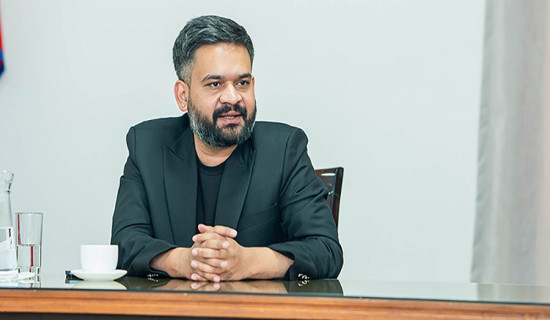
CJ recommendation based on merit, law: Minister Pokharel
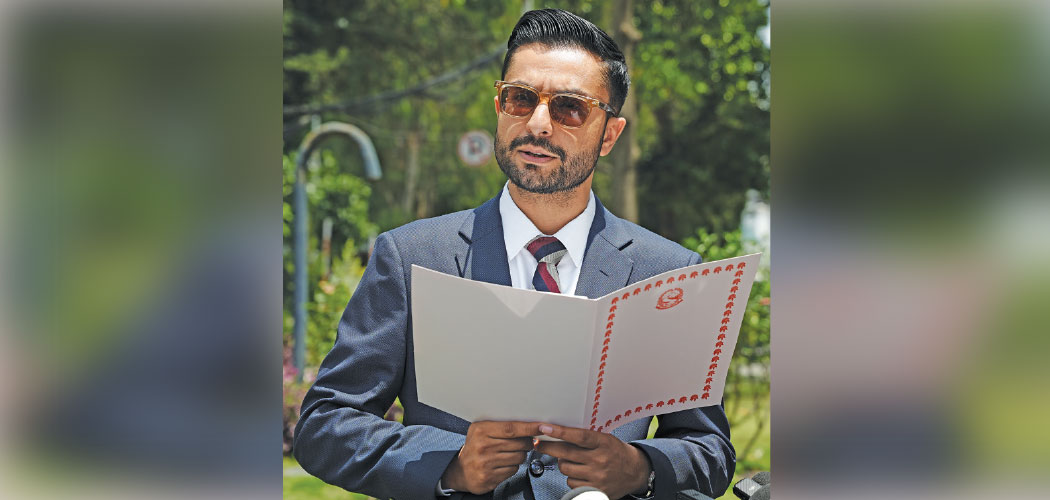

By A Staff Reporter,Kathmandu, May 9: The government has clarified that Justice Dr. Manoj Kumar Sharma of the Supreme Court has been recommended for the position of Chief Justice (CJ) purely on the basis of his professional competence.
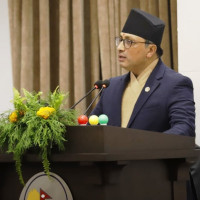
Talking to media persons following the meeting of the Council of Ministers held at the Office of Prime Minister and Council of Ministers (OPMCM) in Singha Durbar on Friday morning, Minister for Education, Science and Technology, Sasmit Pokharel, who is also the government spokesperson, maintained that the government is undertaking efforts to reform the judiciary.
Minister Pokharel remarked, “There has long been a call for structural legal and constitutional reforms. Even today, we maintain that the judiciary, executive, and legislature must remain distinct from one another.”
He further remarked that the Judicial Council currently appears to be politically influenced, noting that three out of its five members are political appointees.
Minister Pokharel added, “Judges being recommended are also increasingly seen to have political backgrounds. There have long been comments on the Constitutional Council as well. For the first time, we have made a recommendation for the Chief Justice based on total number of cases he has settled. This is not to suggest that this is a perfect system, but the recommendation has been made on the basis of capability.”
In another query of journalists, Minister Pokharel said that the Ministry of Foreign Affairs has already initiated necessary procedures for diplomatic engagement with the government of India to resolve border-related issues.
He said that the government has sent a diplomatic note to the government of India, adding that dialogue between the two countries has already commenced and that the Foreign Affairs Ministry is actively advancing the requisite diplomatic processes. “According to the diplomatic note, communication between the two countries is ongoing. Talks are expected to take place,” he said.
Minister Pokharel informed that the government is moving forward with a plan to reduce the number of ministries to a maximum of 18, based on various studies.
“We have already committed in the party’s charter to limiting the number of ministries to 18. Ministries with strong interconnections will be merged soon,” he said.
Similarly, he clarified that the education regulations explicitly stipulate that schools are not permitted to charge admission fees more than once.
Minister Pokharel said the main responsibility for regulating and taking action rests with local governments regarding schools that are collecting admission and annual fees in violation of the law.
It has also expressed its commitment to fully support local governments, along with the federal government and administration, in bringing such schools under the scope of legal action.
He said, “If any school is charging fees beyond the prescribed limits or in violation of the law, local authorities will monitor such cases. We held discussions last Monday due to numerous complaints, and local governments will take necessary action.”
15 honorary consuls general, consuls dismissed
Meanwhile, the meeting of the Council of Ministers held at the Office of Prime Minister and Council of Ministers (OPMCM) on Friday morning decided to dismiss 15 Nepali honorary consuls general and consuls serving in various countries. As per the decision, the Cabinet agreed to recall and relieve those honorary diplomatic officials from their positions abroad.
According to Minister Pokharel, the meeting also resolved to request President Ramchandra Paudel to address a joint session of both Houses of the Federal Parliament at 4:00 pm on Monday, May 11.
The government further called for mandatory attendance of all members of both houses during the presidential address. “A decision has been made to request the President to address the joint session of Parliament at 4:00 pm on May 11, and to ensure the presence of all members,” Minister Pokharel said.
In addition, the Cabinet meeting approved the submission of key international labour conventions for parliamentary ratification. These include Protocol No. 29 (P029) to the Forced Labour Convention, 1930 (2014 Protocol), and Convention No. 81 concerning Labour Inspection (1947) of the International Labour Organisation.
The Spokesperson clarified that the government is advancing these conventions to align with international labour standards and to eliminate forced labour.